
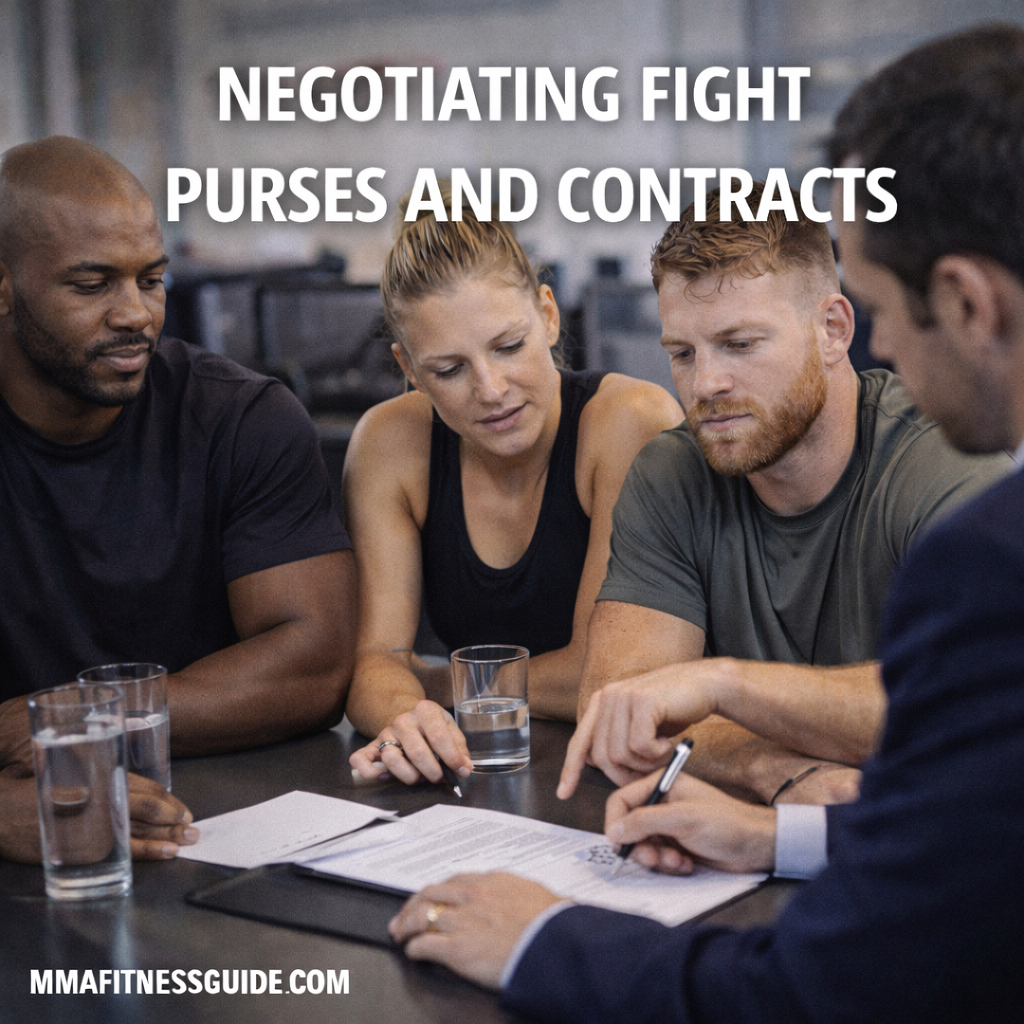
For most MMA fighters, negotiating fight purses and contracts is one of the most intimidating parts of the sport. Many athletes focus exclusively on training and leave negotiations to chance, accepting whatever terms are offered. Over time, this can limit earnings, create unfavorable obligations, and slow career growth.
Understanding how fight purses and contracts work empowers fighters to protect their value, plan long-term, and build sustainable careers. This guide breaks down key negotiation principles every MMA fighter should know.
Understanding Fight Purses in MMA
A fight purse is the guaranteed money a fighter earns for showing up and competing.
Fight purses often include:
- Show money (base pay)
- Win bonuses
- Performance bonuses (when applicable)
- Sponsorship or appearance incentives
Not all promotions structure purses the same way, so clarity matters.
Common Types of MMA Contracts
Before negotiating, fighters should understand what they’re signing.
Single-Fight Agreements
These contracts cover one bout only.
Pros include:
- Flexibility
- Short-term commitment
- Opportunity to test promotions
Cons include limited leverage and income stability.
Multi-Fight Contracts
Multi-fight deals are more common once fighters gain experience.
They often include:
- Set purse increases per fight
- Promotional obligations
- Exclusivity clauses
- Contract length requirements
Longer contracts require closer review.
Why Fighters Undervalue Themselves
Many fighters accept low pay out of fear.
Common reasons include:
- Fear of losing the opportunity
- Lack of negotiation experience
- Belief they are replaceable
- Pressure to “pay dues”
- Emotional attachment to fighting
Confidence and preparation improve leverage.
Know Your Leverage Before Negotiating
Leverage comes from value, not emotion.
Factors that increase leverage include:
- Win streaks
- Finishing rate
- Ticket sales ability
- Fan following or social reach
- Short-notice availability
- Unique fighting style
Understanding your leverage helps guide negotiations realistically.
What Can Be Negotiated Besides Money
Money isn’t the only negotiable element.
Other terms may include:
- Fight frequency
- Matchmaking input
- Sponsorship allowances
- Travel and accommodation coverage
- Medical coverage
- Release clauses
Small improvements add up over time.
The Importance of Clear Contract Language
Verbal promises mean nothing without written terms.
Always confirm:
- Payment amounts and timing
- Bonus conditions
- Exclusivity terms
- Injury and cancellation policies
- Contract extension clauses
If it’s not in writing, it doesn’t exist.
Using Managers and Agents Effectively
Managers can help fighters avoid costly mistakes.
A good manager provides:
- Negotiation experience
- Industry connections
- Objective decision-making
- Contract review support
However, fighters should still understand the basics themselves.
Red Flags in MMA Contracts
Watch for warning signs such as:
- Automatic contract extensions
- Vague payout language
- Excessive exclusivity
- Rights to image or likeness without compensation
- Penalties for declining fights
Red flags don’t always mean walk away — but they require discussion.
Timing Matters in Negotiation
When you negotiate matters as much as what you ask for.
Best times to negotiate include:
- After a strong win
- When multiple promotions show interest
- Before contract renewals
- When stepping up on short notice successfully
Momentum strengthens leverage.
Negotiation Mindset for Fighters
Approach negotiation professionally, not emotionally.
Effective mindset traits include:
- Calm confidence
- Willingness to ask questions
- Respectful communication
- Long-term thinking
- Willingness to walk away when needed
Negotiation is business, not personal.
Planning Long-Term Career Value
Fight purses are part of a bigger picture.
Long-term considerations include:
- Building name recognition
- Maintaining activity
- Protecting health
- Choosing fights strategically
- Avoiding career stagnation
Smart negotiations support longevity.
When to Seek Legal Advice
Legal help can prevent expensive mistakes.
Consider professional review when:
- Signing long-term contracts
- Negotiating image rights
- Dealing with international promotions
- Facing unclear clauses
Legal guidance is an investment, not a cost.
Final Thoughts
Negotiating fight purses and contracts is a skill every MMA fighter must develop. You don’t need to be aggressive — you need to be informed. Fighters who understand their value, ask the right questions, and think long-term protect both their income and their careers.
Training builds your skills in the cage. Smart negotiation builds your future outside of it.