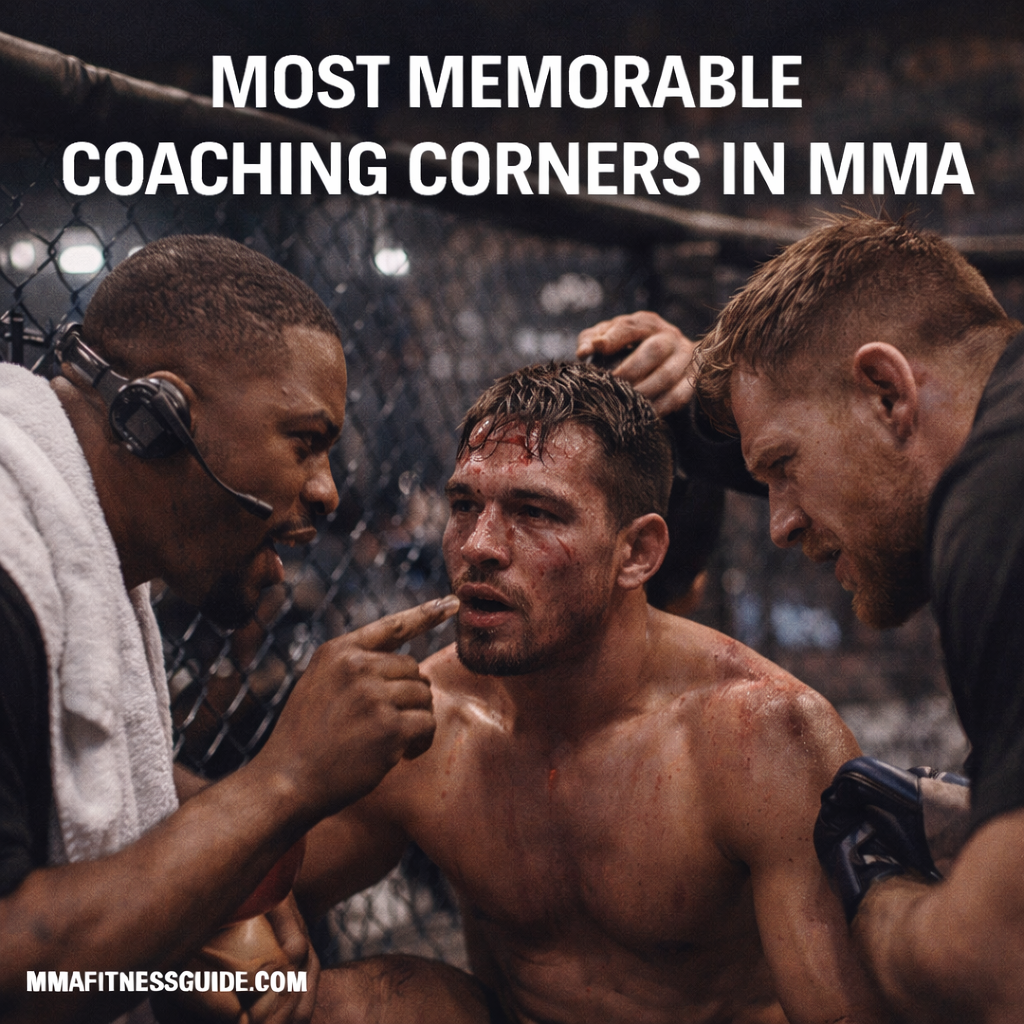
In MMA, fighters may be alone in the cage—but they’re never truly alone. Between rounds, the coaching corner becomes a crucial source of strategy, motivation, clarity, and emotional grounding. Some corners have become legendary, not just for what they said, but for how perfectly their guidance shaped the outcome of historic fights.
This article explores the most memorable coaching corners in MMA history, why they mattered, and what fighters and coaches can learn from them.
Why Coaching Corners Matter in MMA
The corner is where chaos gets organized.
Effective coaching corners help fighters:
- Reset mentally between rounds
- Adjust strategy based on live feedback
- Manage fatigue and emotions
- Stay disciplined under pressure
- Avoid panic or reckless decisions
A few well-chosen words can completely change a fight’s trajectory.
What Makes a Coaching Corner Memorable
Not every loud or emotional says something impactful.
Memorable corners often share these traits:
- Clear, simple instructions
- Calm delivery under pressure
- Deep understanding of the fighter
- Tactical accuracy
- Emotional intelligence
Great corners know when to motivate—and when to quiet the noise.
Calm Precision: The Power of Clarity
Some of the most iconic corners are surprisingly quiet.
Calm, precise coaching:
- Reduces adrenaline overload
- Helps fighters process information
- Encourages execution over emotion
- Builds trust mid-fight
In high-stress moments, simplicity beats volume.
Emotional Motivation That Lands at the Right Time
Other corners are remembered for emotional impact.
Effective motivational corners:
- Tap into personal meaning
- Reinforce belief at critical moments
- Avoid panic or desperation
- Balance urgency with confidence
Emotion works best when it’s controlled, not chaotic.
Strategic Mid-Fight Adjustments That Changed Outcomes
Some coaching corners are legendary because they solved the fight in real time.
Common successful adjustments include:
- Identifying defensive openings
- Changing pace or pressure
- Shifting target selection
- Correcting positioning or footwork
Mid-fight problem-solving is one of the highest coaching skills in MMA.
Coach–Fighter Trust on Display
The most iconic corners reflect deep trust.
Signs of strong trust include:
- Fighters listening closely despite exhaustion
- Immediate execution of advice
- No argument or confusion
- Clear shared language
Trust allows information to land when it matters most.
Corners That Calmed Fighters Down
Over-aggression can be as dangerous as hesitation.
Memorable calming corners often:
- Slow breathing
- Reinforce composure
- Reduce emotional mistakes
- Refocus on fundamentals
These moments protect fighters from themselves.
Corners That Demanded More—At the Right Moment
Urgency has its place.
Effective “push” corners:
- Are timed strategically
- Avoid emotional manipulation
- Emphasize opportunity, not panic
- Trust the fighter’s preparation
The message isn’t “do more,” but “do what you trained for.”
Communication Styles That Define Great Coaches
Legendary corners use different communication styles.
Common approaches include:
- Technical and analytical
- Calm and grounding
- Direct and blunt
- Motivational and emotional
The best coaches adapt their style to the fighter—not the other way around.
When Coaching Corners Go Wrong
Not all memorable corners are positive.
Problematic corner behaviors include:
- Conflicting instructions
- Overloading information
- Emotional outbursts
- Panic or negativity
- Poor read of the fight
These moments highlight how fragile focus can be.
Lessons Fighters Can Learn From Iconic Corners
Fighters can improve corner effectiveness by:
- Building shared language with coaches
- Practicing listening under fatigue
- Giving honest feedback between rounds
- Trusting pre-fight preparation
Corner work starts long before fight night.
Lessons Coaches Can Take From MMA History
Great corners aren’t about ego.
Key coaching lessons include:
- Fewer words, clearer meaning
- Emotional awareness
- Tactical discipline
- Knowing when to speak—and when not to
The best coaches make the fight simpler, not louder.
The Evolution of Coaching Corners in MMA
As MMA has evolved, so have corners.
Modern changes include:
- Greater emphasis on analytics
- Better understanding of fatigue and cognition
- More strategic pacing advice
- Improved emotional regulation techniques
Corners today are more intentional than ever.
Why Fans Remember Coaching Corners
Fans remember corners because they reveal truth.
They show:
- Real-time pressure
- Human vulnerability
- Leadership under stress
- The mental side of fighting
These moments pull back the curtain on what fighting really demands.
Final Thoughts
The most memorable coaching corners in MMA history aren’t always the loudest or most dramatic—they’re the most effective. Whether calming a fighter, making a critical adjustment, or delivering the right words at the perfect moment, great corners shape outcomes and legacies.
In a sport defined by chaos, the corner is where clarity lives—and sometimes, where history is made.