Leg kicks can change the entire flow of an MMA fight — slowing an opponent’s movement, breaking their rhythm, and damaging their ability to strike or defend. But the best fighters don’t just absorb leg kicks; they check them, counter them, and turn defense into immediate offense.
Whether you’re a beginner learning the basics or an experienced fighter sharpening your timing, mastering the check-and-counter sequence is one of the most important parts of modern MMA striking.
This guide breaks down how leg-kick defense works, how to check correctly, and the most effective counters you can fire back instantly.
Why Checking Leg Kicks Matters in MMA
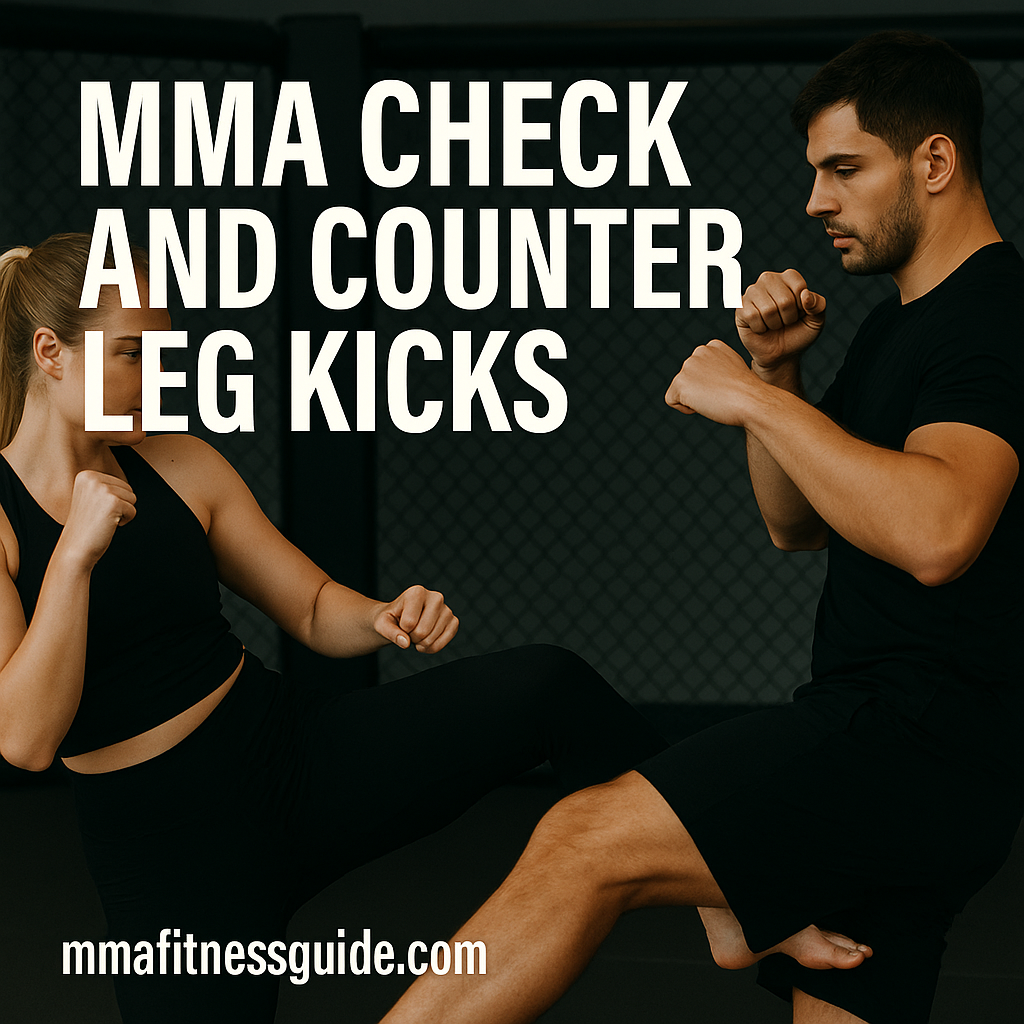
A well-timed check can shut down an opponent’s entire kicking strategy. When you lift your shin and angle it correctly, the attacker’s kick lands on bone, not soft tissue — instantly discouraging them from throwing more.
Checking leg kicks helps you:
- Protect the thigh and calf
- Reduce cumulative damage
- Maintain strong footwork and mobility
- Create instant counter opportunities
- Wear down aggressive kickers
- Control distance more effectively
A fighter who checks consistently becomes extremely hard to target.
How to Properly Check a Leg Kick
A good leg-kick check comes down to three components: timing, angle, and balance.
1. Lift the Lead Leg With a Slight Bend
The goal is not a high raise — it’s a small, sharp lift.
- Raise your knee to roughly mid-thigh height
- Keep your shin vertical
- Maintain slight flexion so the impact is absorbed safely
This keeps you balanced and mobile.
2. Turn the Shin Outward
Rotate your hip outward so your shin meets their shin.
If you don’t turn the shin out, you risk:
- Taking the kick on your thigh
- Getting hit while off-balance
- Leaving your groin or liver open
A strong outward angle stops the kick cleanly.
3. Keep Your Guard Up
Many beginners drop their hands when checking.
Keep hands high to protect from:
- Follow-up punches
- High-kick traps
- Switch-step setups
A check should never make you vulnerable.
4. Land Back in a Balanced Stance
After checking:
- Set the foot down gently
- Reset your base
- Be ready to counter immediately
Good fighters turn checks into offense instantly.
The Most Effective Counters to Leg Kicks
Every time your opponent throws a kick, they give you a window — their balance, defense, and position all change. These openings are perfect for counters.
1. The Straight Right (or Straight Left for Southpaw)
One of the highest-percentage counters.
Why it works:
- Opponent is kicking with one leg, so their guard opens
- Their weight shifts backward
- Their head often stays centered
The straight punch lands fast and clean.
2. Inside Low Kick
After checking, immediately return a low kick of your own.
Benefits:
- Targets their support leg
- Disrupts their rhythm
- Forces hesitation on future kicks
Great for Muay Thai-style exchanges.
3. Hard Calf Kick
Check → Rotate → Counter the calf.
Perfect when you want to:
- Slow their footwork
- Punish kickers who don’t return their leg quickly
- Attack from a stable angle
A calf kick counter can end a fight quickly.
4. Lead Hook
If they’re open after kicking, the lead hook catches them off-balance.
Use this when:
- Their head dips or stays center
- They’re slow returning to stance
The hook also sets up combinations.
5. Step-In Knee
After checking, step forward with a knee strike to the body.
Works well against:
- Opponents who lean forward during kicks
- Slower, heavy-time kickers
- Inside-leg kick attempts
This counter forces them to rethink their strategy.
6. Takedown Entry
Leg kicks are one of the easiest attacks to convert into a takedown.
Options include:
- Single-leg entries
- Sweep entries
- Body-lock pressure against the cage
If they kick recklessly, shoot.
Drills to Master Checking and Countering
Add these into your training sessions.
1. Partner Kick Timing Drills
Partner throws controlled kicks → You check and return a counter.
2. Padwork: Check → Counter
Coach calls out:
- “Check–straight”
- “Check–hook”
- “Check–low kick”
Builds automatic reactions.
3. Shadowboxing With Shin Lifts
Practice smooth checks without stiffness.
4. Light Sparring With Kick Focus
Both partners work at 30–50% to build timing safely.
Common Mistakes to Avoid
- Lifting the leg too high
- Turning the shin inward
- Dropping the hands during checks
- Not returning to stance quickly
- Countering too slowly
- Checking with a straight leg (dangerous!)
Clean technique prevents injury and opens up counters.
Final Takeaway
Leg kicks are a powerful weapon — but only if you let them land. By learning how to check kicks effectively and respond instantly, you transform your defense into offense. Many fighters lose mobility and momentum when they absorb too many kicks; great fighters stop them in their tracks and make opponents pay for even trying.
Check smart. Counter fast. Control the striking game.