
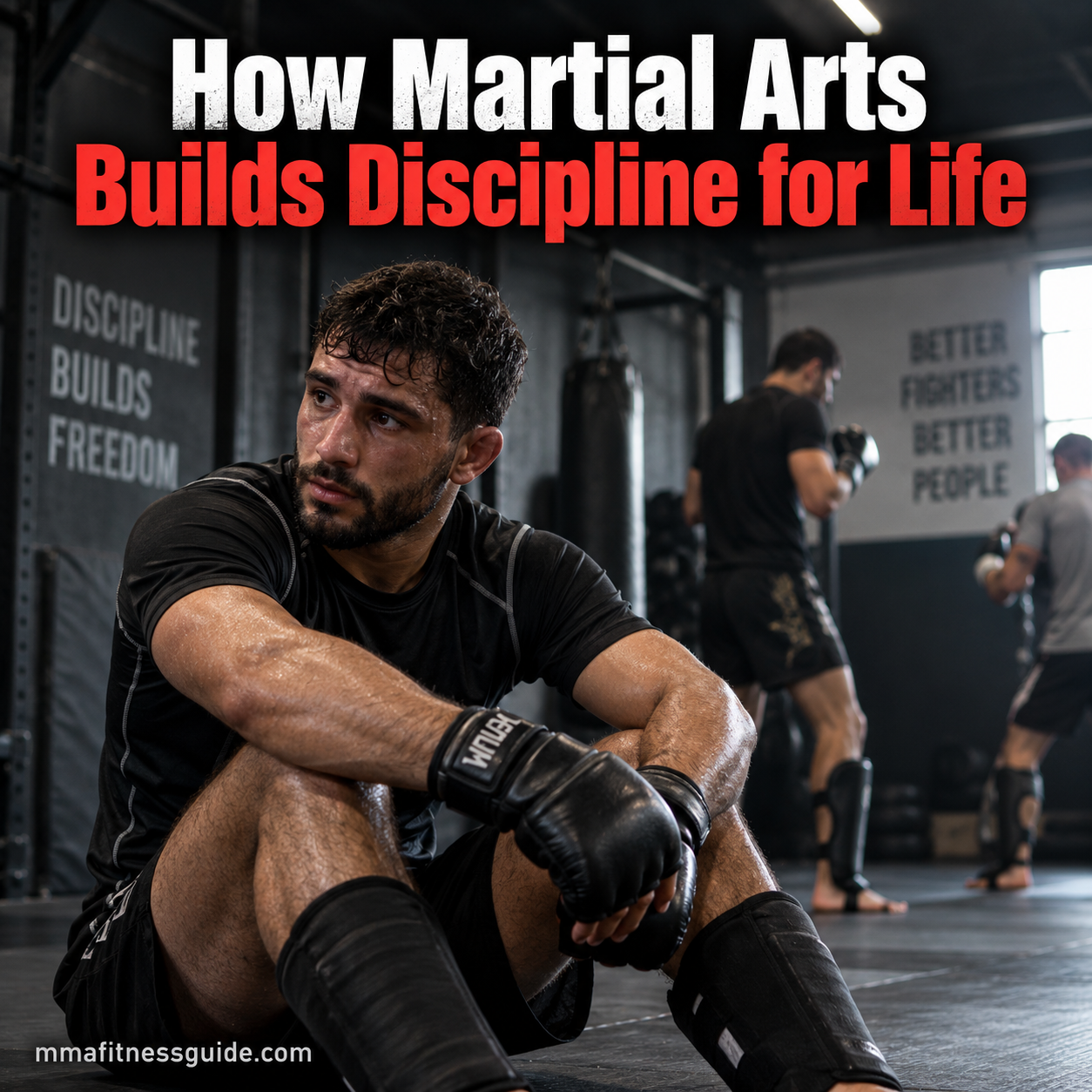
Martial arts are often associated with powerful strikes, technical submissions, championship belts, and impressive physical conditioning. Yet behind every successful fighter is something far less visible: discipline.
Every punch practiced hundreds of times, every difficult training session completed, and every mistake corrected requires a willingness to work toward improvement.
Discipline is what connects effort to progress.
It helps martial artists maintain consistent training schedules, manage their emotions, respect their opponents, and continue learning when progress slows.
These lessons extend far beyond combat sports. The same habits that help someone become a better fighter can support professional development, healthier relationships, academic achievement, and personal responsibility.
Whether you practice Brazilian Jiu-Jitsu, boxing, Muay Thai, Karate, wrestling, or mixed martial arts (MMA), training provides repeated opportunities to develop self-control and accountability.
However, discipline does not develop automatically simply because someone joins a martial arts gym. It grows through consistent practice, thoughtful coaching, realistic expectations, and the deliberate application of training lessons to everyday life.
Martial arts build discipline through consistency, emotional control, and the habits you carry off the mats into everyday life.
1. Discipline: The Core of Martial Arts Philosophy
Discipline has long been an important principle in many martial arts traditions.
In arts such as Karate and Kung Fu, structured practice, etiquette, repetition, and respect are often central parts of training. Modern combat sports, including MMA, also demand considerable discipline, although their teaching methods and traditions may differ.
A fighter cannot rely on physical strength alone.
Without the ability to follow instructions, practice consistently, control unnecessary aggression, and learn from mistakes, even a naturally athletic person may struggle to improve.
What Does Discipline Mean in Martial Arts?
Martial arts discipline is the ability to regulate your behavior and make decisions that support your long-term development.
It includes several practical habits:
- Attending scheduled training sessions consistently.
- Following coaching instructions and gym safety rules.
- Controlling aggression during sparring.
- Practicing difficult techniques instead of avoiding them.
- Respecting training partners regardless of experience.
- Maintaining healthy recovery and training habits.
- Accepting constructive criticism without becoming defensive.
For example, imagine a beginner learning a basic Brazilian Jiu-Jitsu escape.
During the first few sessions, the technique may feel awkward. The student might repeatedly make the same mistake or struggle against a more experienced partner.
An undisciplined response might involve abandoning the technique, becoming frustrated, or attempting to compensate with unnecessary strength.
A disciplined response involves listening to the instructor, identifying the mistake, and continuing to practice with appropriate resistance.
The difference is not necessarily talent. It is the willingness to participate in a structured learning process.
Self-Control Comes Before Technical Mastery
Martial arts require practitioners to understand when and how to use their abilities.
In a controlled sparring session, the objective is not to injure a training partner. It is to develop skills within agreed rules and intensity levels.
A disciplined fighter knows when to increase pressure, when to reduce intensity, and when to stop.
This requires restraint, particularly when frustration or competitiveness begins to influence behavior.
Learning to control physical aggression provides an opportunity to practice the broader principle of thinking before acting.
However, this ability must be reinforced outside training. Being disciplined in the gym does not automatically guarantee self-control in every situation.
The goal is to consciously carry those lessons into everyday decisions.
2. The Routine That Builds Mental Toughness
One of the most direct ways martial arts develop discipline is through structured training.
Improvement requires repeated exposure to techniques, physical challenges, and situations that demand concentration.
A boxer does not develop an effective jab after practicing it once. A wrestler does not master takedown defense during a single class.
Skills develop through repeated practice, feedback, correction, and gradual increases in difficulty.
Why Consistency Matters More Than Occasional Intensity
Consider two beginners who start training at the same time.
The first trains extremely hard for several days but frequently misses classes afterward.
The second attends three manageable sessions each week, follows the instructor’s guidance, and gradually improves.
Over several months, the second student may accumulate substantially more useful practice.
The lesson is straightforward: sustainable consistency creates more opportunities for improvement than occasional bursts of motivation.
A realistic training schedule might include:
| Day | Training focus |
|---|---|
| Monday | Technical striking |
| Tuesday | Strength training |
| Wednesday | Brazilian Jiu-Jitsu |
| Thursday | Rest or light mobility |
| Friday | Technical drilling and controlled sparring |
| Saturday | Conditioning or optional practice |
| Sunday | Recovery |
This is only an example. Beginners may need fewer sessions, while experienced athletes may follow more specialized programs.
The important principle is choosing a schedule that can be maintained without compromising recovery, health, or essential responsibilities.
Learning to Show Up When Motivation Is Low
Motivation naturally fluctuates.
Some days, athletes arrive at the gym feeling energetic and eager to train. On other days, work stress, poor sleep, or ordinary fatigue may make training less appealing.
Discipline helps distinguish between a temporary lack of enthusiasm and a genuine need for recovery.
If you are healthy and adequately recovered but simply do not feel motivated, attending a planned session can reinforce consistency.
If you are injured, ill, or experiencing significant accumulated fatigue, discipline may mean resting or modifying the session.
A disciplined athlete follows a sustainable plan rather than treating every missed workout as a personal failure.
How Repetition Develops Patience
Martial arts expose students to the reality that complex skills take time.
A beginner might spend weeks developing a reliable stance, months improving defensive reactions, and years refining timing against experienced opponents.
This process encourages patience because improvement is rarely immediate or perfectly linear.
Some sessions produce noticeable breakthroughs. Others reveal weaknesses that were previously overlooked.
Learning to tolerate these periods without abandoning the process is one way training can support persistence.
For a deeper examination of consistency and performance, read Discipline: The Hidden Key to MMA Success .
3. How Martial Arts Strengthen Emotional Control
Martial arts create situations in which emotions can become intense.
During sparring, an athlete may experience fear, frustration, embarrassment, excitement, or anger.
A beginner might panic when trapped underneath an opponent. A boxer may become frustrated after repeatedly getting caught by the same counterpunch.
These experiences provide opportunities to practice emotional regulation in a supervised environment.
Learning to Respond Instead of React
Imagine being caught in a difficult position during Brazilian Jiu-Jitsu.
An instinctive reaction might be to struggle aggressively, hold your breath, and waste energy attempting to escape.
A more controlled response involves recognizing the position, protecting yourself, breathing normally, and applying an appropriate escape.
The objective is not to eliminate fear.
It is to avoid allowing fear to dictate every decision.
Over time, repeated practice can help athletes become more familiar with challenging situations and develop responses that are less impulsive.
Breathing Under Pressure
Breathing is a practical component of emotional and physical control.
When an athlete becomes anxious, breathing may become rapid or irregular. Some beginners also hold their breath while striking, grappling, or attempting difficult movements.
Coaches often encourage students to maintain steady breathing during drills and exhale appropriately during exertion.
During a difficult round, a fighter can practice:
- Recognizing unnecessary tension.
- Relaxing the shoulders and jaw when possible.
- Maintaining controlled breathing.
- Focusing on the immediate technical problem.
- Following the coach’s instructions.
These habits can support composure during training.
They may also provide useful strategies for handling stressful everyday situations, although the ability to manage stress outside the gym requires deliberate practice in those settings.
Managing Anger and Frustration
Getting outperformed by a training partner can challenge an athlete’s ego.
Someone who expects to dominate every round may become frustrated when a smaller or less physically powerful partner demonstrates superior technique.
A disciplined athlete learns to interpret these experiences as information.
Instead of retaliating with excessive force, the athlete can ask:
- Which technique caused the problem?
- Did I make a positioning mistake?
- Was I relying too heavily on strength?
- What should I practice before the next session?
This approach turns frustration into a learning opportunity.
Importantly, training should take place in an environment where coaches actively discourage bullying, uncontrolled aggression, and unsafe sparring.
Martial arts can provide opportunities to develop emotional control, but the quality of instruction and training culture matters.
Explore this connection further in How Martial Arts Improve Emotional Fitness .
4. Respect: The Foundation of Discipline
Respect is a prominent feature of many martial arts schools.
Depending on the discipline, students may bow before entering the training area, shake hands before sparring, or follow specific rules for addressing instructors.
These customs differ, but they often communicate similar expectations: training requires cooperation, responsibility, and consideration for others.
Respecting Your Coach
An experienced instructor provides technical guidance, identifies weaknesses, and helps students train safely.
Respecting a coach does not mean accepting every instruction without question.
It means listening carefully, communicating concerns appropriately, and being willing to consider constructive feedback.
Good coaches should also respect students by maintaining safe training practices, explaining expectations, and responding appropriately to injuries or discomfort.
Respect works in both directions.
Respecting Training Partners
Combat sports depend heavily on cooperation.
Even when two athletes are competing during a sparring round, both share responsibility for maintaining an appropriate training environment.
This includes:
- Following agreed sparring intensity.
- Releasing submissions immediately when a partner taps.
- Avoiding reckless techniques.
- Communicating injuries or limitations.
- Helping beginners learn without humiliating them.
- Maintaining appropriate hygiene and equipment.
A technically skilled athlete who repeatedly injures partners or ignores boundaries is not demonstrating responsible training behavior.
Discipline involves recognizing that individual progress should not come at the expense of other people’s safety.
Humility and the Willingness to Learn
Martial arts frequently place students in situations where their limitations become obvious.
A physically strong beginner may struggle against a technically experienced grappler. An accomplished striker may find unfamiliar wrestling techniques extremely challenging.
These experiences can encourage humility when approached constructively.
Instead of interpreting every mistake as a threat to personal identity, students can learn to accept that improvement requires acknowledging weaknesses.
This mindset is useful beyond martial arts.
In professional settings, for example, someone who can accept feedback and identify knowledge gaps is better positioned to continue developing their skills.
5. Goal Setting: Turning Discipline Into Measurable Progress
Training consistently is important, but consistency becomes more effective when athletes know what they are working toward.
Without clear goals, students may attend classes regularly while struggling to identify meaningful progress.
Martial arts provide numerous opportunities to practice setting, pursuing, and evaluating objectives.
Short-Term Goals
Short-term goals focus on improvements that can be achieved over several sessions or weeks.
Examples include:
- Attending three classes each week for one month.
- Improving defensive positioning during grappling.
- Practicing footwork for ten minutes after class.
- Learning a specific combination.
- Maintaining a training journal.
These goals provide direction without requiring immediate competitive success.
Long-Term Goals
Long-term goals require sustained effort over months or years.
A martial artist might aim to compete in an amateur tournament, earn a belt promotion, develop better conditioning, or become proficient in a particular discipline.
The key is breaking larger objectives into smaller actions.
For example:
Long-term objective: Prepare for a first Brazilian Jiu-Jitsu competition.
Supporting actions might include attending regular classes, developing reliable escapes, practicing competition rules, and gradually participating in appropriate live training.
A coach can help determine whether competition is suitable and when the student is ready.
Focus on Process Goals
Outcome goals depend partly on circumstances outside an athlete’s control.
Winning a tournament, earning a promotion, or defeating a particular opponent involves variables such as competition quality, judging, and performance on the day.
Process goals focus on controllable behaviors.
These include attending training, following a recovery plan, reviewing mistakes, and practicing specific techniques.
Process goals make discipline easier to apply because they define what the athlete should actually do.
Learn how to structure these objectives in Building Long-Term Goals in Martial Arts .
6. Applying Martial Arts Discipline Beyond the Gym
One of the most valuable possibilities of martial arts training is transferring useful habits into everyday life.
However, this transfer is not automatic.
Someone may be extremely consistent with training while struggling to maintain the same structure at work or home.
The most effective approach is to identify a specific training habit and deliberately apply it to another area.
Career: Building Reliability and Professional Consistency
Martial artists learn that arriving on time, preparing equipment, and following a schedule make training more productive.
Similar habits support professional reliability.
For example, an employee might apply the same preparation routine used before training to the beginning of the workday.
This could involve reviewing priorities, organizing materials, and completing the most important task before becoming distracted.
The connection is not that martial arts automatically make someone professionally successful.
Rather, training provides a familiar framework for practicing consistent behavior.
Relationships: Developing Patience and Communication
Controlled sparring requires athletes to recognize boundaries, communicate expectations, and manage frustration.
These skills can be relevant to relationships.
When a disagreement occurs, someone can practice pausing before responding, listening carefully, and avoiding unnecessarily aggressive language.
A person accustomed to evaluating mistakes after training might also become more willing to reflect on their own contribution to a disagreement.
Healthy relationships require additional skills, including empathy, communication, and mutual respect, but martial arts can provide opportunities to practice some of the underlying habits.
Health: Maintaining Sustainable Routines
Martial arts encourage many practitioners to pay closer attention to physical conditioning, nutrition, hydration, and sleep.
Regular training can provide a reason to develop more consistent health habits.
For example, an athlete may notice that poor sleep affects concentration during technical drills or that inadequate recovery makes repeated training sessions harder.
These observations can encourage more deliberate daily choices.
However, discipline should not become an excuse for extreme dieting, excessive exercise, or ignoring injuries.
Long-term health requires balancing training with recovery and other responsibilities.
Education and Skill Development
The repetition required to learn martial arts techniques resembles the deliberate practice needed to develop many other skills.
A student learning a language, for example, may benefit from short, consistent study sessions rather than relying entirely on occasional intensive efforts.
The same principle applies to learning programming, playing an instrument, or preparing for professional qualifications.
Martial arts can help make the value of repetition tangible.
The next step is intentionally applying that lesson to another activity.
Confidence Through Preparation
Confidence often becomes more grounded when it is supported by preparation and experience.
A beginner who initially struggles with a basic technique may become more comfortable after practicing it repeatedly and successfully applying it during controlled drills.
That experience can reinforce the idea that unfamiliar challenges become more manageable through learning.
Read How MMA Builds Confidence Outside the Gym for a closer look at how training experiences can influence confidence in daily situations.
7. Practical Ways to Build Discipline Through Martial Arts
Discipline becomes more reliable when it is supported by specific habits rather than vague intentions.
The following strategies can help beginners and experienced practitioners develop a sustainable approach.
1. Set Realistic Training Goals
Start with a schedule that fits your current fitness, experience, and responsibilities.
Two consistent weekly sessions may be more productive than planning six sessions and repeatedly missing them.
Once the routine becomes manageable, adjust it gradually.
2. Track Your Progress
A training journal helps make improvement visible.
After each session, record:
- Techniques practiced.
- Problems encountered.
- Coaching feedback.
- One thing that improved.
- One priority for the next session.
The journal does not need to be complicated.
A few sentences can help identify patterns that might otherwise go unnoticed.
3. Embrace Deliberate Repetition
Repeating a technique is useful when the repetitions reinforce correct movement.
Performing hundreds of careless repetitions can strengthen mistakes.
Instead, focus on technique quality, seek feedback, and gradually increase difficulty.
For example, practice a takedown entry slowly before attempting it against progressively greater resistance under appropriate supervision.
4. Use Recovery Days Productively
Rest days are not failures of discipline.
Recovery is part of the training process.
Depending on your needs, an easier day might include light walking, gentle mobility, reviewing technical notes, or simply resting.
Avoid treating every day as an opportunity for another demanding workout.
5. Surround Yourself With Dedicated People
Training partners influence the environment in which habits develop.
A gym where members arrive consistently, encourage one another, and respect safety rules can make disciplined behavior easier to maintain.
Look for coaches and partners who value technical development and responsible training rather than unnecessary aggression.
6. Reduce Friction Before Training
Small preparations can make consistency easier.
Pack your equipment the night before, keep your training schedule visible, and plan transportation in advance.
Removing unnecessary decisions reduces the likelihood that minor inconveniences will interfere with attendance.
7. Review Your Habits Monthly
Every four weeks, evaluate your routine.
Ask whether you attended your planned sessions, improved specific techniques, recovered adequately, and maintained your responsibilities outside training.
If the schedule is unrealistic, modify it.
Discipline is not about preserving an ineffective routine indefinitely. It includes making sensible adjustments when circumstances change.
8. The Fighter’s Mindset: Commitment Over Comfort
Motivation can help someone begin martial arts, but long-term participation requires more than enthusiasm.
There will be periods when progress slows, training becomes repetitive, or competing responsibilities make attendance difficult.
Commitment provides a reason to continue working toward a meaningful objective.
Learning to Accept Discomfort
Martial arts involve physical effort and the psychological discomfort of making mistakes in front of others.
A beginner may feel awkward during drills or embarrassed after struggling in sparring.
With appropriate coaching, these experiences can help students become more comfortable with the normal challenges of learning.
However, productive discomfort should not be confused with dangerous training.
Pain from an injury, repeated concussions, unsafe weight cutting, or pressure to continue sparring when medically unfit should never be treated as tests of discipline.
The objective is sustainable development, not proving toughness through unnecessary harm.
Learning From Defeat
Losing a sparring round or competition can be disappointing.
It can also reveal technical weaknesses that were difficult to identify during easier training.
A constructive post-training review focuses on specific questions.
What happened? Which decisions contributed to the result? What can be practiced differently?
This approach helps separate performance from personal worth.
One unsuccessful competition does not define an athlete, just as one successful performance does not eliminate the need for further improvement.
Georges St-Pierre and Professional Discipline
Former UFC champion Georges St-Pierre is widely associated with meticulous preparation, technical development, and a serious approach to training.
His career provides a useful example of how high-level combat sports involve much more than physical aggression.
Professional fighters must coordinate technical practice, conditioning, strategy, recovery, and competition preparation over extended periods.
St-Pierre’s example also illustrates the value of remaining open to learning across multiple disciplines.
For a more detailed examination, read Georges St-Pierre: Discipline and Dominance .
Inspirational sayings can reinforce commitment, but they are most useful when connected to practical behavior.
Explore additional examples in Motivational Quotes From Combat Sports .
9. How Martial Arts Develop Focus and Accountability
Discipline is closely connected to the ability to direct attention and take responsibility for decisions.
Martial arts provide regular opportunities to practice both.
Improving Attention During Technical Training
Learning a complex technique requires concentration.
During a wrestling drill, for example, a student may need to coordinate foot placement, posture, hand positioning, timing, and balance.
Attempting to perform the movement while distracted increases the likelihood of mistakes.
Structured drills encourage students to concentrate on one task at a time.
A useful practice is to choose a single technical priority before each round.
Instead of attempting to improve every aspect of grappling simultaneously, focus on maintaining posture or protecting a particular position.
This makes the session easier to evaluate afterward.
Taking Responsibility for Mistakes
Martial arts offer immediate feedback.
If a fighter repeatedly drops their guard, a training partner may identify the opening during controlled drills.
The athlete can blame the partner, ignore the problem, or take responsibility for correcting the mistake.
Accountability involves choosing the third response.
It also means recognizing when a problem requires coaching, a different training approach, or additional recovery rather than simply trying harder.
Building Better Everyday Focus
The concentration habits practiced in martial arts can be deliberately adapted to other activities.
For example, someone working on a demanding project might set a specific objective, remove distractions, complete a focused work period, and review the result.
This resembles the structure of a productive technical training session.
Discover more practical strategies in Fighter Habits That Improve Mental Focus .
10. Common Mistakes That Prevent Discipline From Developing
Martial arts offer opportunities to build discipline, but certain habits can interfere with progress.
Understanding these mistakes helps athletes avoid confusing commitment with counterproductive behavior.
Training Too Hard, Too Soon
Beginners sometimes attempt to match the workload of experienced competitors.
This can lead to excessive fatigue, poor technique, and an increased risk of injury.
Start with manageable training volume and progress according to your fitness, recovery, and coaching guidance.
Comparing Yourself With Everyone Else
Different athletes enter martial arts with different backgrounds.
A beginner with wrestling experience may adapt to grappling faster than someone who has never participated in a contact sport.
Constant comparison can distract from individual progress.
Track improvements against your own previous performance while using experienced athletes as learning resources.
Treating Every Session Like a Competition
Trying to win every sparring round can discourage experimentation.
Athletes may avoid unfamiliar techniques because they fear being outperformed.
Technical training should include opportunities to make mistakes, practice weaker skills, and work at controlled intensity.
Ignoring Recovery
A demanding training schedule is only useful when the athlete can recover sufficiently.
Persistent fatigue, declining performance, unusual soreness, and recurring injuries may indicate that the current workload needs adjustment.
Coaches and qualified healthcare professionals can help athletes make appropriate decisions when recovery or injury concerns arise.
Depending Entirely on Motivation
Waiting until every session feels exciting makes consistency difficult.
Create a manageable schedule, prepare in advance, and establish clear reasons for training.
At the same time, remain flexible enough to accommodate genuine health needs and unavoidable responsibilities.
11. How Long Does It Take to Build Discipline Through Martial Arts?
There is no universal timeline for developing discipline.
The process depends on training frequency, coaching quality, personal circumstances, previous habits, and how deliberately someone applies lessons outside the gym.
During the first several weeks, beginners may focus primarily on learning gym expectations and establishing an attendance routine.
Over the following months, regular practice can create more opportunities to develop patience, technical consistency, and constructive responses to mistakes.
Longer-term participation may help reinforce these habits, but improvement is not guaranteed simply by accumulating years of training.
Someone who attends classes without reflecting on their behavior may develop technical skills while making little progress in other areas.
A useful way to evaluate discipline is to look for observable changes.
Are you attending training more consistently? Do you respond to coaching more constructively? Can you adjust your workload when recovery is necessary? Have you successfully applied a training habit to another responsibility?
These questions provide more meaningful feedback than expecting a particular personality transformation after a fixed number of classes.
12. Frequently Asked Questions About Martial Arts and Discipline
Do martial arts really teach discipline?
Martial arts can provide structured opportunities to practice discipline through regular attendance, technical repetition, coaching, goal setting, and controlled competition.
The results depend on the individual, the training environment, and whether those habits are reinforced consistently.
Which martial art is best for developing discipline?
Karate, Taekwondo, Brazilian Jiu-Jitsu, Judo, boxing, wrestling, Muay Thai, and MMA can all provide opportunities to develop discipline.
The most suitable choice depends on your interests, physical needs, access to qualified instructors, and the quality of the gym.
A supportive training environment and sustainable participation matter more than assuming one style automatically produces better character.
Can adults develop discipline through martial arts?
Yes. Adults can practice new routines, improve technical skills, and develop more consistent habits through structured training.
Starting with realistic expectations is particularly important for people balancing employment, family responsibilities, and other commitments.
Can martial arts help children learn discipline?
Age-appropriate martial arts classes can give children opportunities to practice listening, following instructions, cooperating with peers, and working toward goals.
Programs should emphasize qualified supervision, safety, positive reinforcement, and developmentally appropriate expectations.
Parents should evaluate the instructor and gym environment rather than assuming every martial arts program teaches these skills equally well.
Does martial arts discipline improve self-confidence?
Training can create opportunities for confidence to develop through preparation, skill acquisition, and successfully managing challenges.
However, confidence develops differently across individuals and situations. Applying it outside the gym requires experience and deliberate practice.
Is discipline more important than motivation?
Motivation can help initiate action, while discipline supports consistent behavior when enthusiasm fluctuates.
Both can contribute to progress.
A sustainable routine also requires flexibility, adequate recovery, and realistic goals.
Can you build discipline without competing?
Absolutely.
Competition is optional in many martial arts programs.
Students can develop consistency, self-control, technical ability, and accountability through recreational classes, controlled sparring, and personal training goals.
13. Key Takeaways: Discipline Is Built Through Daily Practice
Martial arts offer a structured environment in which discipline can be practiced repeatedly.
The most important lessons extend beyond learning how to punch, kick, grapple, or defend against an opponent.
- Consistency creates opportunities for improvement. Regular, manageable training supports long-term technical development.
- Self-control matters as much as physical ability. Responsible athletes manage aggression, follow safety rules, and respect boundaries.
- Emotional regulation requires practice. Sparring and difficult drills can provide opportunities to respond constructively to frustration and pressure.
- Respect supports a productive training environment. Coaches and training partners share responsibility for safe, cooperative practice.
- Clear goals give discipline direction. Process-based objectives help athletes focus on behaviors they can control.
- Recovery is part of commitment. Sustainable training includes rest, appropriate workload management, and attention to health.
- Life skills require deliberate transfer. Training habits become useful outside the gym when they are consciously applied to work, relationships, education, and personal responsibilities.
The greatest lesson is that discipline does not require perfection.
A missed session, difficult training period, or disappointing performance does not erase previous progress.
What matters is the ability to evaluate what happened, make appropriate adjustments, and return to a sustainable process.
Martial arts can teach you how to prepare, persist, adapt, and take responsibility for your actions.
Those habits may begin on the mats, but their value can extend throughout your life.
Continue Building Your Martial Arts Mindset
Discipline is one part of a broader approach to personal development through combat sports. To explore how training habits connect with emotional resilience, confidence, and everyday decision-making, continue with these related guides.
- The Fighter’s Mindset: Lessons for Everyday Life — Explore how preparation, persistence, adaptability, and accountability can influence life beyond combat sports.
- How Martial Arts Improve Emotional Fitness — Learn how martial arts training can provide opportunities to practice emotional awareness, composure, and resilience.
- Building Long-Term Goals in Martial Arts — Discover how to turn ambitious training objectives into realistic, measurable steps.
- Fighter Habits That Improve Mental Focus — Develop practical habits for concentration, preparation, and consistent performance.
The objective is not simply to become a more capable fighter. It is to use the training process to develop habits that support the person you want to become.