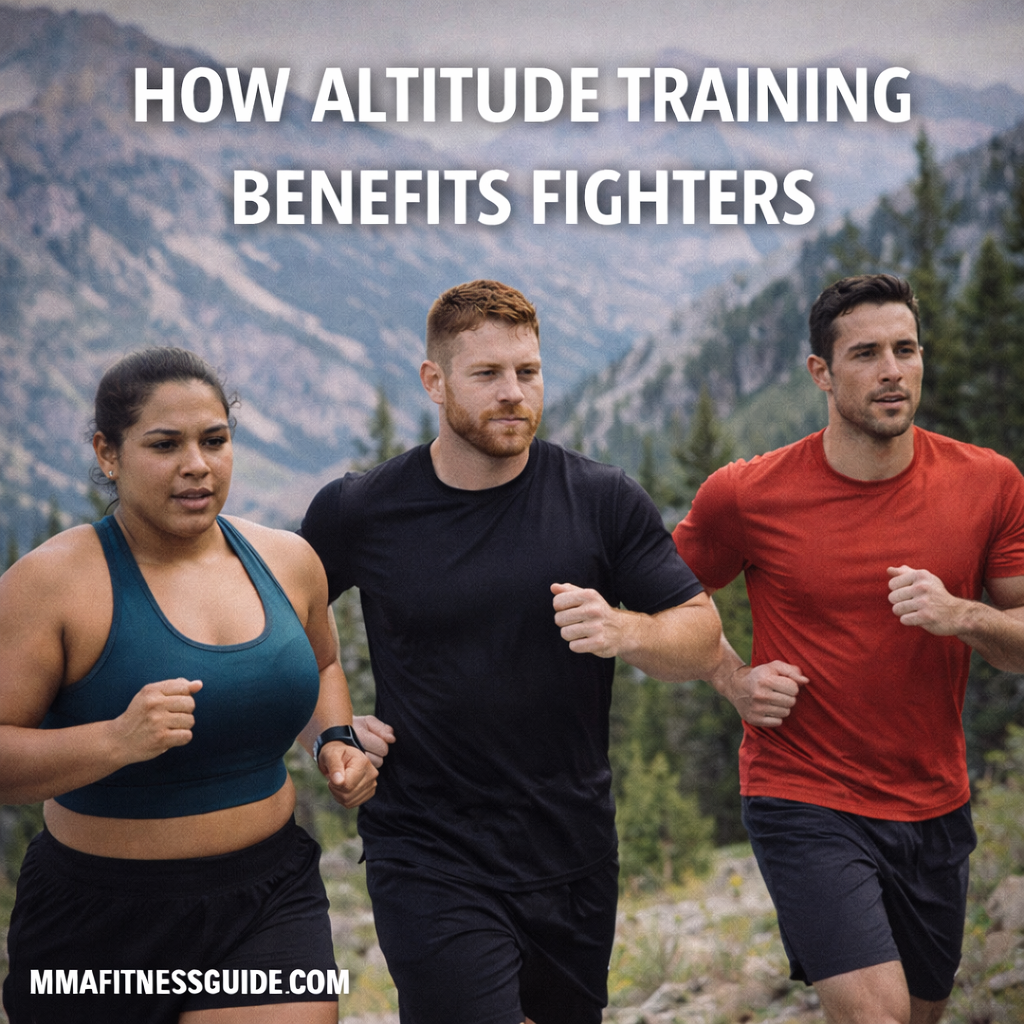
Altitude training has long been associated with endurance athletes, but it’s increasingly used by MMA fighters looking to improve conditioning, recovery, and mental toughness. Training at altitude introduces unique stressors that can enhance performance when applied correctly — and cause setbacks when misunderstood.
This article explains how altitude training works, why it can benefit MMA fighters, and how to use it safely and effectively.
What Is Altitude Training?
Altitude training involves exercising at elevations typically above 6,000 feet where oxygen availability is lower than at sea level.
This reduced oxygen environment forces the body to adapt by:
- Improving oxygen efficiency
- Increasing red blood cell production
- Enhancing aerobic capacity
- Strengthening respiratory muscles
For fighters, these adaptations can translate into improved endurance and recovery.
Why Oxygen Efficiency Matters in MMA
MMA is not a steady-state endurance sport. It demands repeated bursts of high output with limited recovery time.
Better oxygen efficiency helps fighters:
- Recover faster between exchanges
- Maintain output late in rounds
- Control breathing under pressure
- Reduce fatigue-induced mistakes
- Stay composed in high-stress moments
Altitude training targets the systems responsible for these outcomes.
Physiological Benefits of Altitude Training for Fighters
Increased Red Blood Cell Production
One of the most well-known benefits is increased red blood cell count.
This leads to:
- Improved oxygen delivery to muscles
- Greater aerobic capacity
- Enhanced recovery between rounds
These adaptations can improve gas tank efficiency when returning to sea level.
Improved Aerobic Base
A strong aerobic base supports recovery between explosive efforts.
Altitude training can help fighters:
- Lower heart rate at given workloads
- Recover faster between scrambles
- Sustain pressure-based fighting styles
- Maintain clarity under fatigue
A better aerobic system supports every other energy system.
Respiratory Muscle Strength
Breathing becomes more challenging at altitude.
This can strengthen:
- Diaphragm function
- Breathing efficiency
- Breath control under stress
For MMA fighters, controlled breathing can be the difference between composure and panic.
Mental Benefits of Altitude Training
Altitude training is mentally demanding.
Fighters often report:
- Increased mental toughness
- Improved focus under discomfort
- Greater confidence in conditioning
- Better stress tolerance
Training in a challenging environment builds confidence that carries into competition.
How Altitude Training Translates to Fight Performance
When fighters return to lower elevations, they may experience:
- Improved conditioning perception
- Faster recovery between rounds
- Reduced breathing panic
- Better endurance late in fights
These benefits are most noticeable when altitude training is planned and timed correctly.
Common Altitude Training Methods for MMA Fighters
Training at High Elevation
This involves traveling to and training at altitude locations.
Pros include:
- Natural environmental exposure
- Full adaptation across systems
- Strong mental conditioning benefits
Cons include logistical challenges and initial performance drops.
Live High, Train Low
This method involves living at altitude while training at lower elevations.
Benefits include:
- Maintaining training intensity
- Gaining altitude adaptations
- Reducing overtraining risk
This approach is ideal but not accessible to everyone.
Simulated Altitude Tools
Some fighters use altitude masks or chambers.
Important considerations:
- Masks restrict airflow, not oxygen content
- Benefits are limited compared to true altitude
- Best used cautiously and short-term
Simulated tools are supplements, not replacements.
Risks and Common Mistakes
Altitude training is not always beneficial if misused.
Common mistakes include:
- Training too hard too soon
- Ignoring recovery needs
- Staying at altitude too close to fight day
- Expecting immediate performance gains
- Using altitude to compensate for poor conditioning
Poor planning can lead to overtraining and illness.
Who Should and Shouldn’t Use Altitude Training
Altitude training may benefit fighters who:
- Have a solid conditioning base
- Compete in longer bouts
- Struggle with late-round fatigue
- Have access to proper recovery
It may not suit fighters who:
- Are new to structured conditioning
- Have respiratory or cardiovascular issues
- Are already overtrained
- Are close to competition with no adaptation time
Individual response varies.
How Long Altitude Training Takes to Work
Adaptations are not immediate.
Typical timelines include:
- Initial fatigue in the first 3–7 days
- Gradual adaptation over 2–3 weeks
- Peak benefits appearing after return to sea level
Short exposure provides limited benefit.
Integrating Altitude Training Into a Fight Camp
Altitude training should support the camp — not dominate it.
Best practices include:
- Scheduling altitude phases early in camp
- Reducing intensity during initial exposure
- Monitoring recovery and sleep closely
- Returning to sea level well before fight week
The goal is adaptation, not exhaustion.
Altitude Training vs Traditional Conditioning
Altitude training enhances conditioning — it doesn’t replace it.
Fighters still need:
- Skill-based conditioning
- Sport-specific intervals
- Strength and power work
- Recovery-focused programming
Altitude is an amplifier, not a shortcut.
Final Thoughts
Altitude training can offer real benefits for MMA fighters when used intentionally and strategically. Improved oxygen efficiency, aerobic capacity, and mental resilience can all translate to better performance — especially late in fights.
However, altitude training is not a magic solution. It requires planning, patience, and respect for recovery. When integrated properly, it can be a powerful tool in a fighter’s conditioning arsenal.