Introduction
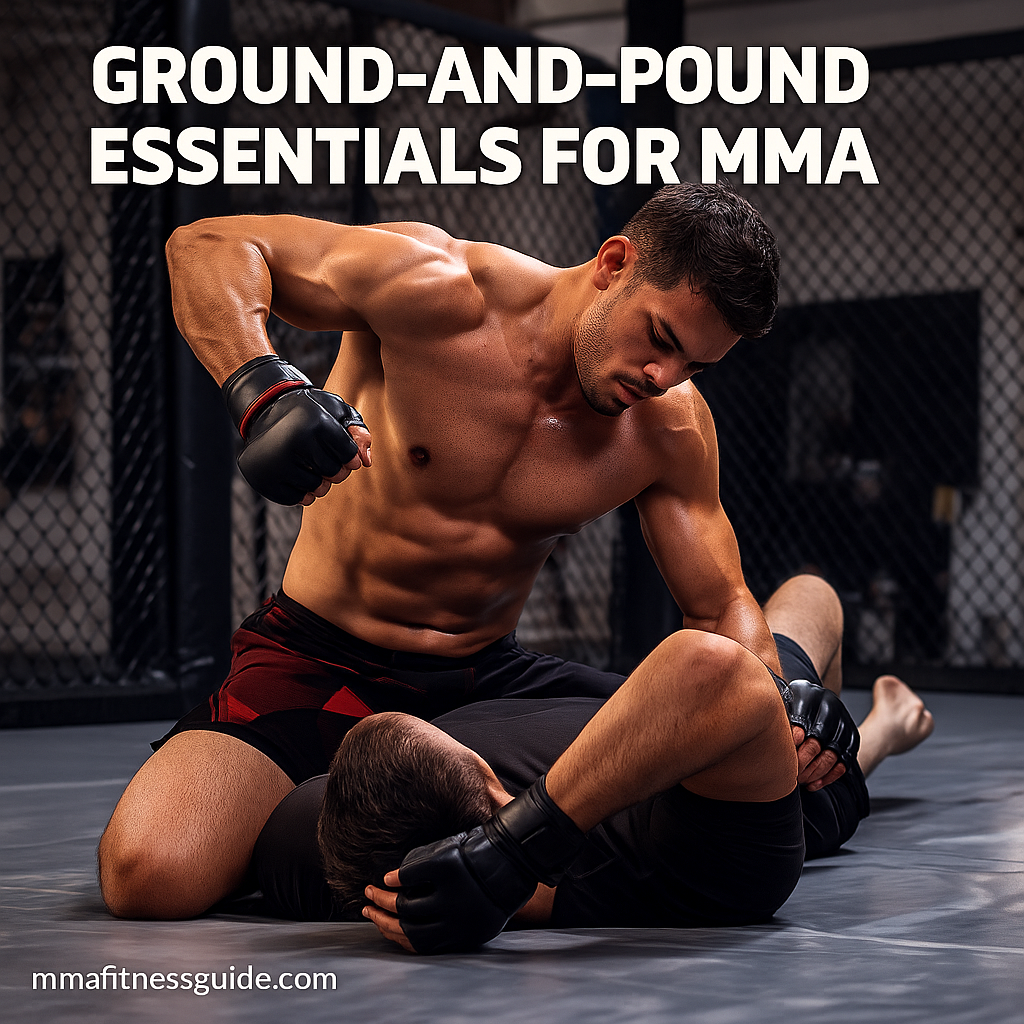
Ground-and-pound is one of the defining skills of MMA. It blends grappling control with striking power, allowing fighters to deal damage, force openings, and finish fights. But effective ground-and-pound isn’t about wild punches — it’s about control, posture, precision, and timing.
Whether you’re a beginner learning top control or an experienced fighter sharpening your finishing ability, these essentials will help you strike safely and effectively from dominant positions.
Why Ground-and-Pound Matters in MMA
A strong ground-and-pound game allows fighters to:
- deal damage from safe positions
- force opponents to expose their back or arms
- secure TKOs
- control rounds for scoring
- blend grappling and striking seamlessly
- transition to submissions more easily
Fighters who master it become dangerous from anywhere on top.
1. Establish Strong Top Position First
Ground-and-pound only works when you can stay balanced and stable.
The three most reliable positions:
1. Full Mount
- best finishing position
- heavy hips make escape difficult
- both hands free to strike
2. Side Control
- strong pressure
- knees and elbows create barriers
- great for transitioning into crucifix or mount
3. Half Guard (Top)
- safe, stable
- excellent for elbows
- high control with shoulder pressure
If you don’t have control, you don’t strike.
2. Posture Is the Foundation of All Ground-and-Pound
Without posture, your strikes will be weak — and you’ll be easy to sweep.
Key posture principles:
- back straight, head up
- hips heavy and connected to opponent
- one hand posted when needed
- avoid leaning too far forward
Good posture = powerful strikes + strong base.
3. Use Your Hips and Weight, Not Just Your Arms
New fighters often swing punches using only upper-body power.
Advanced fighters generate power through:
- dropping body weight
- shifting hips
- rotating shoulders
- using gravity
You’re not just punching — you’re smashing through angles and pressure.
4. Mix Strikes to Create Openings
Ground-and-pound is about strategy, not just damage.
Mix:
- straight punches
- hammerfists
- elbows
- shoulder strikes
- body shots
Each strike forces the opponent to defend differently, creating openings.
Example:
Body shots → opponent drops elbows → open head shots.
Elbows → opponent turns → opens back exposure.
5. Elbows Are Your Most Effective Tool
Elbows deliver:
- cutting power
- short, sharp force
- low risk of injury to your own hand
- great control in tight positions
Best places for elbows:
- mount
- half guard
- side control
- crucifix
Short-range, safe, and high damage — elbows win fights.
6. Strike to Advance, Don’t Advance to Strike
Beginners often rush to mount and then strike.
Skilled fighters strike to advance:
- small punches force the guard to open
- shoulder pressure opens half guard passes
- hammerfists force the opponent to turtle
- body shots force reactions you can follow
Ground-and-pound makes passing easier — and passing makes striking better.
7. Control Their Hands
If the opponent can frame or grab your wrists, you lose striking power.
Use:
- cross-face pressure
- wrist control
- underhooks
- head position
- chest-to-chest pressure
Break their frames before attacking.
You can’t ground-and-pound someone who controls your hands.
8. Avoid Overcommitting and Losing Balance
Many inexperienced fighters swing too big and get swept.
Avoid:
- reaching too far
- leaning past your centerline
- punching while your hips are high
- striking while off-balance
If you fall into a submission attempt, your strikes were too reckless.
Control first, damage second.
9. Use the Cage to Your Advantage
Fighting near the fence changes ground-and-pound options.
From top:
- pin their head against the cage
- trap them so they can’t hip escape
- posture higher for long-range punches
- cut angles using knee-on-belly
The cage turns top pressure into a trap.
10. Blend Submissions With Ground-and-Pound
Strike to create submissions — and threaten submissions to open strikes.
Common transitions:
- mount → arm triangle
- half guard → kimura
- side control → Americana
- turtle → rear naked choke
If your opponent only fears strikes, submissions become easier.
If they only fear submissions, strikes land clean.
Danger comes from blending both.
11. Keep Breathing and Manage Your Pace
Ground-and-pound is exhausting.
Pacing tips:
- throw in combinations, not flurries
- rest between bursts while keeping control
- use your weight to conserve energy
- strike with efficiency, not desperation
Smart fighters maintain pressure without drowning themselves in fatigue.
12. Protect Yourself the Entire Time
Even on top, you can still get:
- up-kicked
- elbowed
- swept
- caught in submissions
Keep your:
- chin tucked
- posture solid
- hips heavy
- arms safe when transitioning
A controlled fighter is a safe fighter.
Final Thoughts
Ground-and-pound is one of MMA’s most devastating tools — but only when applied with technique, control, and strategy. When you combine dominant positions, strong posture, smart strike selection, and constant pressure, you become dangerous from every top position.
Master the fundamentals, stay patient, and let your technique do the damage.