
The Case for Training Outdoors

A diverse group of people training outdoors in a park, including women and a man performing strength and conditioning exercises.
Outdoor group fitness training highlights the physical and mental benefits of exercising outside.

Training doesn’t have to be confined to a gym. While indoor workouts have their place, outdoor training offers unique physical and mental benefits that many people overlook. From improved motivation to real-world strength gains, exercising outside can elevate your fitness routine and keep training fresh long term.

This article breaks down why outdoor training deserves a regular spot in your lifestyle and how to make the most of it.

Continue reading “The Case for Training Outdoors”

Why Fitness Is a Lifelong Practice

People of different ages exercising together outdoors, representing fitness as a lifelong practice that supports health, strength, and well-being over time.
People of different ages stay active together, illustrating why fitness is a lifelong practice that supports health and resilience.

Fitness isn’t a 30-day challenge, a short-term goal, or something you “finish.” It’s a lifelong practice that evolves with your body, priorities, and circumstances. People who stay active for decades don’t do so because they’re always motivated—they do it because fitness becomes part of who they are and how they live.

This article explains why fitness works best as a lifelong practice, how mindset matters more than intensity, and how shifting your perspective can help you stay active at every stage of life.

Continue reading “Why Fitness Is a Lifelong Practice”

MMA: Keep Going When Life Gets Busy

Tired MMA athlete resting in a gym while others train, representing staying consistent with MMA training when life gets busy.
An MMA athlete pushes through fatigue, symbolizing staying committed to training even when life gets busy.

Life doesn’t slow down just because you train MMA. Work deadlines, family responsibilities, injuries, travel, and mental fatigue all compete for time and energy. Many athletes don’t quit MMA because they lose passion—they stop because life gets busy and training feels impossible to maintain.

This article explains how to keep going with MMA when life gets busy, offering realistic strategies to stay consistent, motivated, and mentally balanced without burning out or feeling guilty.

Continue reading “MMA: Keep Going When Life Gets Busy”

Simple Meal Rituals That Reduce Stress

A calm couple practicing mindful eating at home, showing simple meal rituals that reduce stress and support relaxation.
A relaxed meal ritual helps reduce stress and create a calmer, more intentional eating experience.

Meals are more than just fuel—they’re daily opportunities to slow down, reset, and support mental well-being. In a fast-paced world where eating often happens distracted, rushed, or on the go, simple meal rituals can significantly reduce stress and improve how you feel throughout the day.

This article explores practical, low-effort meal rituals that help calm the nervous system, improve digestion, and create a healthier relationship with food—without requiring strict diets or complicated routines.

Continue reading “Simple Meal Rituals That Reduce Stress”

MMA: Rebound After Burnout

MMA athletes resting after intense training, representing recovery, mental reset, and rebounding after burnout in mixed martial arts.
MMA athletes taking a recovery moment after training, symbolizing the process of rebounding from burnout and restoring motivation.

Introduction

Burnout is common in MMA. The physical grind, constant pressure to improve, weight management, and mental intensity can drain even the most passionate athletes. When burnout hits, motivation fades, performance drops, and training feels heavy rather than rewarding.

Rebounding after burnout isn’t about pushing harder—it’s about resetting intelligently and rebuilding your relationship with training.

Continue reading “MMA: Rebound After Burnout”

Lessons From Legendary Coaches

MMA fighter receiving guidance from experienced coaches inside a training gym, illustrating mentorship, leadership, and coaching wisdom.
An MMA athlete receiving instruction from experienced coaches, highlighting the impact of mentorship and leadership in combat sports.

Introduction

Behind every great fighter stands a great coach. While athletes often receive the spotlight, legendary coaches shape careers, cultures, and entire eras of combat sports. Their influence extends beyond techniques and tactics—great coaches teach mindset, discipline, and resilience.

Studying lessons from legendary coaches offers valuable insight not only for fighters, but for anyone seeking long-term growth, leadership, and consistency.

Continue reading “Lessons From Legendary Coaches”

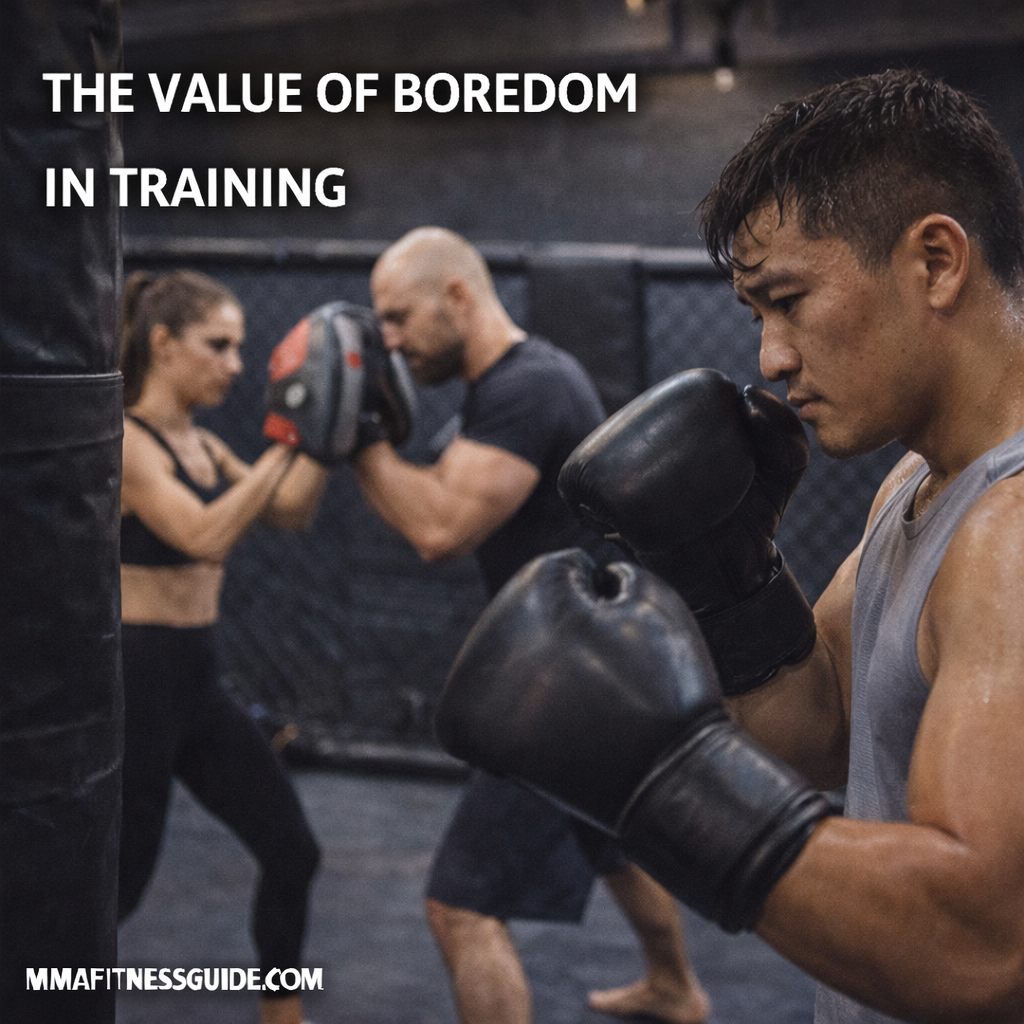
The Value of Boredom in Training

MMA athletes repeating fundamental training drills in a gym, illustrating how consistency and routine build discipline and long-term skill.
MMA athletes training fundamentals through repetition, showing how boredom in training builds discipline, focus, and long-term performance.

Introduction

In a world obsessed with constant stimulation, boredom is often seen as something to avoid. In training, however—especially in MMA, fitness, and skill development—boredom is not a flaw. It’s a feature. Some of the most meaningful progress happens during repetitive, unglamorous work that feels anything but exciting.

Understanding the value of boredom in training can change how you approach consistency, discipline, and long-term improvement.

Continue reading “The Value of Boredom in Training”

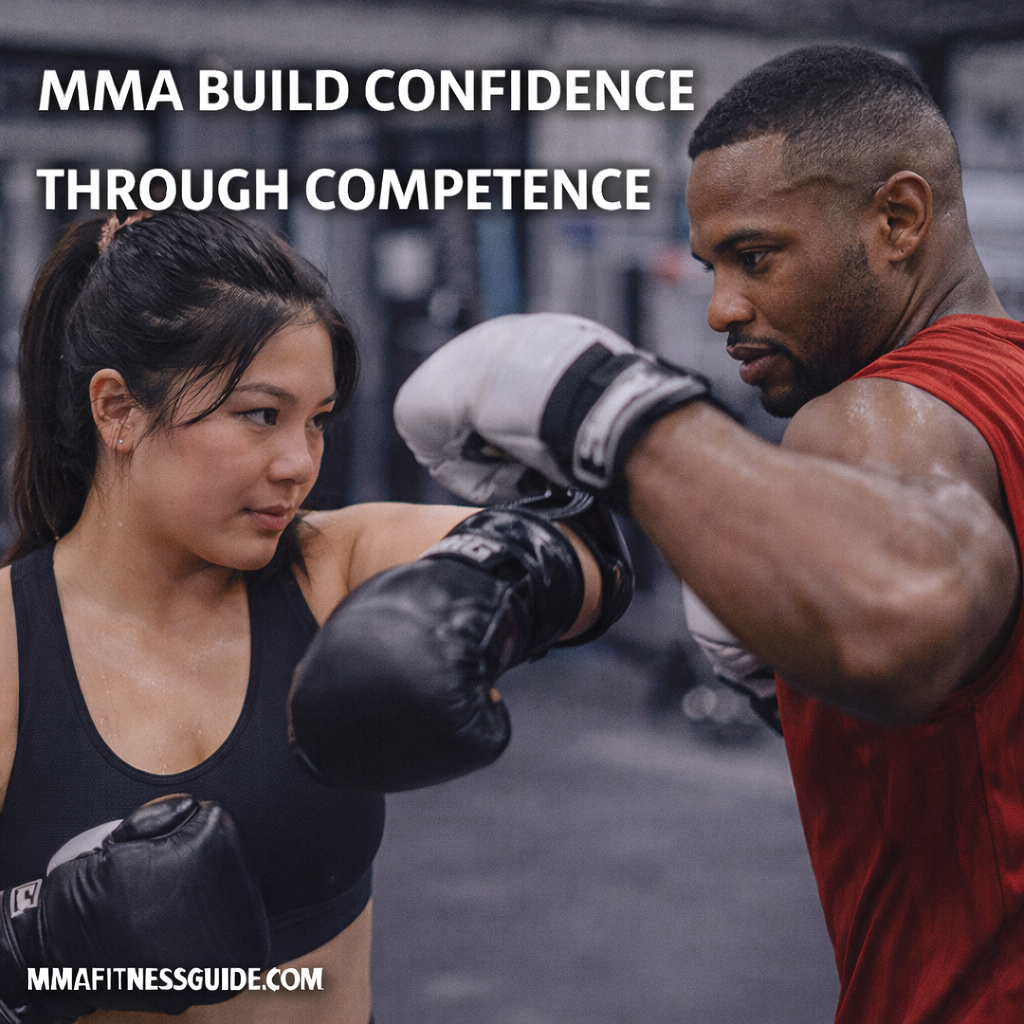
MMA: Build Confidence Through Competence

MMA athletes sparring with focus and control in a gym, illustrating how skill development and repetition build real confidence.
MMA athletes sparring with composure and precision, showing how confidence is built through competence and consistent training.

Introduction

Confidence in MMA doesn’t come from hype, trash talk, or pretending to be fearless. Real confidence is built through competence—the quiet assurance that comes from knowing you’ve put in the work and developed real skill. Fighters who rely on external validation often crumble under pressure, while those grounded in preparation remain steady.

Building confidence through competence creates durable belief that holds up in training, sparring, and competition.

Continue reading “MMA: Build Confidence Through Competence”

Your First Fitness Challenge: 30-Day Plan

Beginner athletes performing forward lunges in a gym as part of a 30-day fitness challenge program.
Beginner athletes performing lunges during a 30-day fitness challenge focused on consistency and strength.

Introduction

Starting a fitness journey can feel overwhelming, especially if you’re unsure where to begin. A 30-day fitness challenge provides structure, motivation, and a clear starting point without requiring perfection. The goal is not extreme transformation—it’s building momentum, consistency, and confidence.

This beginner-friendly 30-day plan focuses on simple habits, manageable workouts, and gradual progress to help you establish a sustainable fitness routine.

Continue reading “Your First Fitness Challenge: 30-Day Plan”

Saying No: Protecting Your Training Time

Athletes setting boundaries by saying no to distractions in order to protect their training time and fitness goals.
Athletes prioritizing their training by setting boundaries and saying no to distractions.

Introduction

Training time is one of the most valuable resources an athlete has. Between work, family, social obligations, and unexpected distractions, it’s easy for training to get pushed aside. For fighters and fitness-focused individuals, learning to say no is not selfish—it’s necessary.

Protecting your training time is about respecting your goals, maintaining consistency, and creating boundaries that support long-term progress.

Continue reading “Saying No: Protecting Your Training Time”