Your trusted source for MMA fitness, nutrition, and fighter-level health.
Category: Famous Fighters & History
Famous Fighters & History highlights the people, moments, and eras that shaped MMA. This category explores legendary careers, historic fights, coaching influences, and how the sport has evolved over time.
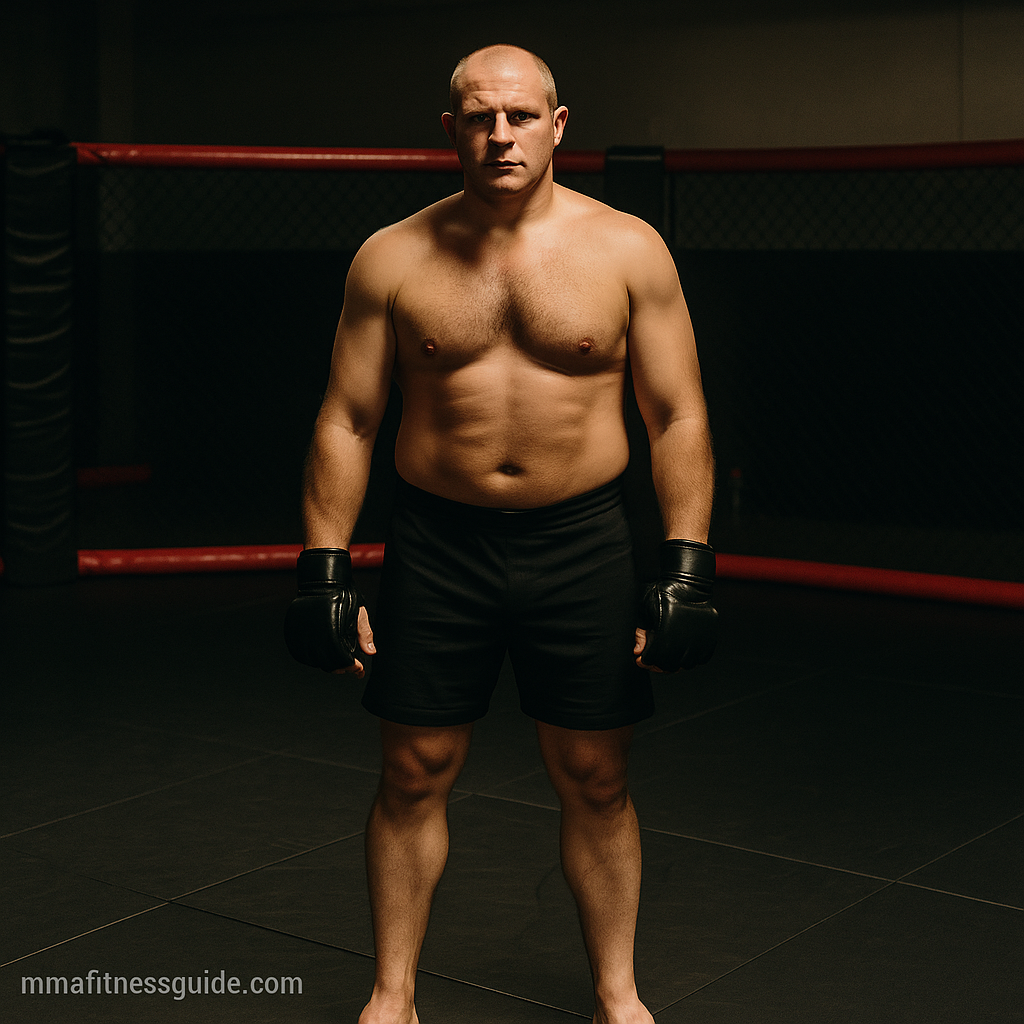
Male MMA athlete standing calmly after training, representing discipline and the legacy of the Pride era.
The Calm Before the Storm
In the early 2000s, when MMA was still carving its identity on the global stage, one man embodied the perfect blend of power, composure, and humility — Fedor Emelianenko.
During his dominant run in PRIDE Fighting Championships, Fedor earned the title “The Last Emperor”, defeating giants, strikers, and submission specialists alike — all while barely showing emotion.
He wasn’t flashy, he wasn’t loud — but inside the ring, he was absolute chaos wrapped in calm.
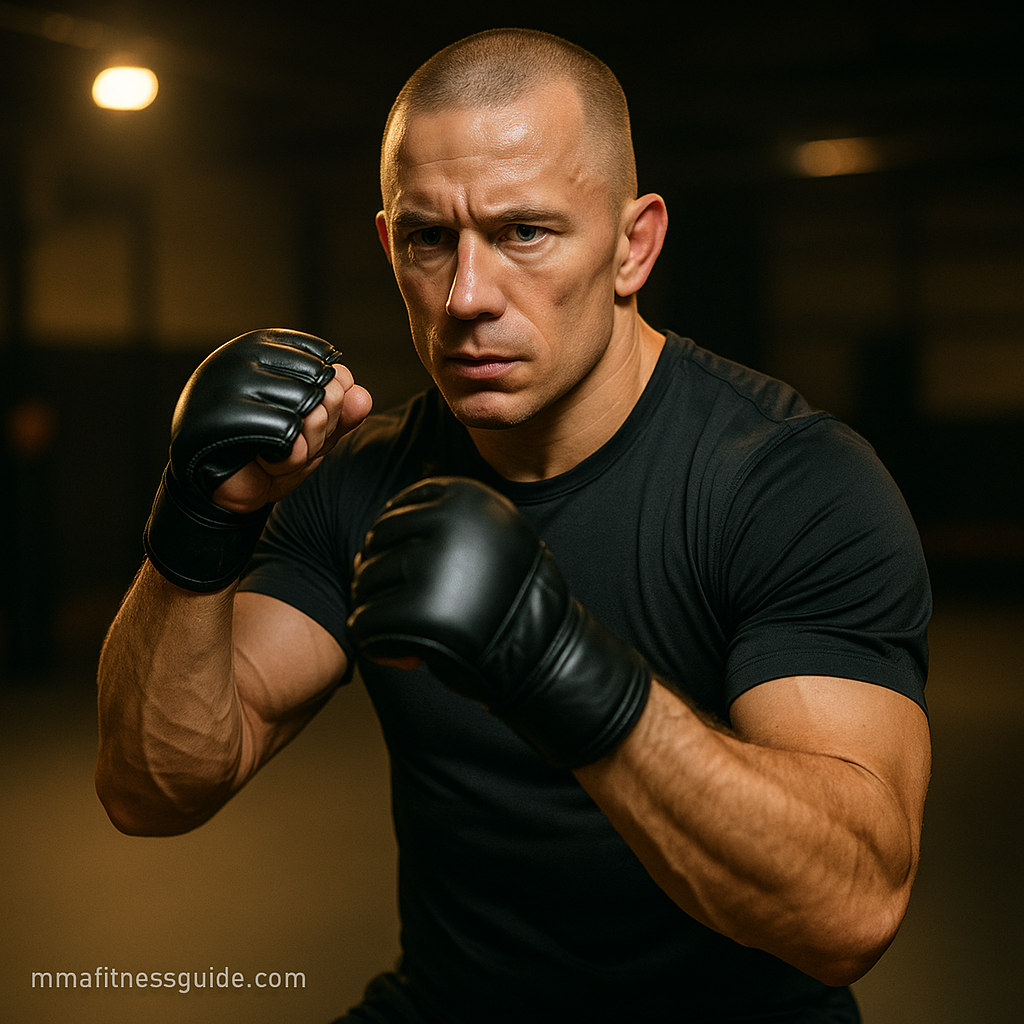
MMA fighter inspired by Georges St-Pierre’s discipline and precision, training under a warm spotlight symbolizing focus and mastery.
The Perfect Balance of Power and Precision
When people talk about greatness in MMA, one name always rises to the top: Georges “Rush” St-Pierre. Known for his unmatched discipline, calculated fight IQ, and respect for the martial arts, GSP didn’t just dominate opponents — he defined professionalism in the sport.
Over his legendary career, he became the embodiment of balance: strength and humility, aggression and control, confidence and respect.
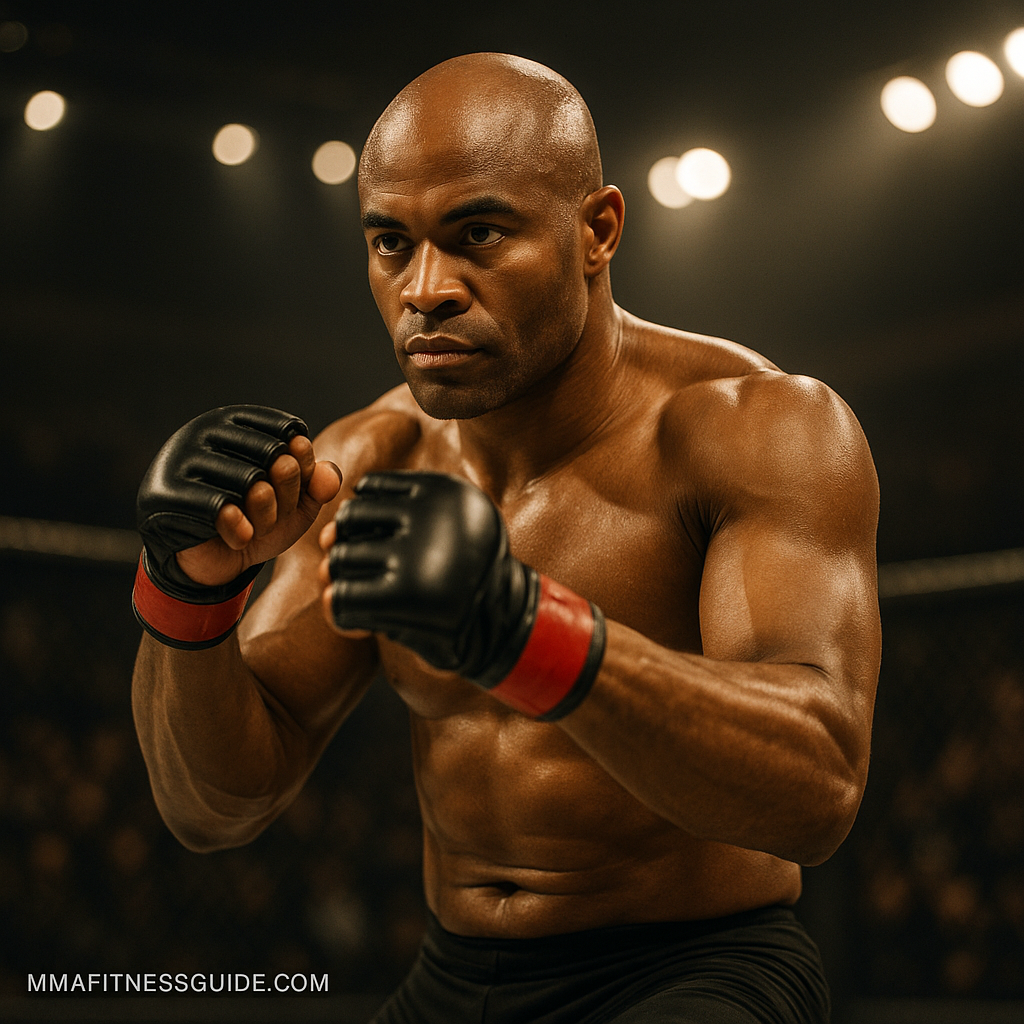
Cinematic image of an MMA fighter inspired by Anderson Silva’s calm precision and mastery inside the cage.
The Spider’s Story: From Humble Beginnings to MMA Greatness
Few fighters have defined an era quite like Anderson “The Spider” Silva. Known for his lightning reflexes, fluid striking, and almost supernatural composure, Silva built a career that blurred the line between art and combat.
His story is not just one of victories and knockouts — it’s a story of discipline, adaptation, and an unbreakable belief in self-expression through martial arts.
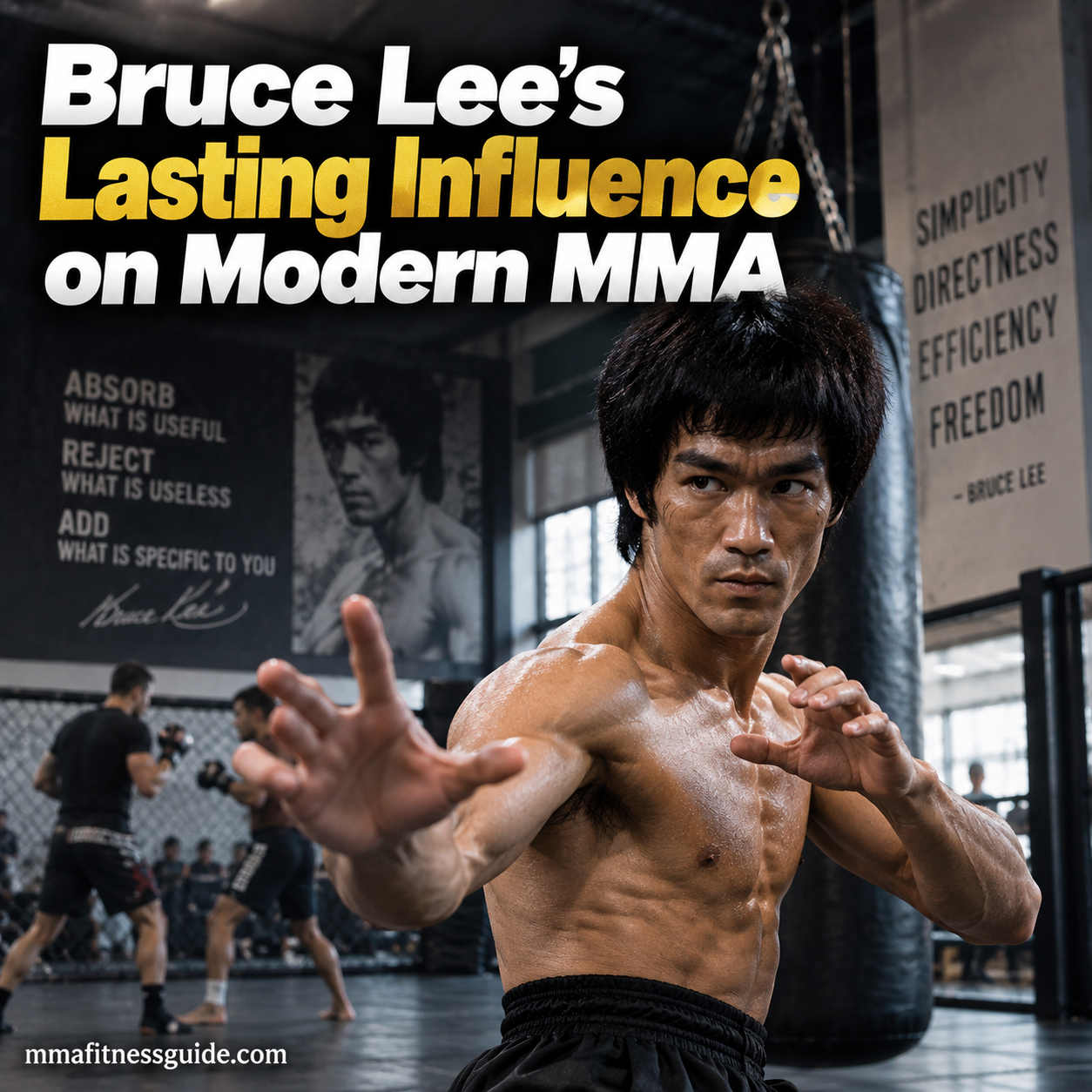
Bruce Lee’s emphasis on adaptability, cross-training, and efficient movement helped influence principles that remain central to modern MMA.
Decades before MMA fighters routinely combined boxing, wrestling, submissions, kicks, and strength training, Bruce Lee was already questioning why martial artists should be limited to a single style.
Rather than treating martial arts as rigid systems, Lee emphasized adaptability, efficiency, physical conditioning, and using techniques because they worked—not simply because tradition demanded them. Through his development of Jeet Kune Do and his broader approach to training, he promoted a mindset that closely resembles the cross-training philosophy at the heart of modern MMA.
Bruce Lee never competed in MMA as we know it today, but his influence can still be recognized in the way fighters train, coaches approach skill development, and athletes combine techniques from different disciplines. His legacy is less about claiming he invented MMA and more about how early he embraced many of the ideas that would eventually become central to the sport.