Your trusted source for MMA fitness, nutrition, and fighter-level health.
Category: Famous Fighters & History
Famous Fighters & History highlights the people, moments, and eras that shaped MMA. This category explores legendary careers, historic fights, coaching influences, and how the sport has evolved over time.
A focused MMA athlete featured alongside the title celebrating some of the sport’s most stunning comebacks.
Introduction
MMA is known for its unpredictability, but some moments go beyond upsets — they become legendary comebacks. These are the fights where athletes were outstruck, outgrappled, or nearly finished, only to dig deep and turn everything around. Comebacks remind fans why MMA is so exciting and why fighters are respected for their mental toughness as much as their physical skill.
Below are some of the most iconic comebacks in MMA history, shown in simple terms so new fans and longtime followers alike can appreciate what made them special.
A dramatic collage of four fictional MMA athletes representing the passion and intensity behind the greatest rivalries in MMA history.
Jon Jones and Daniel Cormier brawled at a press event before ever settling their feud inside the cage. Nate Diaz shocked the MMA world by submitting Conor McGregor, setting up a massive rematch. Chael Sonnen spent months provoking Anderson Silva before coming within minutes of ending one of the sport’s greatest championship reigns.
Moments like these show why a great MMA rivalry can become bigger than any single fight. Championship stakes, contrasting personalities, stylistic matchups, rematches, and genuine personal tension can transform two fighters into opponents whose careers become permanently connected.
From respectful battles between generational greats to feuds fueled by genuine animosity, MMA’s greatest rivalries have sold major events, elevated divisions, created new stars, and produced some of the most memorable moments in the sport’s history.
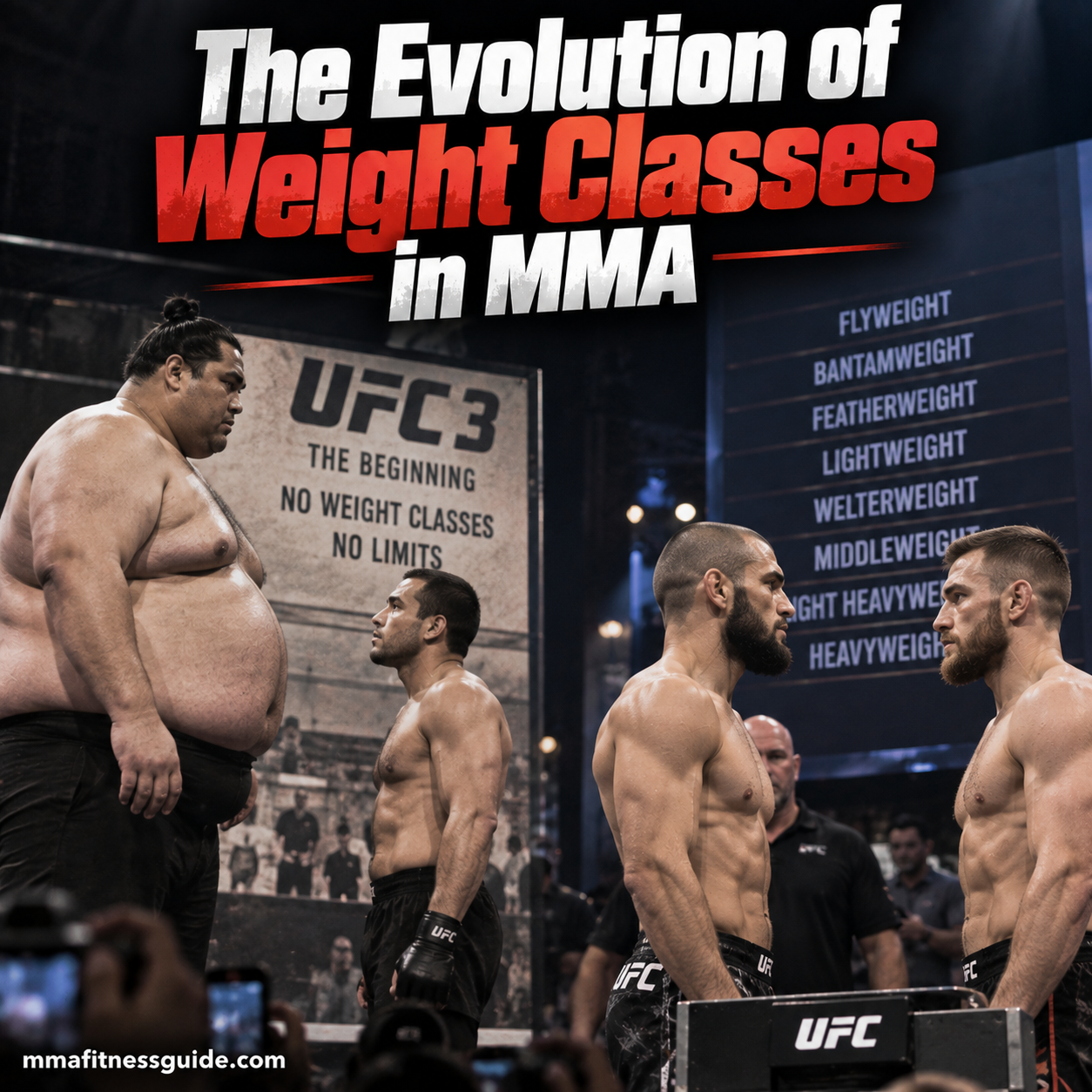
MMA evolved from early openweight contests with extreme size differences to structured weight classes designed to create safer and more competitive matchups.
At UFC 3 in 1994, roughly 200-pound Keith Hackney stepped across the Octagon from Emmanuel Yarborough, a sumo wrestler who weighed well over 600 pounds. A matchup with that kind of size difference would be unimaginable in a major MMA promotion today, but in the sport’s earliest years, it was part of the experiment.
MMA eventually moved away from unrestricted size matchups and toward regulated divisions designed to create fairer, safer competition. From the UFC’s first basic weight categories to today’s flyweight-through-heavyweight structure, that transformation changed matchmaking, championship systems, fighting styles, and even how athletes prepare for competition. It also created a new problem the earliest fighters rarely faced: the increasingly extreme practice of cutting weight to make a division.
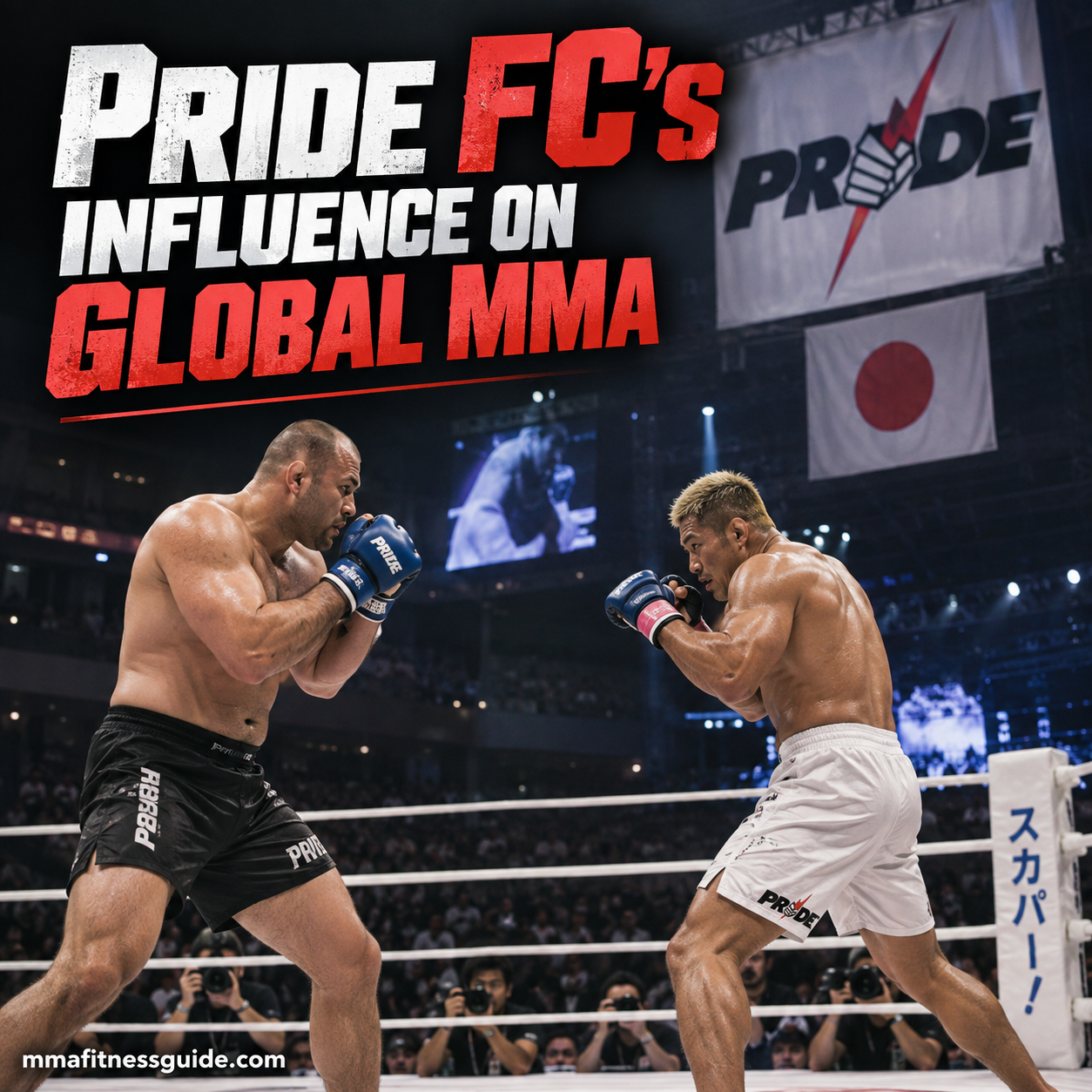
Pride Fighting Championships helped shape modern MMA through its legendary fighters, distinctive rules, and global influence.
Before the UFC became the global powerhouse it is today, tens of thousands of fans were packing Japanese arenas to watch Fedor Emelianenko, Wanderlei Silva, Mirko “Cro Cop” Filipović, and other legends fight under a rule set unlike anything most modern MMA fans see today. Pride Fighting Championships combined elite competition with soccer kicks, grounded knees, elaborate entrances, and an atmosphere that made major events feel larger than life.
From the techniques fighters developed under its aggressive rules to the international stars it introduced to millions of fans, Pride left fingerprints across modern MMA. Its influence can still be seen in fighting styles, matchmaking, event production, and promotions around the world more than two decades after its peak.
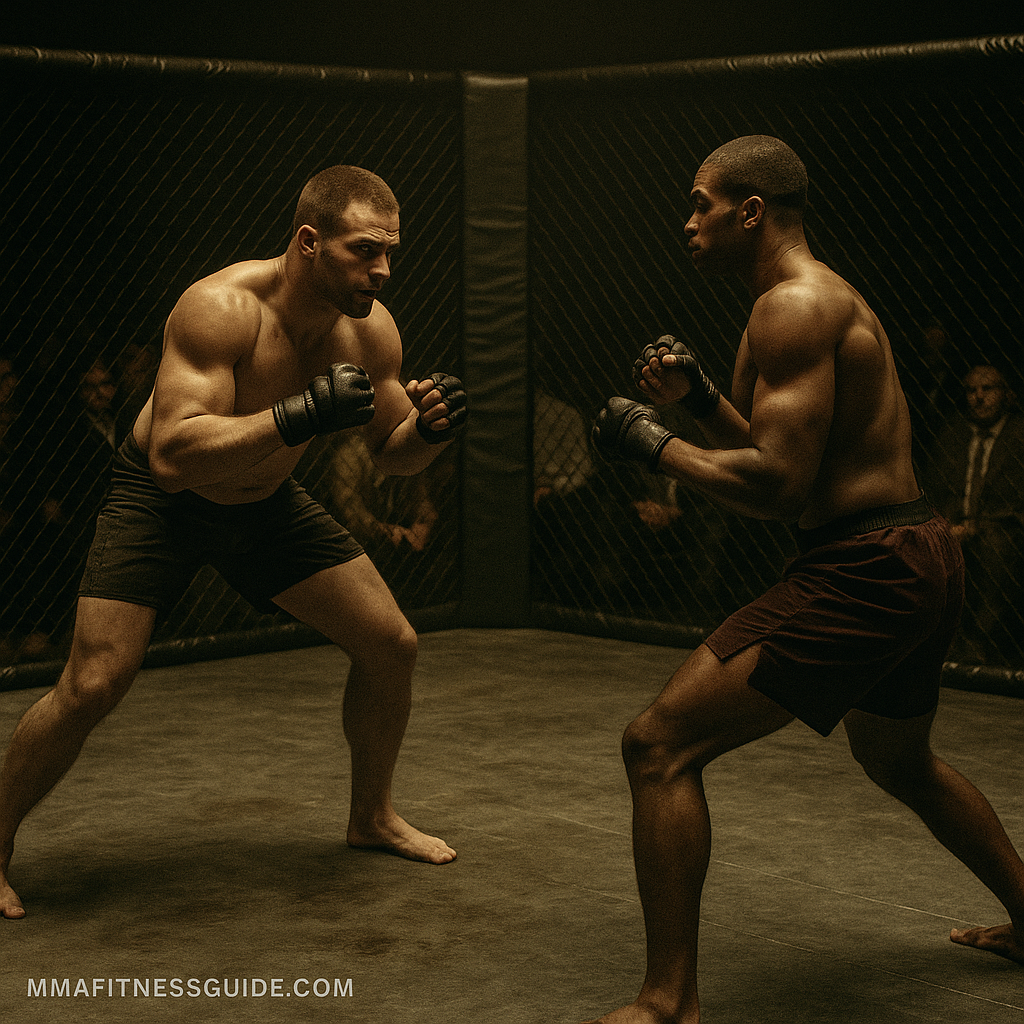
Two fighters face off in a dimly lit octagon, capturing the raw atmosphere and intensity of the early UFC era.
When Chaos Built a Legacy
Before the UFC became the global powerhouse it is today, it was something far more raw — and far more chaotic.
In the early 1990s, the Ultimate Fighting Championship wasn’t about flashy production or million-dollar paydays. It was about one question: “Which martial art is the most effective?”
That simple idea gave birth to a movement that would forever change combat sports.
Male MMA fighter resembling Demetrious Johnson training with speed and precision, symbolizing the art of adaptation in MMA.
The Evolution of a Champion
Demetrious “Mighty Mouse” Johnson isn’t just one of the most successful fighters in MMA history — he’s one of the most complete.
Known for his incredible speed, technical precision, and fight IQ, Johnson’s career is a masterclass in adaptation.
While others rely on raw power or single-style dominance, Demetrious built his legacy by mastering every range, every transition, and every second inside the cage.
Female MMA fighter demonstrating sharp striking technique and focus, inspired by Valentina Shevchenko’s precision style.
Valentina Shevchenko doesn’t need to throw twenty punches to create an opening. Sometimes, a small adjustment in distance, a subtle change in rhythm, or a perfectly timed counter is enough to turn an opponent’s attack against them.
Watch her striking closely, and you’ll notice something that casual viewers often miss: much of the work happens before she throws a punch or kick.
She positions her feet, measures distance, observes reactions, and waits for an opportunity. When the opening appears, her movements are compact and deliberate.
Known as “The Bullet,” Shevchenko has built her MMA career around technical striking, disciplined defense, and the ability to adapt to different opponents. Her background in Muay Thai and kickboxing gives her a particularly useful striking foundation, but her effectiveness comes from how she combines those skills with distance management, timing, and an understanding of MMA’s wider demands.
For fighters looking to improve their stand-up game, studying Shevchenko offers practical lessons that can be applied in sparring, pad work, and technical drills.
Male MMA fighter training alone in a gym, focusing on reach, precision, and strategic movement.
The Architect of Controlled Chaos
Few fighters in MMA history have blended creativity, athleticism, and control quite like Jon “Bones” Jones.
Standing 6’4″ with an 84.5-inch reach, Jones turned his natural advantages into a masterclass in distance management and unpredictable striking.
But beyond his physical gifts lies the true reason for his dominance — his strategic mind and ability to adapt mid-fight like few others in the sport’s history.
Male MMA fighter practicing solo drills in a gym, highlighting discipline, focus, and mental preparation before competition.
The Eagle’s Path to Dominance
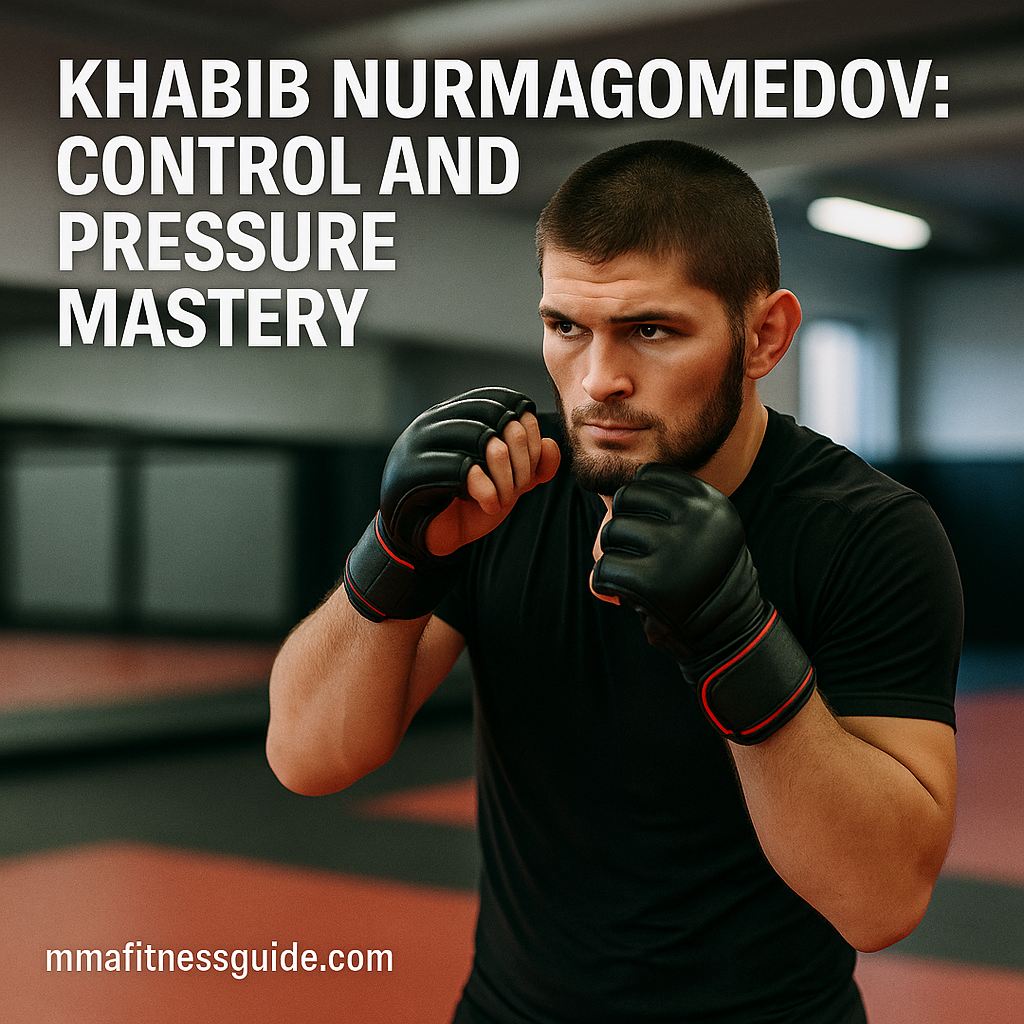
Few fighters in MMA history have embodied control and composure quite like Khabib Nurmagomedov. Born in the mountains of Dagestan, Khabib developed his fighting instincts wrestling under his father’s guidance from the age of eight — even famously wrestling a bear as a boy.
By the time he entered the UFC, his blend of grappling pressure, positional dominance, and relentless mindset had turned him into one of the most complete fighters the sport had ever seen.
Male MMA fighter standing confidently after training, representing power, precision, and self-belief.
The Rise of a Fighting Icon
Few names in combat sports have made an impact like Conor McGregor. Known for his sharp left hand, quick wit, and unmatched showmanship, McGregor redefined what it means to be both a fighter and a brand.
From humble beginnings in Dublin to becoming a global superstar, his journey embodies ambition, precision, and fearless self-belief — traits that continue to inspire (and polarize) fans worldwide.