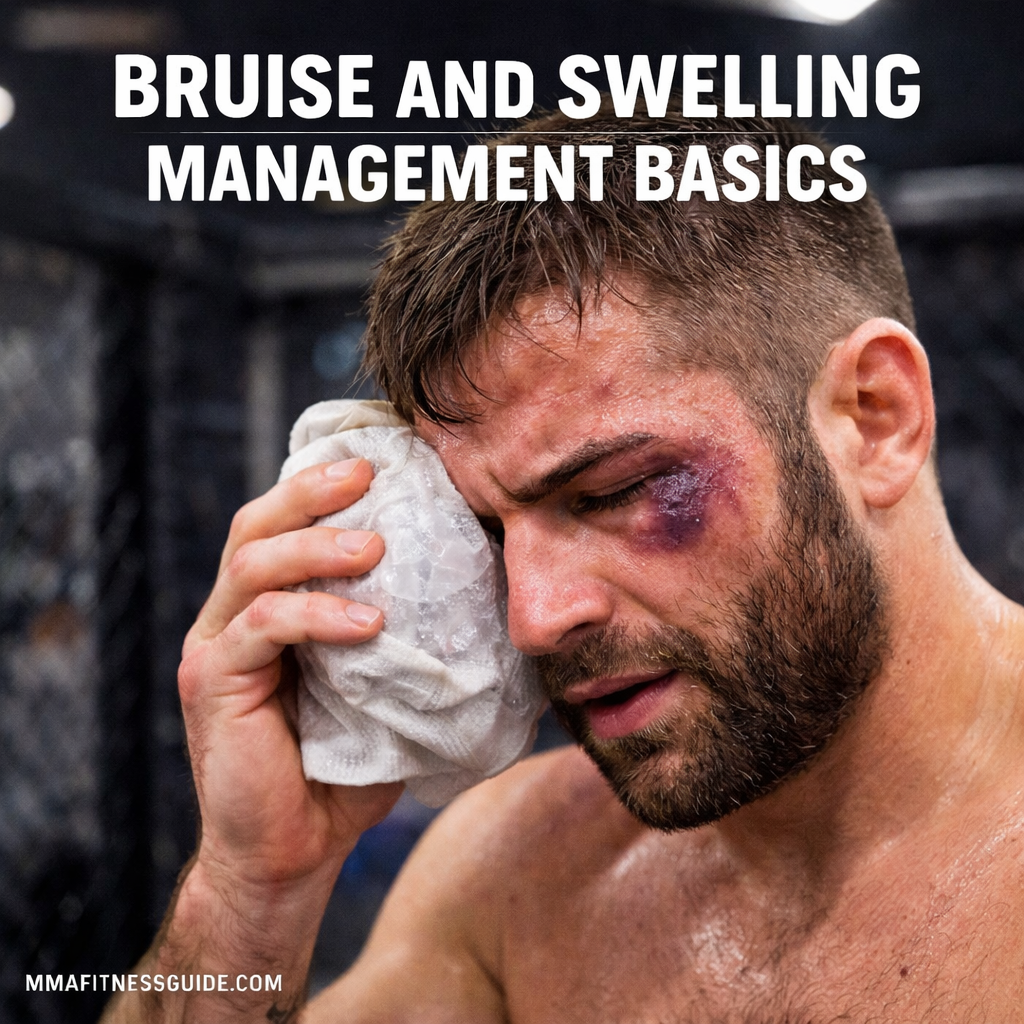
Bruises and swelling are common in MMA, boxing, Muay Thai, wrestling, and other combat sports. Strikes, takedowns, and clinch work all place stress on muscles, blood vessels, and soft tissue. While most bruises are minor, poor management can lead to prolonged pain, stiffness, reduced mobility, and delayed training return.
This guide covers bruise and swelling management basics, explaining what causes them, how to treat them effectively, and when to modify training to support proper recovery.
What Causes Bruising and Swelling in Combat Sports
Bruising occurs when small blood vessels break beneath the skin, allowing blood to pool in surrounding tissue. Swelling is the body’s inflammatory response to injury, increasing fluid flow to protect and repair damaged areas.
Common causes include:
- Direct strikes and impact
- Repeated microtrauma during sparring
- Falls, throws, and takedowns
- Muscle strains and contusions
- Joint stress from grappling
Understanding the cause helps determine the right recovery approach.
Why Proper Management Matters
Ignoring bruises and swelling can turn minor injuries into lingering problems.
Effective management helps:
- Reduce pain and stiffness
- Restore range of motion
- Prevent excessive inflammation
- Shorten recovery time
- Maintain consistent training schedules
Early care is often the difference between missing one session and missing several weeks.
The First 24–48 Hours: Immediate Care
The initial phase after injury is critical for controlling swelling and tissue damage.
Rest and Activity Modification
Reducing stress on the injured area allows inflammation to settle.
Guidelines:
- Avoid impact on the affected area
- Reduce training intensity
- Focus on technique or conditioning that doesn’t aggravate the injury
Cold Therapy
Cold helps limit blood flow and reduces swelling in the early stage.
Best practices:
- Apply ice or cold packs for 15–20 minutes
- Repeat every 2–3 hours
- Always place a cloth between ice and skin
Cold therapy is most effective within the first 48 hours.
Compression and Elevation
Compression
Compression limits fluid buildup and supports injured tissue.
Tips:
- Use elastic wraps or compression sleeves
- Ensure snug but not restrictive fit
- Remove if numbness or tingling occurs
Elevation
Elevating the injured area helps fluid drain away.
When possible:
- Keep the injury above heart level
- Combine elevation with rest and compression
- Use pillows or supports for comfort
Transitioning From Acute to Recovery Phase
After swelling begins to decrease, the focus shifts to circulation and mobility.
Heat Therapy
Heat can be useful once acute inflammation subsides.
Use heat to:
- Increase blood flow
- Reduce muscle tightness
- Improve flexibility
Apply heat for short sessions and stop if swelling increases.
Gentle Movement
Light movement prevents stiffness and promotes healing.
Examples:
- Controlled range-of-motion exercises
- Light stretching
- Low-intensity drills without impact
Nutrition and Hydration Support
Recovery isn’t just physical—it’s nutritional.
Helpful habits include:
- Staying well hydrated
- Eating protein to support tissue repair
- Including anti-inflammatory foods
- Avoiding excessive alcohol during recovery
Proper fueling supports faster healing and reduced inflammation.
Training Adjustments While Bruised or Swollen
Training through pain often slows recovery.
Smart adjustments:
- Avoid direct contact on injured areas
- Focus on technical drilling
- Emphasize cardio or mobility work
- Communicate injuries with coaches
Listening to your body prevents minor injuries from becoming chronic issues.
When to Be Cautious or Seek Medical Advice
Most bruises heal on their own, but some situations require attention.
Red flags include:
- Severe or rapidly increasing swelling
- Extreme pain or loss of function
- Bruising that worsens after several days
- Signs of infection such as redness or warmth
Persistent symptoms should be evaluated by a medical professional.
Common Mistakes in Bruise and Swelling Management
Avoiding these mistakes improves recovery outcomes.
Common errors:
- Applying heat too early
- Ignoring swelling and continuing full training
- Over-icing beyond recommended durations
- Failing to rest injured tissue
Consistency and timing matter more than intensity.
Final Thoughts
Bruise and swelling management is a foundational recovery skill for combat sports athletes. With proper early care, smart training adjustments, and gradual reintroduction of movement, most minor injuries resolve quickly and safely.
Managing bruises correctly keeps fighters healthy, mobile, and ready to train without unnecessary setbacks.