
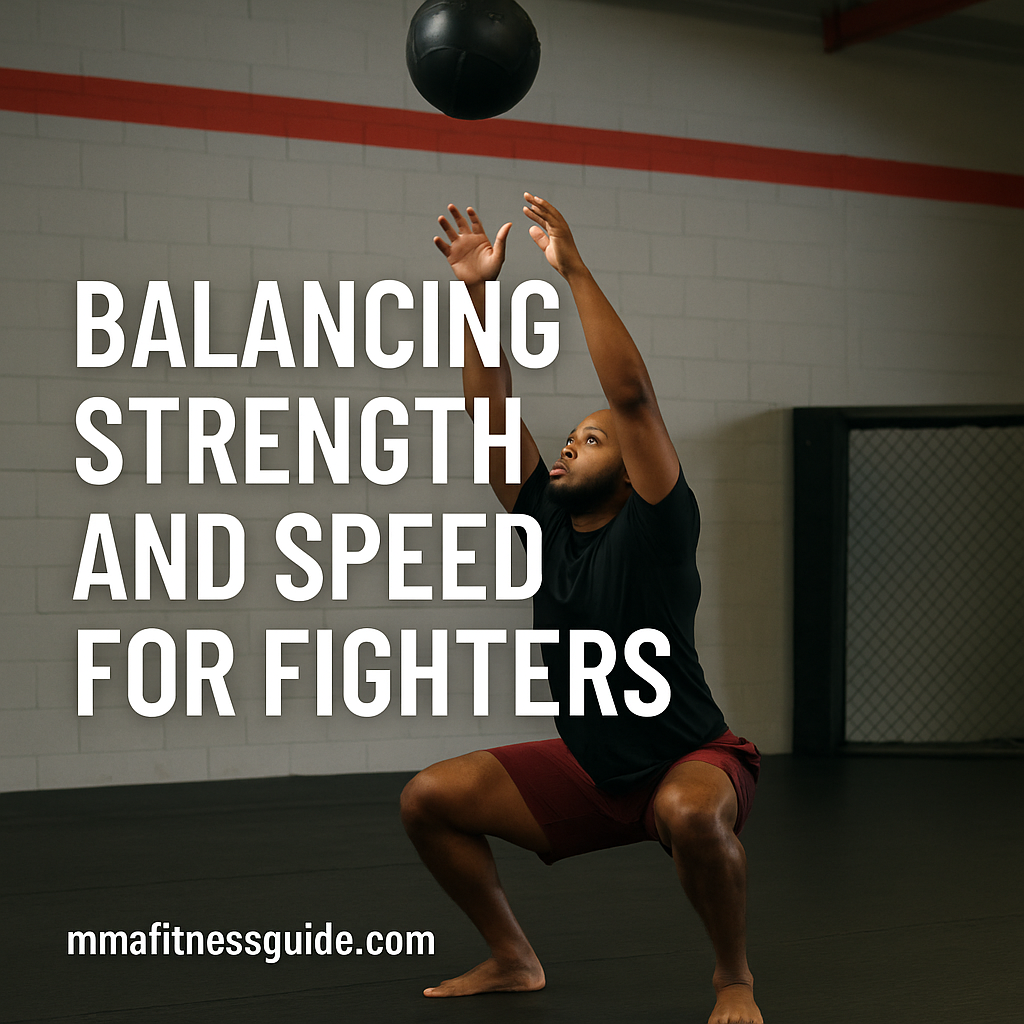
Introduction
In MMA, strength and speed work together. You might be strong, but if you’re slow, opponents can outmaneuver you. And you might be fast, but without strength, your strikes and takedowns won’t carry enough power. The key is to train both — without letting one take away from the other.
Balancing strength and speed isn’t complicated. With the right structure and a few smart adjustments, you can improve both qualities at the same time and feel more explosive in every aspect of your game.
Why Fighters Need Both Strength and Speed
Strength helps you:
- Hit harder
- Control grappling exchanges
- Maintain balance
- Defend takedowns
- Stabilize joints
Speed helps you:
- Move quickly
- React faster
- Slip punches
- Shoot takedowns explosively
- Chain attacks smoothly
When combined, they create true fight power.
Common Mistakes That Slow Fighters Down
Many fighters accidentally sabotage their speed by:
- Lifting too heavy too often
- Doing long, slow workouts
- Skipping explosive drills
- Doing only bodybuilding-style training
- Overtraining and losing sharpness
Strength without speed becomes stiffness.
Speed without strength becomes fragility.
Step 1: Train Strength Using Lower Reps and Good Technique
Strength training for fighters should be simple and efficient.
Focus on:
- Deadlifts
- Squats
- Pull-ups
- Rows
- Bench or push-ups
- Hip thrusts
Best rep range: 3–6 reps
Best sets: 3–5
Rest: 2–3 minutes
Low reps build strength without adding too much fatigue or muscle bulk.
Step 2: Add Explosive Movements to Build Speed and Power
Speed comes from quick, explosive actions.
Useful exercises:
- Box jumps
- Medicine-ball throws
- Sprint intervals
- Explosive push-ups
- Kettlebell swings
- Skater jumps
Keep sets short and crisp — explosiveness drops if you get tired.
Step 3: Lift Heavy on One Day and Move Fast on Another
Don’t mix heavy lifting and high-speed training in the same session.
Instead, split them:
Day 1: Strength
Day 2: Speed + explosive work
Day 3: MMA training
Day 4: Rest or movement
(Repeat as needed)
Your nervous system performs better when each day has one clear focus.
Step 4: Use Contrast Training (Advanced but Effective)
Contrast training helps build strength and speed together.
Example:
- Heavy squat (3 reps)
- Immediately do a jump (3–5 reps)
OR
- Heavy bench (3 reps)
- Immediately do clap push-ups (3–5 reps)
This method teaches your body to use strength more quickly.
Step 5: Stay Mobile to Avoid “Tight Strength”
If you gain strength without mobility, you may feel stiff.
Add:
- Hip mobility
- Thoracic spine rotations
- Shoulder circles
- Light dynamic stretches
- Deep squat holds
Mobile strength is fight-ready strength.
Step 6: Use Footwork Drills for Fight-Specific Speed
Speed isn’t just physical — it’s also mental and technical.
Footwork drills include:
- Quick lateral shuffles
- Step-in/step-out drills
- Cone footwork
- Pivot and angle drills
- Shadowboxing with fast movement
Good footwork makes a fighter feel naturally faster.
Step 7: Monitor Fatigue to Keep Speed Sharp
Speed drops when you’re exhausted.
Avoid:
- Overly long lifting sessions
- High-rep burnout sets
- Back-to-back heavy days
- Too much slow cardio
Speed needs freshness. Protect it.
Step 8: Use MMA Drills to Blend Strength and Speed
The best training prepares you for real fight actions.
Examples:
- Explosive takedown entries
- Fast sprawl-to-shot transitions
- Quick ground scrambles
- Power punching into angle changes
- Controlled explosive pad rounds
These drills connect your strength, speed, and technique.
Step 9: Keep Workouts Short and Focused
More isn’t better — better is better.
Ideal sessions:
- Strength days: 45–60 minutes
- Speed days: 30–45 minutes
- Mixed sessions: 45 minutes
Shorter, sharper training leads to better speed gains.
How You Know You’re Balancing Strength and Speed Correctly
You’re on the right track if:
- You feel more explosive
- You recover quicker
- Your footwork feels lighter
- You hit cleaner and harder
- Your grappling scrambles feel smoother
- You don’t feel overly sore or fatigued
Balance creates improvement without burnout.
Final Thoughts
Fighters perform at their best when strength and speed work together. By structuring your training intelligently — heavy lifting on one day, explosive work on another, and technical MMA training mixed in — you can build power, agility, and durability simultaneously. Keep sessions focused, protect your recovery, and train with intention. Your performance in the gym and in sparring will improve fast.