
MMA: Build a Style Around Your Strengths

Split-image of MMA fighters using striking, grappling, and takedowns, representing how fighters build a style around their individual strengths.
MMA athletes demonstrate different fighting strengths, highlighting how building a personal style improves performance and confidence.

There is no single “perfect” fighting style in MMA. The most successful fighters don’t try to master everything at once—they build a style around their natural strengths. By leaning into what you do best and structuring training around those attributes, you can become more effective, confident, and consistent inside the cage.

This article explains how to build an MMA style around your strengths, identify your natural advantages, and avoid common mistakes that slow development.

Continue reading “MMA: Build a Style Around Your Strengths”


MMA: Avoid Overeating After a Fight

MMA fighter sitting with fast food after a fight, illustrating the challenge of avoiding overeating during post-fight recovery.
An MMA athlete navigates post-fight hunger, highlighting the importance of avoiding overeating to support recovery.

After a fight, it’s common for MMA athletes to feel an intense urge to eat everything in sight. Whether the bout ended in victory or defeat, the combination of adrenaline crash, dehydration, caloric deficit, and emotional release can trigger overeating that leaves fighters feeling bloated, sluggish, and regretful.

This article explains why post-fight overeating happens, how it can affect recovery and performance, and practical strategies MMA athletes can use to refuel properly without overdoing it.

Continue reading “MMA: Avoid Overeating After a Fight”

Training for Longevity: How to Stay Fit Past 40

Middle-aged MMA athletes training in a gym, representing longevity-focused MMA conditioning and staying fit past age 40.
MMA athletes over 40 focus on smart training and recovery to maintain long-term fitness and performance.

Training MMA past 40 isn’t about proving toughness—it’s about staying capable, healthy, and consistent for the long run. While recovery slows and injuries take longer to heal, many athletes discover that smarter training actually improves performance and enjoyment. Longevity-focused training allows you to keep sharpening skills, staying fit, and enjoying MMA without burning out or breaking down.

This guide explains how to train for longevity past 40 by adjusting intensity, recovery, mindset, and conditioning—without giving up progress or purpose.

Continue reading “Training for Longevity: How to Stay Fit Past 40”

Legal Waivers and Safety Protocols

MMA gym coach reviewing a legal waiver and safety procedures with athletes before training, representing risk management and safety protocols.
An MMA coach explains legal waivers and safety protocols to athletes before training begins.

Running an MMA gym involves more than coaching technique and building fighters—it also requires protecting athletes, staff, and the business itself. Legal waivers and safety protocols are foundational tools that reduce risk, set expectations, and create a safer training environment. When done correctly, they protect everyone involved while supporting long-term gym credibility and sustainability.

This article explains the role of legal waivers and safety protocols in MMA, what they should include, and how gym owners can implement them effectively without harming trust or culture.

Continue reading “Legal Waivers and Safety Protocols”

MMA: Keep Going When Life Gets Busy

Tired MMA athlete resting in a gym while others train, representing staying consistent with MMA training when life gets busy.
An MMA athlete pushes through fatigue, symbolizing staying committed to training even when life gets busy.

Life doesn’t slow down just because you train MMA. Work deadlines, family responsibilities, injuries, travel, and mental fatigue all compete for time and energy. Many athletes don’t quit MMA because they lose passion—they stop because life gets busy and training feels impossible to maintain.

This article explains how to keep going with MMA when life gets busy, offering realistic strategies to stay consistent, motivated, and mentally balanced without burning out or feeling guilty.

Continue reading “MMA: Keep Going When Life Gets Busy”

MMA: Stretch Your Back Safely

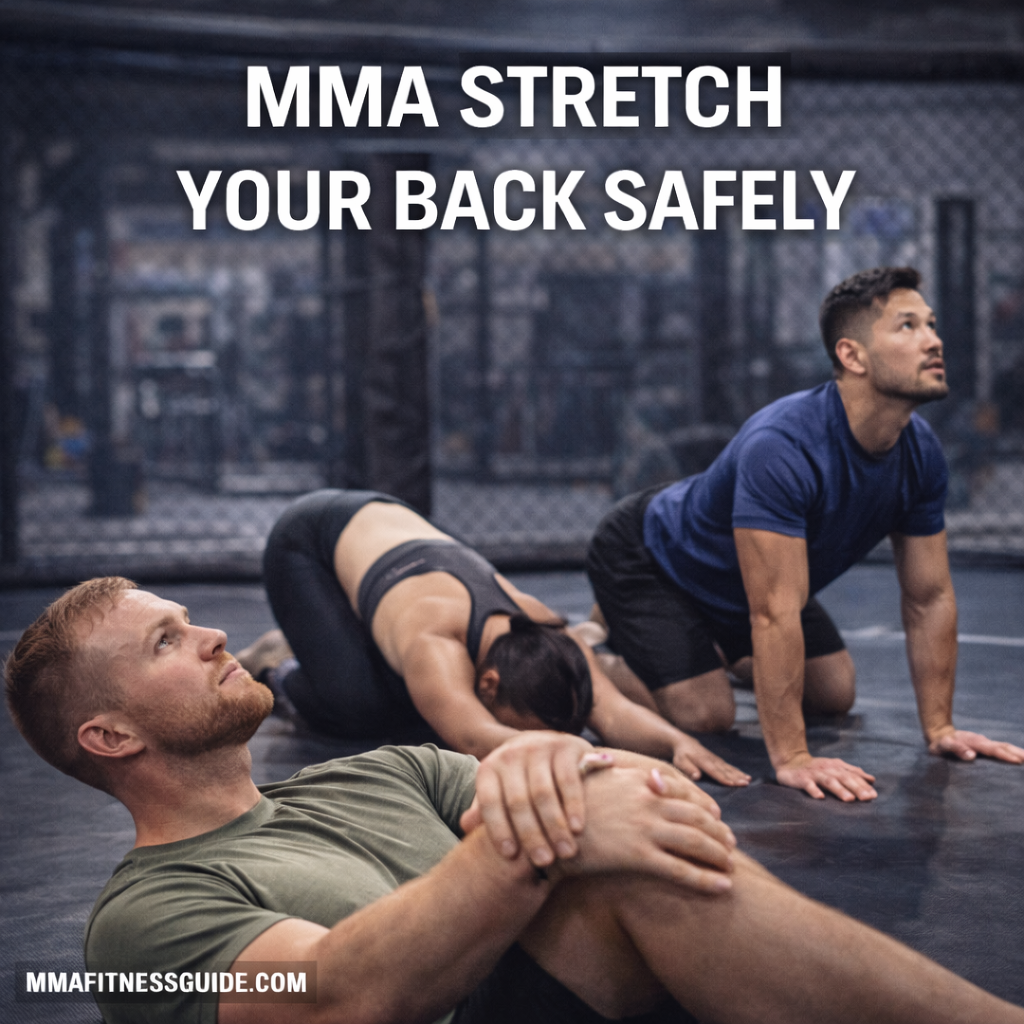
MMA beginners performing safe back stretches on gym mats, demonstrating proper spinal mobility exercises for injury prevention.
MMA beginners practice safe back stretching techniques to improve mobility and reduce stiffness during training.

Back tightness and soreness are common for beginners starting MMA training. Striking, grappling, takedowns, and conditioning all place new demands on the spine and surrounding muscles. Without proper mobility work, stiffness can turn into pain, reduced movement quality, or even injury.

This guide explains how beginners can stretch their back safely for MMA, which stretches are most effective, and how to avoid common mistakes that lead to discomfort or setbacks.

Continue reading “MMA: Stretch Your Back Safely”

Legends vs New Era: Comparing Styles

Cinematic MMA faceoff showing legendary fighters versus modern-era athletes inside an octagon, illustrating the evolution of fighting styles across generations.
Legendary MMA fighters face off against new era athletes in a cinematic comparison of evolving fighting styles.

Combat sports are constantly evolving. Techniques that once dominated entire eras now coexist with newer, more hybridized approaches shaped by sports science, global cross-training, and rule-set optimization. Comparing legendary fighters to today’s new era athletes isn’t about deciding who is “better”—it’s about understanding how styles, strategies, and preparation have changed over time.

This article explores the key differences between legendary fighters and modern competitors, highlighting how MMA and combat sports have evolved technically, physically, and mentally.

Continue reading “Legends vs New Era: Comparing Styles”

Team Dynamics and Trust in the Gym

MMA fighters from diverse backgrounds standing together in a gym huddle, representing team dynamics and trust in a combat sports training environment.
MMA teammates build trust and strong team dynamics through communication, respect, and shared training goals.

In MMA and combat sports, individual performance often gets the spotlight—but behind every successful fighter is a strong training environment built on trust. Team dynamics in the gym shape how athletes learn, recover, compete, and grow. When trust is present, gyms become places of progress and safety. When it’s missing, injuries, burnout, and conflict follow.

This article explores why team dynamics and trust matter in the gym, how they influence mental health and performance, and practical ways athletes and coaches can help build a strong, supportive training culture.

Continue reading “Team Dynamics and Trust in the Gym”

Returning to Sparring Safely After Injury

MMA athletes preparing to spar in a gym, demonstrating a safe and respectful return to sparring after injury.
MMA fighters prepare for controlled sparring as part of a safe return-to-training process after injury.

Returning to sparring after an injury is one of the most critical—and risky—phases of recovery for MMA athletes. Even when pain has subsided, the body and nervous system may not be fully prepared for live contact. Rushing back too soon increases the chance of reinjury, compensations, and long-term setbacks.

This guide explains how to return to sparring safely after injury, outlining smart progression steps, warning signs to watch for, and best practices that help fighters regain confidence without compromising recovery.

Continue reading “Returning to Sparring Safely After Injury”

Women’s Gear Guide for MMA and BJJ

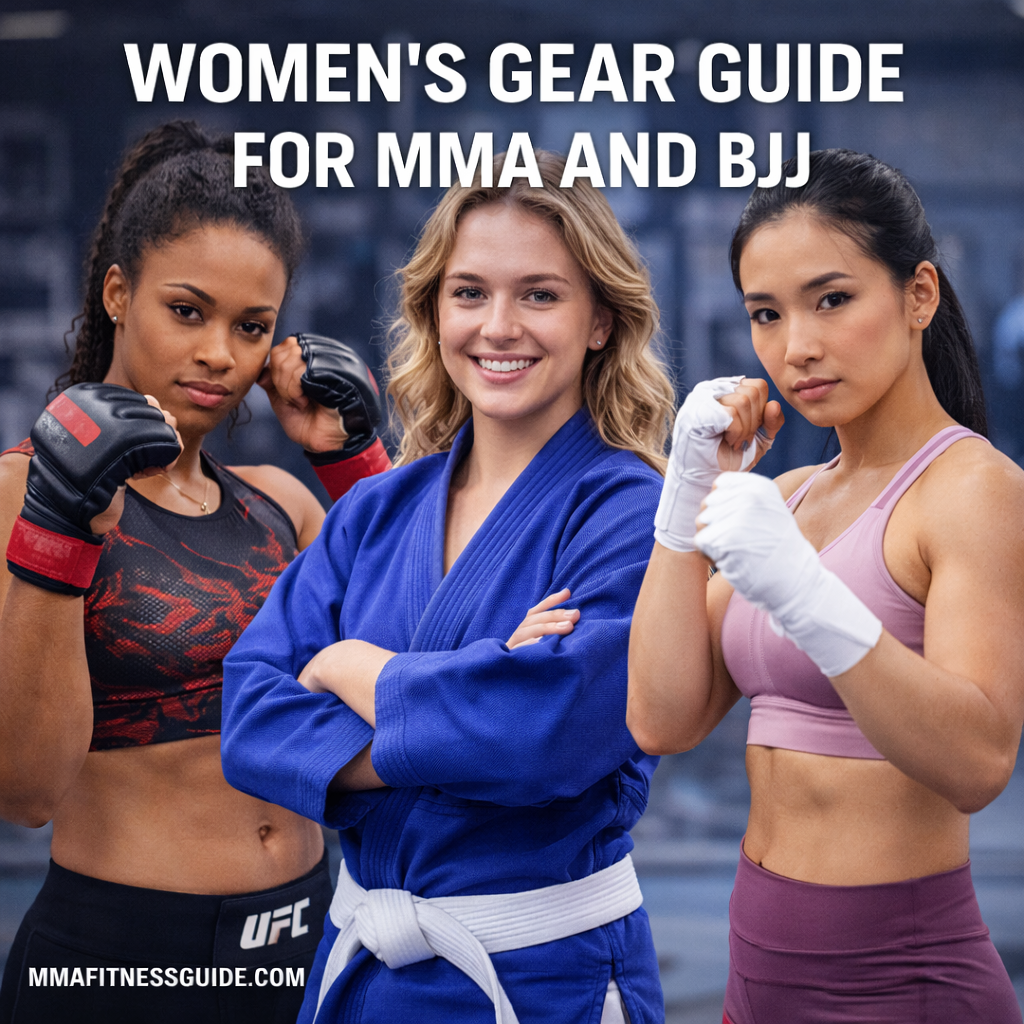
Diverse women wearing MMA and BJJ training gear in a gym, showcasing women’s gear for mixed martial arts and Brazilian jiu-jitsu.
Diverse female athletes display essential MMA and BJJ training gear designed for comfort, performance, and protection.

Women’s participation in MMA and Brazilian Jiu-Jitsu has grown rapidly, and having the right gear makes a major difference in comfort, safety, and performance. Equipment designed specifically for women fits better, lasts longer, and allows athletes to focus on training instead of constant adjustments or discomfort.

This women’s gear guide for MMA and BJJ breaks down essential equipment, explains what to look for when choosing gear, and highlights practical considerations for training and competition.

Continue reading “Women’s Gear Guide for MMA and BJJ”