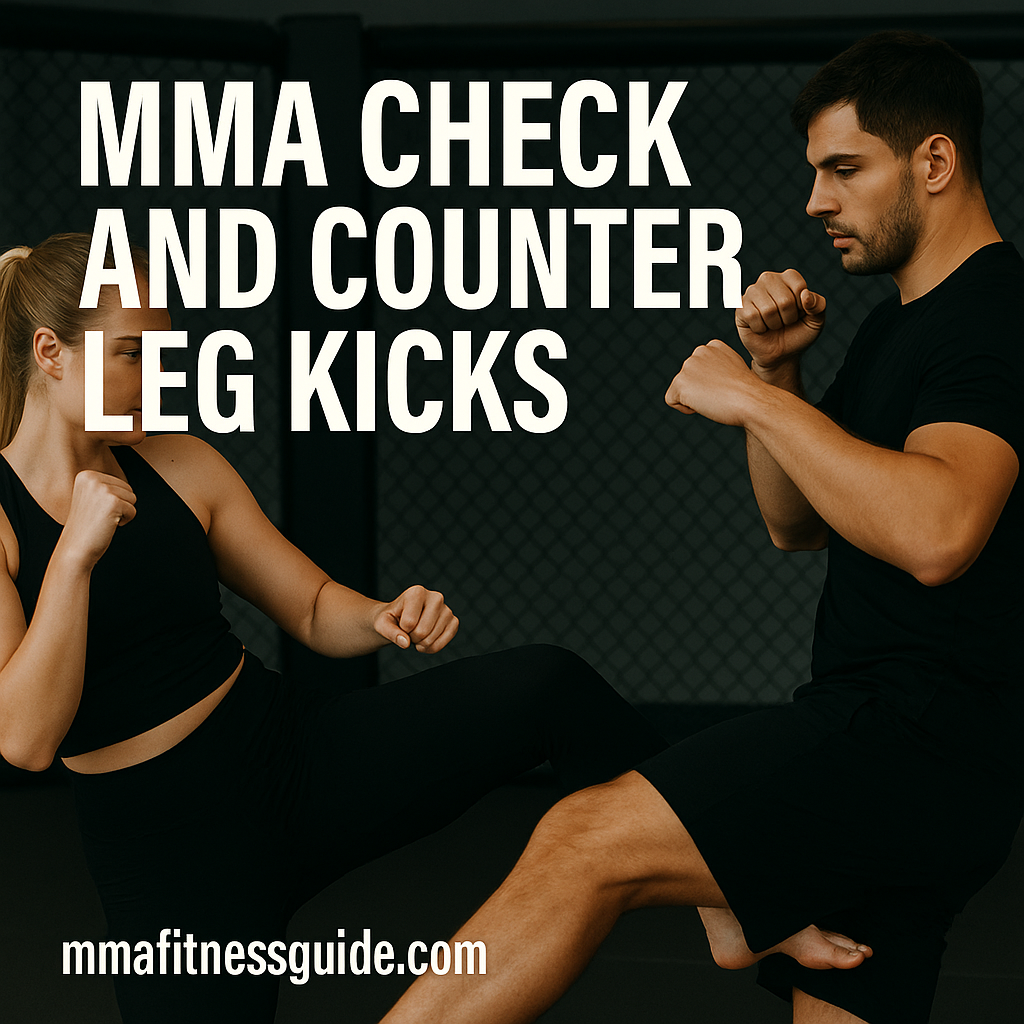
MMA: Check and Counter Leg Kicks

A male and female MMA athletes practicing a leg kick and defensive check in a gym, shown with the article title and mmafitnessguide.com watermark.
A male and female fighter demonstrating a leg kick and defensive check inside an MMA gym, used to illustrate the concept of checking and countering leg kicks.

Leg kicks can change the entire flow of an MMA fight — slowing an opponent’s movement, breaking their rhythm, and damaging their ability to strike or defend. But the best fighters don’t just absorb leg kicks; they check them, counter them, and turn defense into immediate offense.

Whether you’re a beginner learning the basics or an experienced fighter sharpening your timing, mastering the check-and-counter sequence is one of the most important parts of modern MMA striking.

This guide breaks down how leg-kick defense works, how to check correctly, and the most effective counters you can fire back instantly.

Continue reading “MMA: Check and Counter Leg Kicks”

Managing Weight Between Fights

A title graphic reading “Managing Weight Between Fights” displayed over a dimly lit MMA gym background with the mmafitnessguide.com watermark.
Managing weight between fights, set over a blurred MMA gym background.

One of the most overlooked parts of a fighter’s career is what happens between fights. While fight camp gets all the attention, the weeks and months outside of camp often determine how easy (or painful) your next weight cut will be.
Staying within a healthy, manageable range allows you to train better, feel better, recover faster, and start camp without the panic of losing 25+ pounds.

Managing weight between fights isn’t about dieting year-round — it’s about consistency, smart habits, and avoiding extremes.

This guide breaks down how fighters can maintain a healthy walking weight without sacrificing strength, performance, or sanity.

Continue reading “Managing Weight Between Fights”

MMA: Prevent Overtraining in MMA

A tired MMA athlete sitting against the padded gym wall with his hands wrapped, representing the importance of preventing overtraining in mixed martial arts.
A fatigued fighter resting against the gym wall, illustrating the need for smart training habits to avoid overtraining in MMA.

Overtraining is one of the biggest threats to a fighter’s long-term progress. When training volume, intensity, and stress stack up faster than your body can recover, performance drops — sometimes sharply.
For beginners and experienced fighters alike, learning how to recognize and prevent overtraining is essential for staying healthy, improving consistently, and avoiding unnecessary injuries.

Overtraining isn’t about being “weak” or “unmotivated.” It’s a physiological state where your body can’t keep up with the workload. The best fighters train hard — but they also train smart. This guide shows you how.

Continue reading “MMA: Prevent Overtraining in MMA”

Creating a Patreon or Membership Community

A male and female athlete sitting at a table while working on a laptop and notebook, representing the process of creating a Patreon or membership community.
A man and woman planning content together, illustrating how fighters and coaches can build a Patreon or membership community.

For fighters, coaches, and content creators, a Patreon or membership community can become one of the most reliable income streams in the MMA world. It turns your knowledge, experience, and personality into long-term, recurring revenue — without needing millions of followers or constant brand sponsorships.

The best part? You control the content, the pricing, and the relationship with your audience.
A small, committed community can support your training, your career, and your creative work far more consistently than any algorithm.

Whether you’re a fighter documenting your journey or a coach sharing drills and breakdowns, a membership platform can elevate your entire career.

Continue reading “Creating a Patreon or Membership Community”

Gear Care as a Life Discipline

Male athlete sitting on the edge of a mat in an MMA gym with his gloves placed beside him, shown with the article title on the image.
A fighter sitting on the gym mats with his gloves nearby, representing the idea of treating gear care as part of personal discipline.

Taking care of your training gear isn’t just about keeping it clean — it’s about building discipline, respect, and consistency. The way you maintain your gloves, wraps, shin guards, mouthguards, and gym clothes reflects the way you approach your training and, in many ways, your life.

For fighters and hobbyists alike, gear care is a direct expression of mindset: responsibility, attention to detail, and pride in the craft. When you build the habit of caring for your equipment, you naturally develop the same approach toward your body, your training, your environment, and your goals.

This is why gear care becomes more than a chore — it becomes a discipline.

Continue reading “Gear Care as a Life Discipline”

MMA: Warm Up Before Any Workout

A male athlete stretching on a gym floor to warm up before training, with the article title displayed on the image.
A fighter warming up on the gym floor, used to illustrate beginner-friendly MMA warm-up routines.

A proper warm-up is one of the most important — and most overlooked — parts of MMA training. Whether you’re hitting pads, lifting weights, drilling technique, or jumping into a conditioning workout, warming up prepares your body for impact, improves performance, and dramatically reduces the risk of injury.

For beginners, a good warm-up doesn’t need to be complicated. It just needs to activate your muscles, raise your heart rate, loosen your joints, and get your mind locked into training mode.

This beginner-friendly MMA warm-up works before any workout — striking, grappling, strength training, or cardio days.

Continue reading “MMA: Warm Up Before Any Workout”

Fights That Changed the Rules of the Sport

A bold title graphic reading “Fights That Changed the Rules of the Sport” over a blurred MMA arena background, with the mmafitnessguide.com watermark at the bottom.
A title graphic highlighting major MMA fights that led to rule changes, set against a blurred arena backdrop.

Mixed martial arts was built through trial, error, and unforgettable fights that forced athletic commissions and promotions to rethink what was allowed inside the cage. In the early days of modern MMA, rules were minimal, fighters relied on raw experimentation, and controversial moments shaped the future of the sport.

Some fights pushed the limits of safety. Others exposed loopholes. A few created new standards that still define MMA today.

These are the fights that changed the rules — and helped MMA evolve into the highly regulated, globally respected sport it is today.

Continue reading “Fights That Changed the Rules of the Sport”

Social Media and Mental Fitness for Athletes

A female athlete in gym clothing looking down at her phone, representing how social media affects mental fitness for athletes.
A focused female athlete checking her phone, illustrating the connection between social media use and mental fitness.

Social media can be a powerful tool for athletes — a place to build a brand, share progress, study techniques, and connect with fans. But it can also create mental pressure, comparison traps, and unnecessary stress that affects performance inside and outside the gym.

For fighters, who already deal with high expectations, intense training schedules, and competition stress, managing social media wisely is essential for long-term mental fitness.

This guide breaks down how social media affects athletes, the risks to watch for, and the habits that help fighters stay mentally strong while staying connected online.

Continue reading “Social Media and Mental Fitness for Athletes”

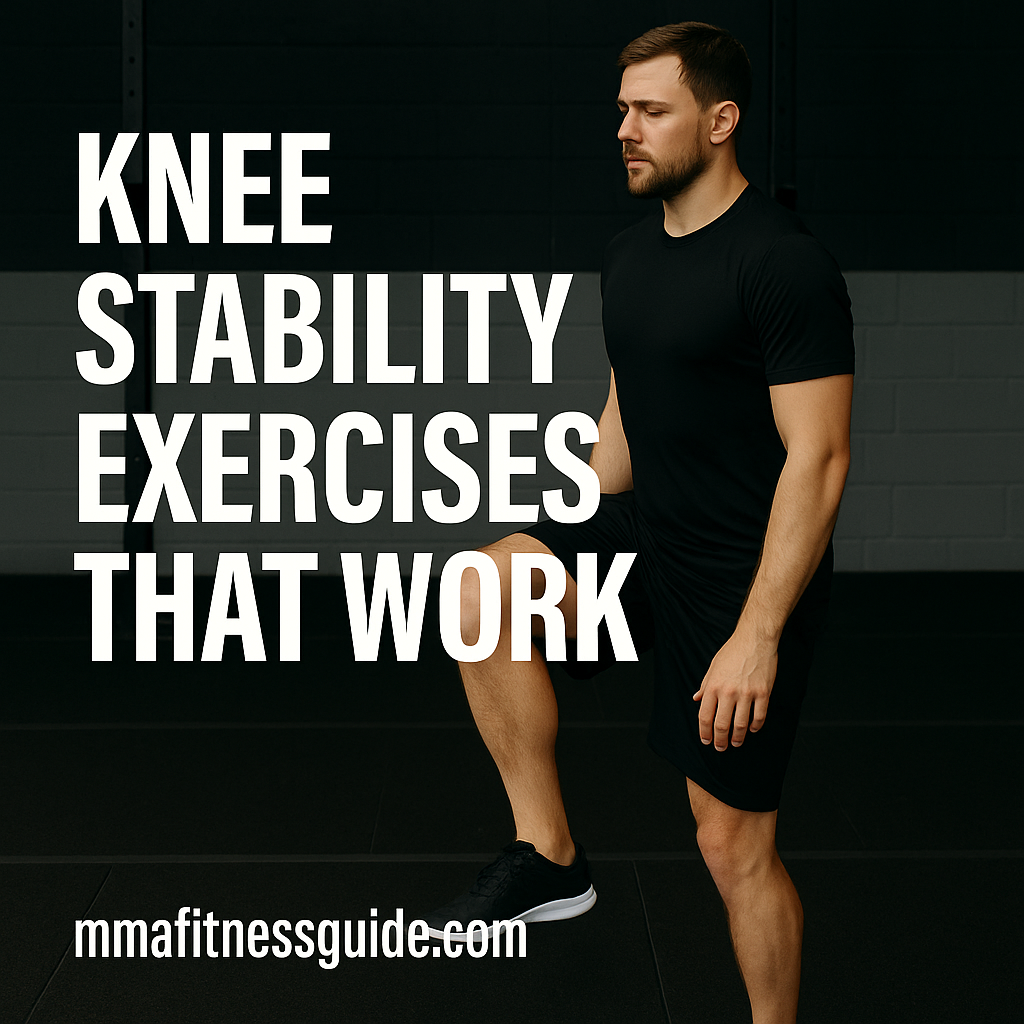
Knee Stability Exercises That Work

A man performing a knee stability drill on one leg inside a gym, demonstrating exercises that help strengthen and stabilize the knees for combat sports.
A fighter practicing a single-leg knee stability exercise in the gym, highlighting movements that support stronger and safer knees.

Strong, stable knees are essential for every fighter. Whether you’re shooting takedowns, checking kicks, pivoting on strikes, or scrambling on the ground, your knees take a beating in MMA. Without proper stability training, the risk of sprains, ACL injuries, and chronic pain goes way up.

The good news: you can build strong, resilient knees with simple exercises that improve balance, joint control, and the strength of the muscles surrounding the knee.

These knee stability exercises work for fighters at every level — and they take just a few minutes a day.

Continue reading “Knee Stability Exercises That Work”

Open Palm vs Closed Glove: What to Choose

Two MMA gloves—a lightweight open-palm style and a padded closed boxing glove—placed side-by-side on a gym floor to illustrate the differences between glove types.
Open-palm MMA gloves next to a closed boxing glove, showing the key differences between the two styles for training and sparring.

Choosing between open-palm gloves and closed-gloves is one of the most important decisions you’ll make for your MMA training. Both styles have unique strengths, weaknesses, and ideal uses depending on whether you’re drilling technique, sparring, competing, or working on grappling-heavy sessions.

This guide breaks down the differences clearly so you know exactly which type of glove is right for your training style and goals.

Continue reading “Open Palm vs Closed Glove: What to Choose”