
Head Movement Drills for Defense

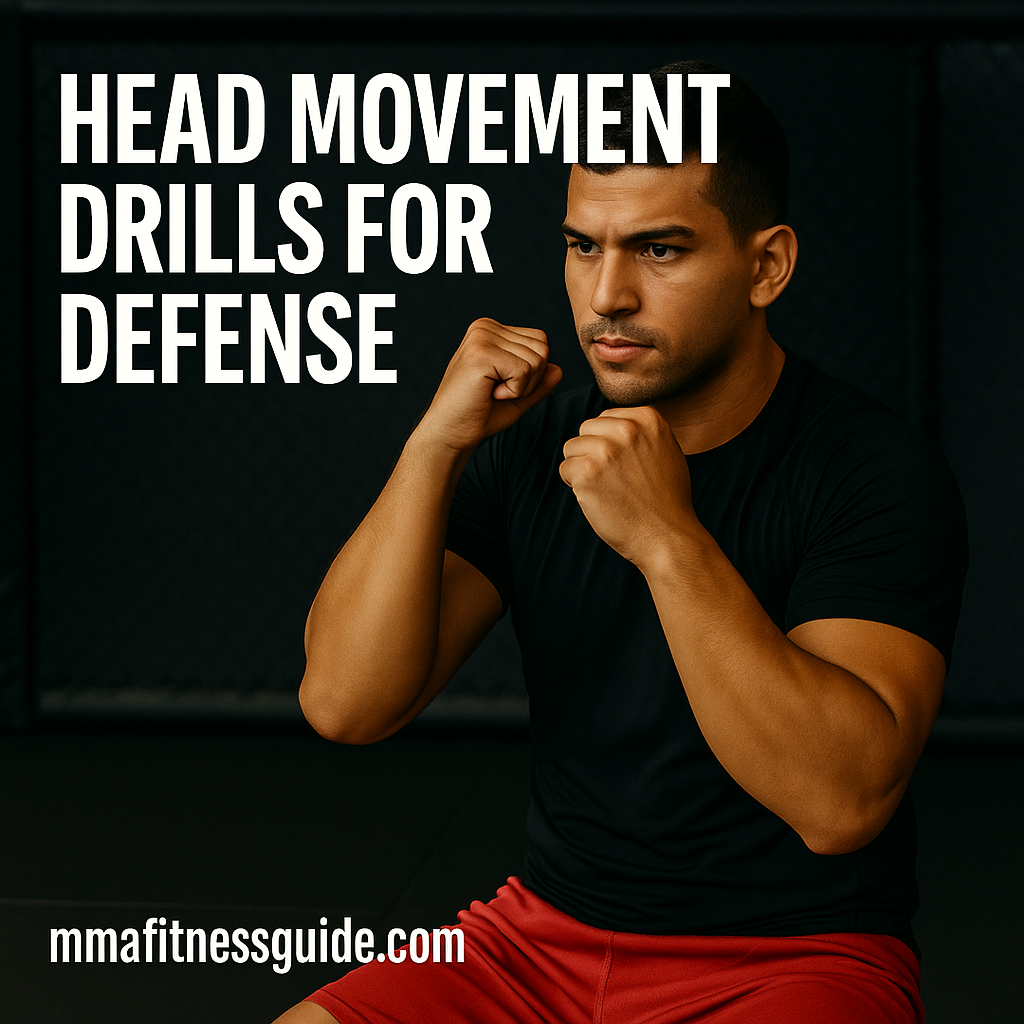
A tan-skinned male fighter in an MMA gym holding a hands-up guard stance while practicing controlled head positioning, shown with the article title and mmafitnessguide.com watermark.
A fighter in a hands-up guard pose demonstrating controlled defensive posture for head movement training.

Head movement is one of the most effective defensive tools in striking. Whether you train MMA, boxing, Muay Thai, or kickboxing, slipping, rolling, and weaving help you avoid punches, counter faster, and stay safe during exchanges. Good head movement isn’t about wild motions — it’s about small, efficient angles that make your opponent miss while keeping you balanced and ready to strike back.

These drills help you build instinctive defense, sharper timing, and better reaction speed.

Continue reading “Head Movement Drills for Defense”


MMA: Avoid Crashing After Cutting Weight

A tan-skinned blonde female athlete standing in an MMA gym holding a sports drink, wearing colored shorts, with the article title “MMA Avoid Crashing After Cutting Weight” and the mmafitnessguide.com watermark.
MMA athlete holding a sports drink after training, symbolizing smart post–weight cut recovery and hydration strategies.

Cutting weight is one of the hardest parts of a fighter’s journey — physically, mentally, and emotionally. But the biggest danger isn’t always the cut itself.

It’s what happens after the weigh-in.

Many fighters experience the post-cut crash:

  • Extreme fatigue
  • Brain fog
  • Weakness
  • Stomach discomfort
  • Emotional drop-offs
  • Poor fight-night performance

The good news? Crashing isn’t guaranteed. With the right rehydration and refueling plan, you can stabilize energy, restore strength, and feel sharp when you step into the cage.

This guide shows you how to avoid the crash and recover the right way after cutting weight.

Continue reading “MMA: Avoid Crashing After Cutting Weight”

The Ultimate Full-Body Fighter Workout

A tan-skinned male athlete performing a push-up while a blonde female athlete in colored shorts performs a squat behind him in an MMA gym, shown with the article title and mmafitnessguide.com watermark.
A male fighter doing push-ups alongside a female athlete performing squats, illustrating the intensity of a full-body fighter workout.

A great fighter isn’t just strong, or fast, or explosive — they’re all three. MMA demands full-body power, endurance, mobility, and resilience. Whether you’re a beginner or an experienced athlete, a well-designed full-body workout helps you build the strength and conditioning needed for striking, grappling, and everything in between.

This Ultimate Full-Body Fighter Workout is built to mimic real MMA demands: pushing, pulling, rotation, grip strength, explosive power, and sustainable cardio. You can use it on strength days, conditioning days, or as a complete standalone session.

Continue reading “The Ultimate Full-Body Fighter Workout”

Building a Website That Converts Students

A man and woman smiling while working together on a laptop at a table, with the article title “Building a Website That Converts Students” displayed across the image.
A couple working on a laptop, representing the process of creating a high-converting website for MMA gyms, coaches, and online instructors.

In today’s MMA landscape, having a website isn’t optional — it’s a core part of how coaches, gyms, and personal trainers attract new students. Whether you run a small martial arts academy or coach fighters privately, your website works as your digital front door, introducing people to your teaching style, schedule, and brand.

But a website isn’t helpful unless it converts. A clean design and cool photos are great, but your real goal is to turn visitors into paying students, trial sign-ups, or leads you can follow up with.

This guide breaks down the essentials for building an MMA website that earns trust, removes friction, and gets students to take action.

Continue reading “Building a Website That Converts Students”

Healthy Eating on a Tight Budget

A male athlete wearing red shorts standing in an MMA gym with the title “Healthy Eating on a Tight Budget” displayed beside him and the mmafitnessguide.com watermark.
A fighter in red shorts standing in an MMA gym, used to highlight the importance of budget-friendly healthy eating for athletes.

Eating healthy doesn’t have to be expensive — even for fighters and fitness enthusiasts who burn a ton of calories. Many athletes assume clean eating means pricey supplements, organic-only foods, or perfectly curated meal prep. But the truth?
With the right strategy, you can fuel your training, recover faster, and stay consistent without overspending.

This guide breaks down simple, realistic ways to eat well on a tight budget while supporting your MMA and fitness goals.

Continue reading “Healthy Eating on a Tight Budget”

Cooldowns That Help You Recover Faster

A tan-skinned female athlete standing in an MMA gym with her eyes closed and hands on her hips, wearing colored shorts, representing a cooldown breathing pose. The image includes the article title and mmafitnessguide.com watermark.
A female fighter practicing a relaxed cooldown breathing pose after training, used to highlight recovery-focused habits for beginners.

Most beginners focus heavily on warming up — but forget about the cooldown. In MMA, strength training, or conditioning workouts, how you finish your session directly affects recovery, soreness, mobility, and your long-term progress.

A good cooldown helps your heart rate drop safely, reduces tightness, and signals your nervous system to relax after intense training. It only takes a few minutes, but the payoff is huge: fewer aches, fewer injuries, and faster progress.

This guide breaks down beginner-friendly cooldowns that help you recover faster after any MMA or fitness session.

Continue reading “Cooldowns That Help You Recover Faster”

Cross-Discipline Champions and Trailblazers

A tan male athlete and a female athlete standing confidently inside an MMA cage, both wearing bright training shorts, with the article title and mmafitnessguide.com watermark displayed.
A male and female fighter standing in an MMA cage, symbolizing the trailblazers and cross-discipline champions who shaped modern mixed martial arts.

Some of the greatest fighters in combat sports history didn’t just dominate one discipline — they crossed into multiple arts, broke barriers, and changed the landscape of MMA forever. These athletes didn’t follow the traditional path. They blended striking, grappling, and hybrid skill sets long before it was common, forcing the sport to evolve around them.

Cross-discipline champions are more than just talented fighters. They are innovators, risk-takers, and pioneers whose careers reshaped how athletes train, compete, and think about martial arts.

This guide highlights the trailblazers who proved that greatness doesn’t belong to one style — it’s forged through adaptation, experimentation, and fearless progression.

Continue reading “Cross-Discipline Champions and Trailblazers”

Identity Beyond Fighting: Staying Balanced

A female MMA athlete wearing colored shorts sitting on the gym mats in front of a chain-link wall, paired with the article title and mmafitnessguide.com watermark.
A female fighter seated on the gym mats wearing colored shorts, representing the theme of finding identity and balance beyond fighting.

For many fighters, MMA becomes more than a sport — it becomes an identity. You train, eat, sleep, and live like a fighter. The gym becomes home. Your teammates feel like family. The grind shapes your routines, friendships, confidence, and even your sense of purpose.

But if fighting becomes the only thing that defines you, it can create pressure, burnout, and emotional instability, especially during injuries, layoffs, or transitions. True mental fitness comes from knowing who you are outside the cage, not just inside it.

This guide helps fighters stay grounded, balanced, and mentally resilient by building an identity that’s deeper and more stable than wins, losses, or training sessions.

Continue reading “Identity Beyond Fighting: Staying Balanced”

Shin Splints: Prevention and Care

A male athlete sitting on the gym floor massaging his shin, illustrating shin splint pain, with the article title and mmafitnessguide.com watermark displayed.
A fighter seated on the gym mats checking his lower leg, visually representing shin splint prevention and care.

Shin splints are one of the most common overuse injuries in MMA and combat sports. Whether you’re drilling kicks, running for conditioning, or pushing through long training sessions, the repeated impact can irritate the muscles and connective tissue along the shin.
Left unchecked, shin splints can turn from a minor annoyance into a serious setback.

Understanding what causes shin splints — and how to prevent and treat them — helps you stay consistent, reduce pain, and protect your long-term performance.

Continue reading “Shin Splints: Prevention and Care”

Best Mouthguard Cases and Hygiene Training Tips

A female athlete sitting on the mats in an MMA gym with a mouthguard case and gloves placed in front of her, shown with the article title and mmafitnessguide.com watermark.
A focused athlete seated on the gym mats with her mouthguard case nearby, representing proper gear care and hygiene for MMA training.

A mouthguard is one of the simplest and most essential pieces of protective gear in MMA — but it’s also the one fighters neglect the most. Leaving it in your gym bag, tossing it on the locker-room bench, or forgetting to clean it properly leads to bacteria growth, bad odors, and a shorter lifespan for your gear.

A good mouthguard case protects your mouthguard from germs, dirt, and damage, while proper hygiene habits keep you healthier and safer during training. Whether you’re a beginner or a seasoned fighter, taking care of your mouthguard is non-negotiable.

This guide breaks down the best mouthguard cases available today and the most effective hygiene practices every fighter should follow.

Continue reading “Best Mouthguard Cases and Hygiene Training Tips”