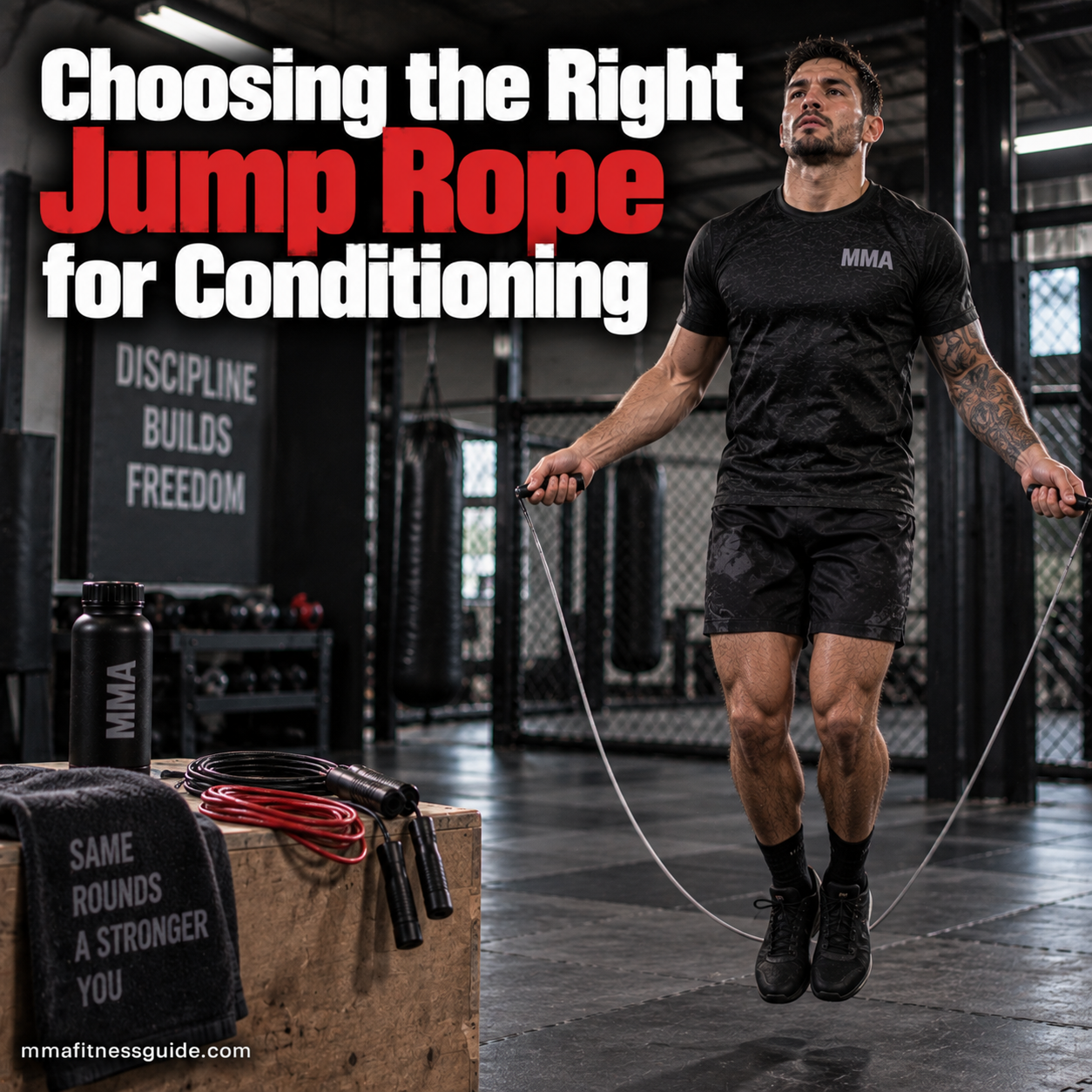
A thin speed rope can whip around fast enough for double-unders, while a heavy rope forces your shoulders and forearms to work through every rotation. A basic PVC rope sits somewhere in between, giving beginners enough feedback to learn timing without requiring perfect technique.
Those differences matter for fighters.
Jumping rope can be used for a five-minute warm-up before striking, longer conditioning rounds, quick-footwork drills, or additional shoulder endurance work. The rope that works well for one of those jobs may feel awkward for another.
For most beginners, a controllable PVC rope is a practical starting point. Fighters chasing faster turnover may prefer a cable speed rope, while heavier ropes can add resistance to shorter conditioning rounds.
Before buying one, consider the cord material, weight, handle design, adjustability, and—most importantly—whether the rope is the correct length for your height and jumping style.
Why Jump Rope Is Essential for Fighters
Jump rope is a staple in striking and MMA gyms because it builds qualities that directly transfer to fighting:
- Improved footwork and agility
- Sharper coordination and timing
- Better cardiovascular conditioning
- Enhanced balance and rhythm
- Warm-up activation for ankles, calves, and hips
- Mental focus and flow state
Just 5–10 minutes per session can dramatically improve your movement.
The Different Types of Jump Ropes
Each type of rope feels different and serves a different purpose. Here’s what fighters need to know.
1. Speed Ropes (Fast & Lightweight)
Speed ropes are designed for rapid turnover and quick footwork.
Best for:
- Quick warm-ups
- Developing rhythm and coordination
- Footwork drills
- High-speed conditioning
Pros:
- Extremely fast
- Light and easy to travel with
- Great for double-unders
Cons:
- Not ideal for beginners
- Less resistance — not great for strength endurance
Speed ropes are the go-to choice for fighters who already have solid rope skills.
2. PVC Ropes (Beginner-Friendly & Versatile)
PVC ropes have flexible, forgiving cords that rotate smoothly.
Best for:
- Beginners
- Learning basic steps and timing
- General conditioning
Pros:
- Easy to control
- Comfortable to use
- Works for most training styles
Cons:
- Not as fast as coated wire ropes
- Can wear out on rough surfaces
PVC ropes are the most beginner-friendly option.
3. Heavy Ropes (Strength & Power)
Heavier ropes increase upper-body engagement and muscular endurance.
Best for:
- Shoulder stamina
- Grip strength
- Slower, powerful conditioning rounds
Pros:
- Great shoulder burn
- Builds punching endurance
- Adds variety to training
Cons:
- Harder to control
- Not recommended for long-duration intervals
Use heavy ropes once or twice per week for added challenge.
4. Weighted Handle Ropes
These ropes add weight to the handles instead of the cord.
Best for:
- Forearm conditioning
- Grip strength
- Increasing resistance without slowing the rope
Pros:
- Makes basic jumps more challenging
- Great supplement for fighters who punch a lot
Cons:
- Not ideal for fast footwork
- Can fatigue hands quickly
Good for fighters who need more hand and wrist conditioning.
5. Adjustable Ropes
Adjustable ropes let you change the length easily.
Best for:
- Gyms with multiple athletes
- Fighters unsure of their ideal rope length
Pros:
- Easy to size
- Useful for group classes
- Convenient for travel
Cons:
- May be less durable than fixed-length competition ropes
An adjustable rope is perfect if you’re still dialing in your ideal size.
How to Choose the Right Jump Rope Length
A rope that’s too long or too short ruins technique.
General sizing rule:
Step on the middle of the rope and pull handles upward:
- Handles should reach roughly armpit height for beginners
- More advanced fighters may prefer chest height for faster spin
If unsure, choose adjustable ropes until you find your ideal measurement.
Which Rope Is Best for Your Training Goals?
For beginners
PVC rope — easy to learn and forgiving.
For footwork and speed
Speed rope — builds rhythm, timing, and agility.
For strength and shoulder endurance
Heavy rope — boosts upper-body conditioning.
For mixed workouts
Adjustable rope — versatile and great for shared use.
For fighters training for competition
Steel cable speed rope — fastest turnover and precision.
What Handles Should Fighters Look For?
The right handles make a big difference.
Consider:
- Grip texture (non-slip)
- Shape (ergonomic and comfortable)
- Bearing quality (smooth rotation)
- Weight (light for speed, heavy for endurance)
Cheaper ropes often have stiff or sticky rotation, which disrupts rhythm.
Training Tips for Fighters Using Jump Rope
- Keep knee bend light to reduce impact
- Maintain a soft, springy bounce
- Stay tall with relaxed shoulders
- Use wrists more than arms
- Start slow, then increase speed
- Add variations (side swings, high knees, crossovers)
Jump rope becomes much easier once rhythm takes over.
Sample Jump Rope Workout for Fighters
Warm-Up (2 minutes)
- Basic bounce
- Side-to-side steps
- Alternating singles
Main Set (6–10 minutes)
- 30 seconds fast rope
- 30 seconds rest
- 30 seconds boxer skip
- 30 seconds rest
- Repeat
Finisher (1–2 minutes)
- Double-unders or high-knees for final burn
Final Thoughts: Choosing the Right Jump Rope
The best rope depends on your skill level, goals, and training style. For most fighters:
- Beginners: PVC rope
- Intermediate/advanced: Speed rope
- Strength focus: Heavy rope
- Versatility: Adjustable rope
Investing in the right jump rope makes conditioning smoother, more efficient, and far more enjoyable — helping you level up your movement and cardio for MMA.