Most beginners underestimate how important proper breathing is in MMA. Whether you’re drilling technique, doing pad rounds, lifting, or sparring, your breath controls your endurance, power output, and ability to stay calm under pressure. Poor breathing leads to faster fatigue, sloppy technique, and predictable rhythms that experienced training partners can exploit.
This guide teaches beginners how to breathe correctly during MMA training so you can perform better, stay relaxed, and develop habits that carry into sparring and real competition.
Why Proper Breathing Matters in MMA
Breathing is more than oxygen in and out — it affects your entire performance.
Here’s what good breathing improves:
- Endurance: You last longer in rounds and conditioning.
- Power: Your strikes hit harder when breath matches movement.
- Relaxation: Controlled breathing prevents panic and tight muscles.
- Timing: Breath rhythm improves flow and striking cadence.
- Core stability: Proper breath bracing protects your spine.
If you’ve ever felt gassed early in a round, breathing is often the missing piece.
The Biggest Breathing Mistakes Beginners Make
Holding your breath
The most common issue — especially during combos, takedown attempts, or grappling scrambles.
Breathing only through the mouth
Mouth breathing alone spikes heart rate and increases tension.
Breathing too shallow
Chest breathing limits oxygen and makes fatigue appear much faster.
Forgetting to breathe during strength exercises
This leads to dizziness, poor form, and reduced power.
The Foundations: How to Breathe Properly
Focus on nasal breathing during warm-ups
Nose breathing improves oxygen efficiency and teaches calm under exertion.
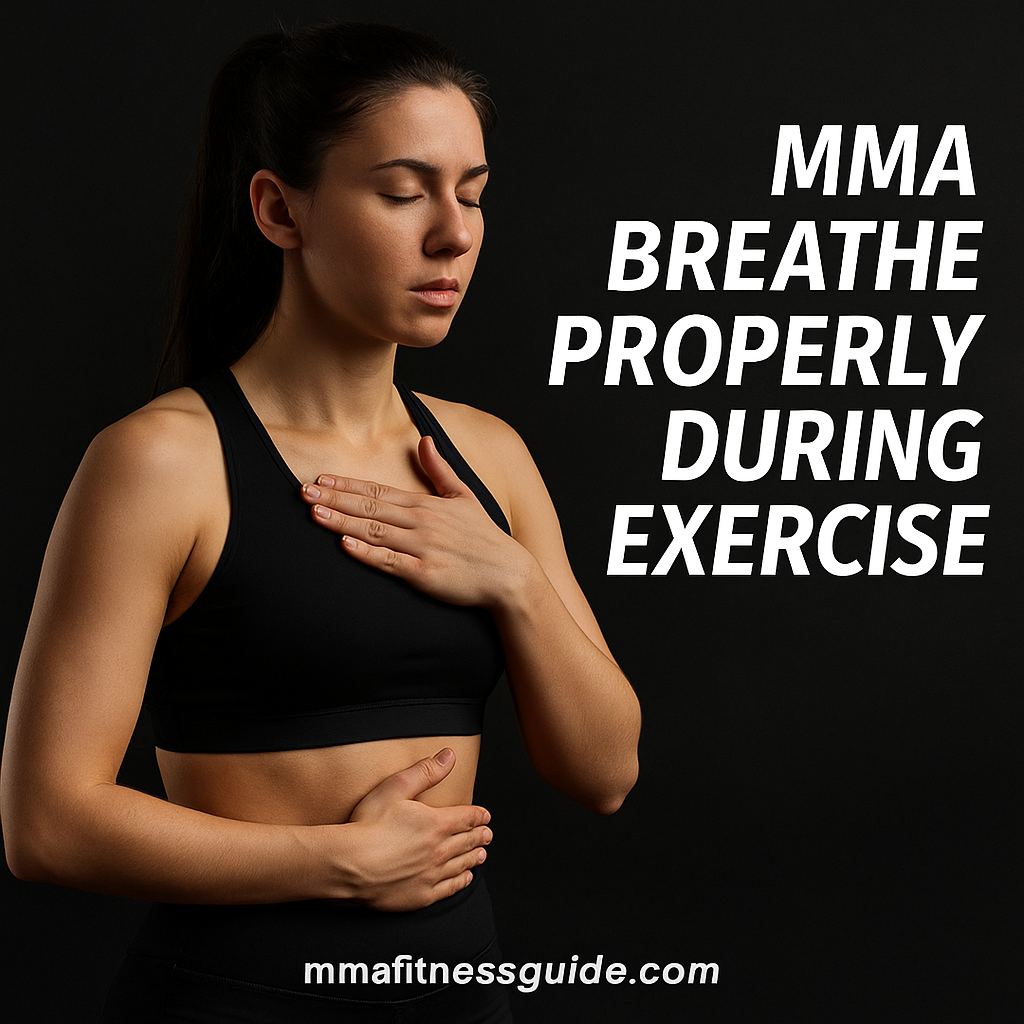
Use diaphragmatic breathing
Instead of lifting your chest, let your stomach expand. This provides deeper oxygen intake and better relaxation.
Try this:
- Hand on chest, hand on stomach
- Breathe so the bottom hand moves more
This is the base for all fight conditioning.
Breathing During Striking
Your breath should match the rhythm of your strikes, not fight against it.
Exhale sharply with every punch or kick
This adds snap, keeps your core engaged, and prevents holding your breath.
Sound example:
“Tsh! Tsh!” — short, controlled exhales.
Breathe between combinations
Don’t wait until you’re tired — regulate continuously.
Stay loose
Good breathing keeps your shoulders from tensing, which improves speed and accuracy.
Breathing During Grappling
Grappling stress makes beginners panic-breathe or hold breath entirely.
Slow breathing during scrambles
Short nasal breaths keep you from gassing out.
Exhale on escapes
This helps with relaxation and slipping out of tight spaces.
Use long exhales to stay calm under pressure
Whether stuck under side control or mounted, slow breathing prevents panic.
Avoid over-bracing
Only tense when applying pressure or defending — otherwise stay relaxed and breathe smoothly.
Breathing for Strength and Conditioning
Use the “brace and exhale” method for lifts
Inhale before the exertion → exhale during the effort.
Examples:
- Inhale before squatting → exhale on the way up
- Inhale before swinging kettlebell → exhale at hip extension
Don’t rush your breathing on circuits
Match breath to movement instead of sprinting randomly.
Use box breathing for rest rounds
A simple recovery method:
4 seconds inhale → 4 hold → 4 exhale → 4 hold
Just 20–30 seconds can lower heart rate noticeably.
How to Practice Breathing Outside the Gym
These drills help beginners build breathing habits that show up automatically during training.
Diaphragmatic breathing (2–5 minutes)
Practice while lying down or sitting.
Slow nasal breathing walk
Breathe only through your nose during a 5–10 minute walk.
Cadence breathing
4 seconds inhale → 6 seconds exhale
This trains relaxation and heart-rate control.
Meditation for fighters
Even 3 minutes daily improves focus and breath control in sparring.
Signs You’re Breathing Correctly
- You stay relaxed during drills
- You don’t gas out early
- Strikes feel snappier
- You can think clearly mid-round
- Recovery between sets feels faster
When breathing becomes automatic, your skill level jumps dramatically.
Final Tips for Beginners
- Practice breathing just like technique
- Don’t wait until sparring to learn breath control
- Use short exhales during striking
- Breathe slowly and steadily during grappling
- Stay calm — breath and tension are directly linked
Mastering your breath is one of the easiest ways to improve performance in MMA. It’s the foundation for endurance, technique, and mental composure — and it starts on day one.