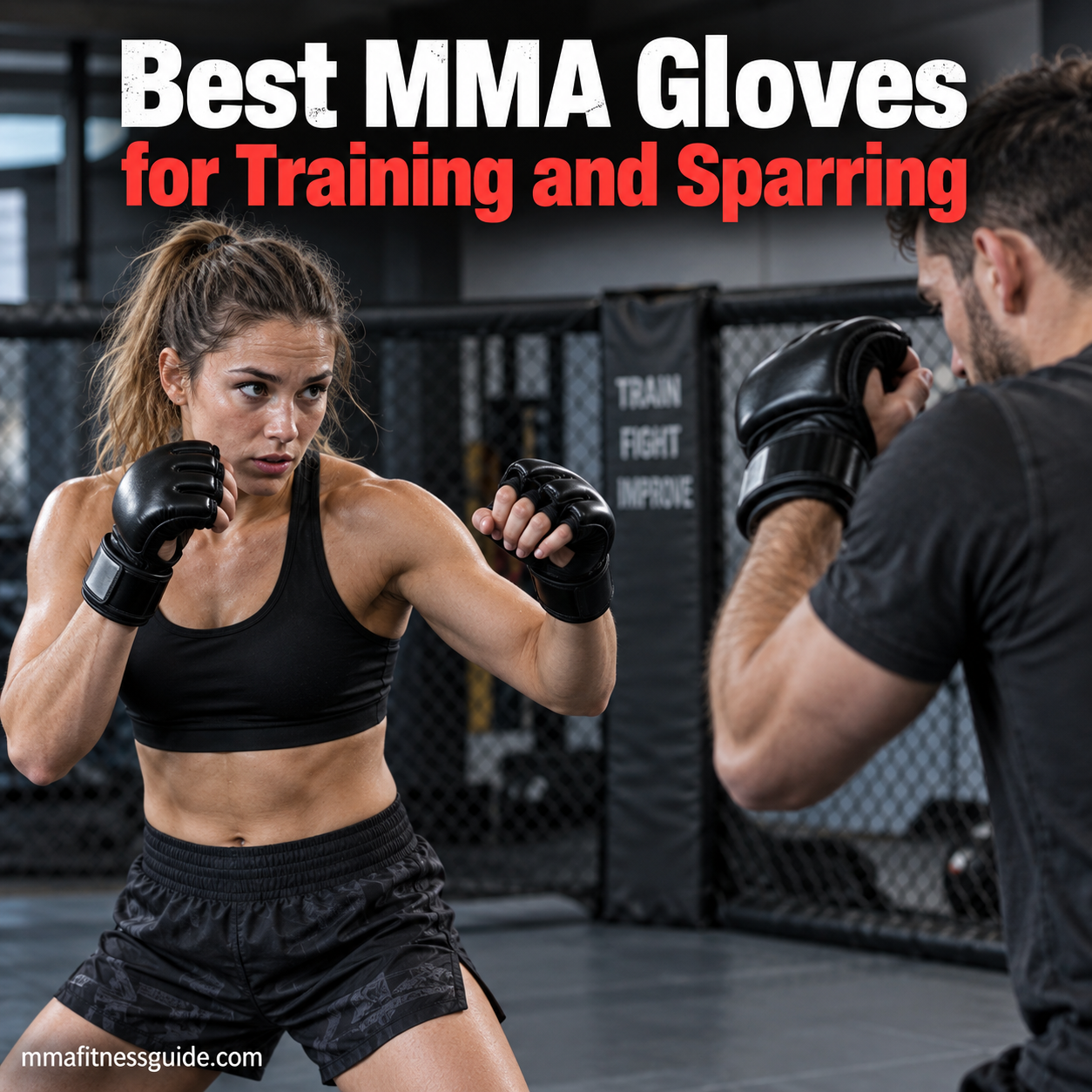
Choosing the right MMA gloves is an important part of safe and effective training. Whether you are new to mixed martial arts, attending fitness-focused classes, or preparing for regular sparring, your gloves need to match the type of training you perform.
MMA gloves are not interchangeable with boxing gloves. They feature an open-finger design that allows athletes to grip, clinch, and perform grappling techniques. However, the amount of padding, wrist support, and finger mobility varies significantly between glove styles.
A glove that works well for hitting pads may not provide enough protection for sparring. Similarly, lightweight competition gloves are designed for a different purpose than everyday training equipment.
Choosing incorrectly can lead to unnecessary hand discomfort, reduced training efficiency, and increased injury risk for you or your training partners.
This guide explains the different types of MMA gloves, how to evaluate padding and fit, which features matter for beginners, and how to select gloves for sparring, bag work, and conditioning.
It also covers sizing, materials, maintenance, replacement, and common purchasing mistakes so you can make a more informed decision before investing in your next pair.
Why MMA Gloves Matter in Training
MMA gloves serve two primary functions: protection and control.
During striking, the small bones and joints of the hands experience considerable force. Properly designed gloves provide cushioning that helps distribute impact and reduce direct stress on vulnerable areas.
Wrist closures can also provide additional support, although gloves cannot compensate for poor punching technique or prevent every wrist injury.
The benefits extend beyond the person wearing them.
In partner drills and sparring, appropriate padding helps reduce some of the impact delivered to training partners. This is particularly important when practicing repeated combinations, defensive reactions, and controlled striking.
Hand Protection During Repeated Striking
Heavy bag sessions can involve hundreds of punches. Even moderate-force strikes create repeated stress on the knuckles, wrists, and surrounding connective tissue.
Gloves designed for striking provide cushioning between the hand and the target.
However, padding alone is not enough. Correct fist alignment, gradual training progression, and appropriate hand protection remain important.
For additional guidance, read our article on hand and wrist care for strikers .
Protection During Partner Training
Sparring introduces another consideration: protecting the person receiving the strikes.
Competition gloves have relatively little padding and are not appropriate substitutes for dedicated sparring gloves.
Sparring gloves generally feature thicker cushioning and a more rounded striking surface.
Even with proper equipment, sparring intensity must remain controlled. Gloves do not eliminate the risk of concussion, facial injury, or other trauma.
Comfort and Training Consistency
Poorly fitting gloves can distract you during workouts.
Common problems include:
- Excessive movement around the knuckles.
- Wrist straps that loosen during training.
- Finger openings that cause rubbing.
- Padding that shifts when punching.
- Interior seams that irritate the skin.
A comfortable glove allows you to focus on technique instead of repeatedly adjusting your equipment.
Types of MMA Gloves
Not all MMA gloves are designed for the same purpose. The three main categories are training gloves, sparring gloves, and competition gloves.
Understanding their differences is the first step toward choosing the appropriate equipment.
Training Gloves
Training gloves are designed for general workouts, pad work, bag work, and conditioning drills.
They typically provide more padding than competition gloves while retaining the open-finger construction associated with MMA.
Common uses include:
- Heavy bag training.
- Focus mitt and pad work.
- Fitness-focused MMA workouts.
- Controlled technical drilling.
- Mixed striking and grappling exercises.
Training gloves prioritize durability, protection, and versatility.
However, the term training glove is broad. Some products have relatively thin padding and are better suited to technical drills than repeated heavy punching.
Check the manufacturer’s intended use rather than relying on the product name alone.
If your sessions involve substantial heavy bag work, a dedicated boxing glove may provide a more appropriate level of cushioning.
Sparring Gloves
MMA sparring gloves are specifically designed for controlled partner training.
They generally have thicker padding across the knuckles and a rounded striking surface.
Many models also include additional thumb coverage and reinforced wrist closures.
Their purpose is to provide a balance between striking protection and the ability to perform MMA-specific movements.
Sparring gloves commonly support:
- Controlled striking combinations.
- Light and moderate-intensity sparring.
- Clinch entries.
- Defensive drills.
- Transitions between striking and grappling.
Unlike boxing gloves, MMA sparring gloves usually retain some finger mobility.
This allows athletes to practice techniques that require gripping, although thicker padding may restrict certain movements.
Important: A glove marketed for MMA sparring is not automatically approved for every gym. Ask your coach which models, padding levels, and designs are permitted before purchasing.
Competition Gloves
Competition gloves are lighter and provide less padding than most training and sparring gloves.
Their design prioritizes the ability to strike, grip, and grapple under competition rules.
Professional MMA competition gloves are commonly associated with the 4-ounce category, although requirements vary between organizations, amateur divisions, and jurisdictions.
Competition gloves should not be used for regular sparring.
Their reduced padding makes them unsuitable for repeated partner striking, particularly when beginners are still developing distance control and punching technique.
They may be used for specific technical exercises under qualified supervision, but they are not a practical all-purpose choice for most fitness-focused trainees.
Hybrid MMA Gloves
Some manufacturers offer hybrid gloves that attempt to combine the features of training and sparring gloves.
These may include additional knuckle padding while preserving enough flexibility for basic grappling movements.
Hybrid designs can be useful for classes that alternate between pad work, controlled striking, and grappling drills.
However, the term hybrid does not guarantee that a glove is suitable for sparring.
Before purchasing, confirm whether the model is specifically approved for partner contact.
MMA Gloves vs. Boxing Gloves: Which Should You Use?
One of the most common beginner questions is whether MMA gloves can replace boxing gloves.
The answer depends on the workout.
Boxing gloves feature enclosed fingers and generally provide substantially more padding than standard MMA competition gloves.
MMA gloves expose the fingers to allow gripping and grappling.
| Training activity | Common glove choice |
|---|---|
| Heavy bag punching | Padded boxing or dedicated bag gloves |
| Boxing-focused pad work | Boxing gloves |
| MMA technical drills | MMA training gloves |
| MMA sparring | Gym-approved MMA sparring gloves |
| Boxing sparring | Gym-approved boxing sparring gloves |
| Competition | Regulation-approved competition gloves |
For workouts involving large volumes of punching, boxing gloves are often a practical choice because of their cushioning and construction.
For sessions that combine striking with clinching and grappling, MMA training gloves may be more appropriate.
Some gyms require athletes to own both types.
If you are assembling your first equipment collection, our essential gear guide for beginner MMA fighters explains how to build a practical training setup.
Key Features to Look for in MMA Gloves
Glove quality is not determined by appearance or brand recognition alone.
Several construction details influence how a glove performs during repeated training.
Padding
Padding is what actually determines how much impact your hands and knuckles absorb.
It helps cushion the knuckles and distribute impact across the striking surface.
However, padding quality depends on more than thickness.
Consider the following characteristics:
Padding density: Foam that is excessively soft may compress quickly, while very firm padding may be uncomfortable or inappropriate for partner contact.
Padding coverage: The striking surface should cover the knuckles evenly without leaving obvious gaps.
Padding stability: Cushioning should remain in place when the hand opens, closes, or makes contact with a target.
Padding durability: Foam should retain its structure through repeated use.
For beginners, a well-padded training glove is generally more appropriate than a minimalist competition-style design.
For sparring, choose gloves specifically designed and approved for that purpose.
More padding can help cushion impact, but it does not make hard strikes safe or eliminate head-injury risk.
Wrist Support
Proper wrist alignment is essential when punching.
A wrist that bends excessively on impact can experience substantial stress.
Look for gloves with secure closures that help keep the glove in position.
Common designs include:
- Single hook-and-loop straps.
- Extended wrist straps.
- Wraparound closures.
- Reinforced wrist cuffs.
A longer strap may provide a more secure fit, but construction and sizing matter more than strap length alone.
Test the closure while making a fist.
The glove should remain stable without cutting off circulation or restricting comfortable movement.
Fit and Size
MMA gloves are commonly sold in sizes such as small, medium, large, and extra-large.
Manufacturers often use hand circumference to determine sizing.
Unlike boxing gloves, where ounce ratings frequently indicate glove weight and padding categories, MMA glove sizing is usually more dependent on hand dimensions.
A correctly fitted glove should:
- Sit securely across the knuckles.
- Allow a comfortable fist.
- Avoid excessive movement.
- Keep finger openings from digging into the skin.
- Remain stable during punching and gripping.
Do not assume that your size will be identical across brands.
Always consult the manufacturer’s sizing chart.
Material and Durability
MMA gloves are commonly made from genuine leather or synthetic materials.
Both can be suitable depending on construction quality and intended use.
Genuine leather
Leather gloves can offer durability and flexibility, particularly when manufactured with quality stitching and properly maintained.
However, they may cost more and require additional care.
Synthetic leather
Synthetic materials are common in entry-level and midrange gloves.
They can provide good durability and are often easier to maintain, although quality varies significantly.
A well-constructed synthetic glove may outperform a poorly manufactured leather glove.
Examine stitching, padding consistency, and wrist closure quality rather than purchasing based on material alone.
Ventilation and Interior Comfort
MMA gloves have open fingers, but the interior can still accumulate sweat.
Look for smooth lining, comfortable finger openings, and materials that do not cause excessive rubbing.
Poor ventilation can contribute to unpleasant odors and material deterioration.
Comfort becomes especially important during long sessions or when gloves are used several times per week.
Finger and Thumb Design
Finger mobility is one of the defining features of MMA gloves.
However, the amount of movement varies between models.
Some gloves provide individual finger loops, while others use larger openings.
Check whether the design allows you to:
- Form a secure fist.
- Open your hand comfortably.
- Grip without excessive resistance.
- Avoid exposed seams rubbing against the fingers.
For sparring, pay particular attention to exposed fingertips and thumb construction.
Some gyms prohibit gloves with designs that increase the risk of accidental eye contact or scratching.
How to Choose the Correct MMA Glove Size
Buying the correct size is especially important when ordering online.
A glove that is too large may shift during striking. A glove that is too small may compress the fingers and make forming a fist uncomfortable.
Step 1: Measure Your Hand
Use a flexible measuring tape to measure around the widest part of your palm, typically across the knuckles, excluding the thumb.
Keep your hand relaxed.
Record the measurement in inches or centimeters, depending on the manufacturer’s chart.
Step 2: Check the Manufacturer’s Size Chart
Compare your measurement with the sizing information for the exact glove model.
Do not rely on a generic chart from another brand.
If your measurement falls between sizes, consult the manufacturer’s fitting recommendations.
Step 3: Account for Hand Wraps
If you plan to wear hand wraps, try the gloves with the wraps you normally use.
Wraps can change how tightly the glove fits.
Not every MMA glove accommodates full-length boxing wraps comfortably, so check the manufacturer’s guidance.
Step 4: Test the Fit
When trying on gloves, form a fist several times.
Then open your hand and simulate basic gripping movements.
The glove should remain secure without painful pressure.
Pay attention to numbness, tingling, or significant restriction. These indicate that the fit or wrapping may need adjustment.
Best MMA Gloves for Beginners
Beginners should prioritize protection, comfort, and appropriate construction rather than choosing the lightest glove available.
A first pair should match the activities performed most frequently.
For example, someone attending an MMA fitness class three times per week may need a different glove from someone primarily practicing grappling and occasional striking drills.
What Beginners Should Prioritize
Look for:
- Adequate knuckle padding.
- Secure wrist closures.
- Comfortable finger openings.
- Durable stitching.
- Appropriate sizing.
- A design approved by your gym.
Avoid purchasing competition gloves simply because professional fighters wear them.
Competition equipment is designed for a different environment.
Should Beginners Buy Expensive Gloves?
Not necessarily.
An expensive glove is not automatically the most suitable option for a beginner.
A reasonably priced pair from an established equipment manufacturer may provide everything needed for introductory training.
Spend enough to obtain reliable construction, but prioritize fit and intended use over premium branding.
Our guide to top brands making quality MMA equipment provides additional information about manufacturers and equipment options.
One Pair or Multiple Pairs?
For basic technical classes, one appropriate pair may be sufficient initially.
However, athletes who regularly perform heavy bag work and MMA sparring may benefit from separate gloves.
A practical setup could include:
- Boxing or dedicated bag gloves for repeated punching.
- MMA sparring gloves for approved partner drills.
- MMA training gloves for mixed technical sessions, when required.
Check your gym’s equipment policy before buying multiple pairs.
Best MMA Gloves for Sparring
Sparring requires more careful equipment selection than most solo training activities.
The objective is to practice timing, distance, defense, and technique while managing unnecessary impact.
Proper sparring gloves help support that environment.
Look for Dedicated Sparring Padding
Choose gloves specifically labeled and constructed for MMA sparring.
They should have substantial cushioning across the knuckles and a rounded striking surface.
Avoid thin competition-style gloves for partner striking.
A glove with exposed hard seams, damaged padding, or an irregular striking surface should not be used for sparring.
Check Thumb and Finger Coverage
Exposed fingers can create additional risks during partner training.
A suitable sparring glove should allow controlled hand movement without leaving unnecessary protrusions or sharp edges.
Inspect the thumb area and finger openings carefully.
Your coach may require particular designs based on the gym’s sparring rules.
Make Sure the Gloves Stay Secure
Loose gloves can rotate during punches or shift during clinch exchanges.
Before sparring, confirm that both gloves are properly fastened.
If a closure repeatedly comes undone, stop using the gloves for partner contact until the problem is resolved.
Understand the Limits of Sparring Gloves
Thicker padding does not make full-power head strikes safe.
Gloves may reduce certain forms of superficial injury and cushion the wearer’s hands, but they cannot reliably prevent concussions or other serious injuries.
Controlled intensity, appropriate supervision, clear communication, and suitable training partners remain essential.
MMA Gloves for Heavy Bag and Pad Work
Heavy bag training places different demands on gloves than sparring.
A heavy bag provides resistance, and repeated punching can place significant stress on the hands.
Thin MMA competition gloves are generally a poor choice for high-volume bag sessions.
Choosing Gloves for Heavy Bag Training
For sessions centered on repeated punching, consider padded boxing gloves or dedicated bag gloves.
These are commonly designed to provide more cushioning for sustained striking.
If your workout requires MMA gloves because it alternates between striking and grappling, choose a training model with sufficient padding and follow your coach’s recommendations.
Choosing Gloves for Pad Work
Focus mitts and Thai pads are commonly used to practice accuracy, combinations, and power.
The appropriate glove depends on the drill.
Boxing gloves are frequently used for striking-focused pad sessions.
MMA training gloves may be appropriate for technical drills that incorporate transitions, clinching, or grappling.
Avoid assuming that a glove suitable for light pad work can withstand extended heavy bag sessions.
MMA Gloves for Fitness and Conditioning Workouts
MMA fitness classes often combine striking drills with bodyweight exercises, footwork, and cardiovascular conditioning.
Gloves for these workouts should balance protection, flexibility, and comfort.
A typical class might include:
- Shadowboxing.
- Focus mitt combinations.
- Heavy bag intervals.
- Defensive movement.
- Conditioning circuits.
- Technical grappling exercises.
The glove should match the most demanding activity in the session.
If the workout includes extensive bag punching, prioritize appropriate striking protection.
If the class focuses on technical MMA movements, an open-finger training glove may be more practical.
Consider Grip and Mobility
Some conditioning exercises require gripping equipment or supporting body weight through the hands.
Bulky gloves can interfere with these movements.
Remove gloves when appropriate and follow the instructor’s guidance rather than attempting every exercise while wearing them.
Avoid using striking gloves for exercises that damage their padding or place unusual stress on the seams.
How Much Should You Spend on MMA Gloves?
MMA glove prices vary depending on materials, construction, brand, and intended use.
Entry-level gloves can be suitable for occasional technical training, while more expensive models may offer improved materials, construction, or specialized features.
However, price alone does not establish quality.
Before purchasing, evaluate:
- Whether the glove matches your training activity.
- Whether the padding is appropriate.
- Whether the wrist closure feels secure.
- Whether the sizing is accurate.
- Whether replacement or return options are available.
For someone training once or twice per week, a durable entry-level or midrange glove may be sufficient.
Someone training frequently may place greater importance on long-term durability and comfort.
As your training becomes more specialized, review our guide to upgrading your gear as you progress .
How to Care for MMA Gloves
Proper care helps extend glove life and maintain hygiene.
Sweat, moisture, and repeated use can contribute to odor, material deterioration, and bacterial buildup.
A simple cleaning routine is more effective than allowing gloves to sit in a closed gym bag between sessions.
After Every Training Session
Open the wrist closures and allow air to circulate through the gloves.
Wipe exterior surfaces with a clean cloth.
Remove visible moisture from accessible interior areas.
Allow the gloves to dry naturally in a well-ventilated location.
Avoid placing them directly against heaters or leaving them in prolonged direct sunlight, which can damage certain materials.
Clean According to the Manufacturer’s Instructions
Different glove materials require different cleaning methods.
Use products compatible with the glove’s construction.
Avoid soaking gloves unless the manufacturer explicitly recommends it.
Excess moisture can become trapped inside padding and contribute to deterioration.
For a complete maintenance routine, read how to clean and maintain your MMA gloves .
Store Gloves Properly
Once dry, store gloves in a clean, cool location.
Avoid compressing them beneath heavy equipment.
Do not leave damp gloves inside sealed bags overnight.
A ventilated gym bag can help during transportation, but gloves should still be removed and dried after training.
Our MMA gym bag essentials checklist covers other equipment worth keeping organized.
When Should You Replace MMA Gloves?
Even high-quality gloves eventually wear out.
Repeated impacts compress padding, weaken stitching, and place stress on closures.
A glove may look acceptable externally while its protective structure has deteriorated.
Signs Your Gloves Need Replacing
Inspect your gloves regularly for:
- Flattened or uneven knuckle padding.
- Exposed or torn seams.
- Cracked or peeling material.
- Loose wrist closures.
- Padding that moves inside the glove.
- Persistent odor that remains after appropriate cleaning.
Pay particular attention to sparring gloves.
Damaged padding or exposed stitching can create unnecessary risks for training partners.
How Long Do MMA Gloves Last?
There is no universal replacement schedule.
Glove lifespan depends on training frequency, impact intensity, construction quality, and maintenance.
Someone training occasionally may experience considerably less wear than an athlete using the same pair several times per week.
Inspect condition rather than relying exclusively on the purchase date.
For additional guidance, see how often to replace training equipment .
Common Mistakes When Choosing MMA Gloves
Several purchasing mistakes are particularly common among beginners.
Using Competition Gloves for Everyday Training
Competition gloves provide limited cushioning compared with dedicated training equipment.
They are not appropriate substitutes for padded sparring gloves or gloves designed for repeated bag punching.
Choosing Gloves Based Only on Appearance
A glove may look professional while offering inadequate padding or poor wrist stability.
Construction, fit, and intended use should determine your purchase.
Ignoring Your Gym’s Requirements
Some gyms require specific glove styles for sparring or particular classes.
Buying equipment before checking these requirements can result in purchasing gloves you cannot use.
Purchasing the Wrong Size
Oversized gloves may move during strikes, while undersized gloves can create uncomfortable pressure.
Measure your hands and consult the relevant sizing chart.
Using One Pair for Everything
Using sparring gloves for frequent heavy bag sessions can accelerate padding wear.
If your training includes substantial amounts of both activities, separate equipment may be appropriate.
Continuing to Use Damaged Gloves
Worn padding and loose closures reduce the reliability of your equipment.
Inspect gloves regularly and replace them when their condition becomes unsuitable for training.
Additional Considerations for Women’s MMA Gloves
The same principles of padding, protection, and intended use apply to all athletes.
However, hand dimensions vary considerably, and some athletes may find that certain glove models fit poorly even when the labeled size appears correct.
A smaller glove is not automatically a better glove.
Pay attention to palm circumference, finger length, wrist fit, and knuckle positioning.
Try multiple models when possible rather than relying exclusively on gender-specific product labels.
Our women’s gear guide for MMA and BJJ explores additional equipment considerations.
Frequently Asked Questions About MMA Gloves
Can I use MMA gloves on a heavy bag?
Some padded MMA training gloves are suitable for bag work, but thin competition gloves are generally inappropriate for high-volume punching.
For extended heavy bag sessions, padded boxing or dedicated bag gloves are commonly a more suitable option.
Follow your coach’s guidance and the manufacturer’s intended-use instructions.
What size MMA gloves should I buy?
Measure your hand circumference and compare it with the manufacturer’s size chart.
Sizing varies between brands.
Try the gloves with your usual hand wraps if you intend to wear them during training.
Are 4-ounce MMA gloves suitable for sparring?
Standard 4-ounce competition-style gloves are not suitable for regular partner sparring.
Choose dedicated MMA sparring gloves that meet your gym’s requirements.
Do MMA gloves protect your wrists?
Some MMA gloves provide wrist support through reinforced cuffs and adjustable closures.
However, they cannot guarantee wrist protection.
Proper technique, appropriate training intensity, and correctly fitted equipment remain essential.
Should beginners buy boxing gloves or MMA gloves?
The answer depends on the training program.
Beginners attending striking-focused classes may need boxing gloves.
Those practicing MMA-specific technical drills may need MMA training gloves.
Many athletes eventually use both.
Can I use the same gloves for training and sparring?
Only if the gloves are specifically suitable for both activities and your gym approves them.
Dedicated sparring gloves should not be worn for extensive bag work if doing so compromises their padding.
Do I need hand wraps with MMA gloves?
Hand wraps may provide additional support and help manage hand positioning, but not all MMA gloves accommodate the same wrapping styles.
Follow your coach’s recommendations and the glove manufacturer’s instructions.
How tight should MMA gloves feel?
Gloves should fit securely without causing pain, numbness, or restricted circulation.
You should be able to form a comfortable fist and perform the movements required for your training.
Are expensive MMA gloves worth it?
Higher prices may reflect better materials or construction, but cost does not guarantee suitability.
A correctly fitted glove designed for your training activity is more important than purchasing the most expensive model.
Training Safety Notice
MMA gloves are designed to support safer training but do not eliminate the risk of injury.
Always train within your current skill and fitness level, use proper technique, and follow gym safety guidelines.
Choose gloves appropriate for the specific activity and inspect them before use.
Sparring should be conducted under qualified supervision with controlled intensity and clear agreement between participants.
Consult an appropriately qualified healthcare professional before beginning a new training program if you have relevant health concerns. Stop training if you experience pain, numbness, dizziness, or other concerning symptoms, and seek medical assessment when appropriate.
Final Thoughts
Selecting the right MMA gloves begins with understanding how you train.
For heavy bag sessions, prioritize equipment designed for repeated striking. For technical MMA workouts, look for a balance between padding and finger mobility. For sparring, use dedicated gloves approved by your gym.
Beginners should focus on fit, protection, and reliable construction rather than lightweight competition designs or expensive branding.
As training frequency increases, maintaining separate gloves for different activities may improve equipment longevity and help preserve the condition of your sparring gloves.
Inspect your equipment regularly, follow appropriate cleaning procedures, and replace gloves when their padding or construction deteriorates.
The right gloves will not eliminate every training risk, but they can improve comfort, support appropriate technique, and help you build a more practical long-term MMA training routine.
Related MMA Gear and Training Guides
Continue building your knowledge of MMA equipment with these related articles:
- Essential Gear for Beginner MMA Fighters — Understand the equipment needed to begin training and how to prioritize your purchases.
- Top Brands Making Quality MMA Equipment — Explore manufacturers and important equipment-quality considerations.
- Upgrading Your Gear as You Progress — Learn when more specialized equipment may become useful.
- Hand and Wrist Care for Strikers — Explore practical considerations for managing hand and wrist stress during striking workouts.