
Conditioning is one of the most misunderstood aspects of MMA training. Fighters spend countless hours running, sprinting, hitting pads, wrestling, and completing exhausting circuits, yet many still struggle to maintain their performance during later rounds.
A fighter might feel powerful during the first round but lose striking accuracy in the second. Another might dominate early grappling exchanges before struggling to maintain pressure. Some athletes train so hard between sessions that they arrive at sparring already fatigued.
These problems do not always indicate a lack of effort. They can result from poorly structured conditioning, insufficient recovery, inappropriate intensity, or training that does not address the athlete’s actual needs.
Effective conditioning is not about making every workout as difficult as possible.
It is about developing the physical capacity to repeatedly perform demanding movements while maintaining technical quality.
MMA conditioning must account for several factors: aerobic endurance, explosive energy production, muscular endurance, recovery between exchanges, and the ability to manage effort across multiple rounds.
This guide examines 13 common fighter conditioning mistakes, explains how they affect performance, and provides practical strategies for building endurance without compromising strength, technical development, or long-term health.
Why MMA Conditioning Requires More Than Hard Work
Mixed martial arts places unusual demands on the body’s energy systems.
A fighter might spend several seconds throwing an explosive combination, transition into a prolonged clinch exchange, defend a takedown, and then maintain a slower pace while controlling an opponent on the ground.
These activities require different rates of energy production.
The aerobic system supports sustained activity and recovery between intense efforts. Anaerobic energy pathways contribute substantially during high-intensity exchanges.
All energy systems operate simultaneously, but their relative contributions change depending on exercise intensity and duration.
Effective conditioning develops these capacities while considering the athlete’s technical workload.
A fighter who performs hard sparring three times weekly may already receive substantial high-intensity conditioning. Adding several maximum-effort sprint sessions could increase fatigue without providing a proportionate benefit.
Another fighter who primarily practices low-intensity technique may benefit from additional structured conditioning.
The correct program depends on what the athlete is already doing and which physical qualities need improvement.
Understanding this distinction is the foundation of intelligent MMA conditioning.
Mistake 1: Treating Conditioning as Punishment
Conditioning should develop a specific physical quality.
Unfortunately, some training environments use it primarily as punishment for poor performance, missed techniques, or unsuccessful sparring rounds.
A fighter might be ordered to complete hundreds of burpees after losing a wrestling exchange or perform repeated sprints because a coach is dissatisfied with their effort.
Although demanding exercise can build conditioning when appropriately programmed, using it as punishment creates several problems.
Why Punishment-Based Conditioning Fails
The intensity and volume become unpredictable.
An athlete may receive a demanding conditioning session immediately after an exhausting practice, regardless of their recovery status.
Technique can also deteriorate when exercises are performed under excessive fatigue.
Poorly controlled movements increase unnecessary physical stress and may reinforce undesirable movement habits.
Punishment-based conditioning can also create negative associations with physical preparation.
Instead of understanding the purpose of a workout, athletes learn to associate conditioning with failure.
What to Do Instead
Every conditioning session should have a defined objective.
For example:
- Improve aerobic endurance through steady cycling.
- Develop repeated sprint ability using structured intervals.
- Improve muscular endurance through controlled resistance circuits.
- Practice maintaining technique during moderately demanding pad rounds.
Choose exercises, intensity, and recovery periods according to that objective.
If a fighter needs additional work, identify the physical limitation and address it with a planned progression.
Conditioning should be a tool for development rather than an emotional response to training performance.
Mistake 2: Doing Too Much High-Intensity Work
High-intensity interval training is valuable for MMA.
It can improve the ability to sustain demanding efforts and recover between repeated bursts of activity.
However, performing maximum-effort conditioning every day is not necessarily productive.
The Problem With Constant Maximum Effort
High-intensity sessions create substantial muscular, metabolic, and cardiovascular stress.
When combined with hard sparring, wrestling, and strength training, this workload can exceed an athlete’s recovery capacity.
Possible consequences include:
- Persistent fatigue
- Reduced performance during technical practice
- Declining training quality
- Increased soreness
- Sleep disturbances
- Elevated risk of overuse problems
The issue is not that high-intensity training is inherently harmful. It is that the total workload must remain manageable.
How to Fix It
Account for all demanding training sessions, not just workouts labeled as conditioning.
Hard wrestling rounds and intense sparring already contribute to the athlete’s high-intensity workload.
For many recreational fighters, one or two dedicated high-intensity conditioning sessions weekly may be sufficient when combined with regular MMA practice.
The appropriate amount varies considerably.
Use lower-intensity aerobic training and recovery days to balance the schedule.
Our guide to balancing cardio and strength for optimal performance explains how to organize competing training demands.
Mistake 3: Ignoring Aerobic Base Training
Aerobic conditioning is frequently overlooked because it does not always feel as demanding as sprint intervals or intense circuits.
However, the aerobic system plays an important role throughout an MMA fight.
It supports sustained activity and contributes to recovery between explosive efforts.
A fighter with a well-developed aerobic system may be better prepared to maintain activity across repeated exchanges, although actual fight endurance also depends on technique, muscular endurance, pacing, and other factors.
What Is Aerobic Base Training?
Aerobic base training involves sustained exercise at an intensity that can be maintained for an extended period.
Common examples include:
- Easy running
- Cycling
- Swimming
- Brisk walking
- Low-intensity rowing
A practical starting point is an intensity where you can still speak in complete sentences.
This is commonly called the talk test.
How to Build Your Aerobic Base
Begin with two weekly sessions lasting approximately 20–30 minutes.
Increase duration gradually as your fitness improves.
More experienced athletes may perform longer sessions when their overall training schedule allows.
The goal is consistent aerobic work rather than reaching exhaustion.
Why It Matters for MMA
A strong aerobic foundation supports the ability to sustain activity and recover between demanding efforts.
It also provides a foundation for more intense conditioning.
Beginners can start with our simple cardio workouts for new trainees before progressing toward demanding interval training.
Mistake 4: Conditioning Without Skill Integration
Running, cycling, and rowing can improve cardiovascular fitness.
However, these exercises do not reproduce every physical demand of MMA.
A fighter may develop excellent running endurance while still struggling with prolonged clinch exchanges or repeated grappling transitions.
This happens because sport performance depends on more than cardiovascular capacity.
Local muscular endurance, movement efficiency, technique, and familiarity with specific positions also matter.
Common Conditioning Errors
Some fighters rely entirely on running or cycling.
Others perform random circuits involving unrelated exercises without considering the movement patterns used in MMA.
Neither approach automatically develops the ability to maintain technical performance under fatigue.
How to Fix It
Combine general conditioning with carefully designed sport-specific training.
For example, a technical conditioning round might include:
- Controlled shadowboxing.
- Footwork and defensive movement.
- Moderate-intensity pad combinations.
- Brief recovery.
- Repeated technical work.
Grappling conditioning might involve controlled positional transitions with a cooperative partner.
The objective is to maintain movement quality as physical demands increase.
Avoid turning every technical drill into an exhausting conditioning exercise.
Technical learning often benefits from practicing movements while relatively fresh.
General aerobic training and sport-specific conditioning should complement each other rather than compete.
Mistake 5: Training Conditioning When Already Exhausted
Fighters often finish a demanding session and immediately add extra conditioning.
For example, an athlete might complete several hard wrestling rounds before performing maximum-effort sprints.
This approach may occasionally serve a specific training purpose, but repeatedly adding intense work to an already exhausted athlete can be counterproductive.
Why Excessive Fatigue Matters
Fatigue can reduce movement speed, coordination, and technical consistency.
An exhausted fighter may struggle to maintain proper running mechanics or control resistance exercises.
The additional workload may also interfere with recovery before the next training session.
How to Fix It
Schedule demanding conditioning when you can perform it with adequate movement quality.
If the goal is maximum sprint performance, begin the session relatively fresh.
If the goal is general aerobic endurance, use an intensity that remains manageable after technical practice.
When fatigue is unusually high, consider reducing volume or replacing the session with easy movement.
Training under fatigue can be useful when carefully planned, but it should not become the default approach.
Mistake 6: Not Matching Conditioning to Fight Style
Every MMA fighter needs a broad conditioning foundation.
However, different tactical approaches can create different physical demands.
A fighter who relies on high-volume striking may perform repeated combinations and continuous footwork.
A wrestling-focused fighter may spend extended periods applying pressure, defending positions, and performing repeated takedown attempts.
A counterstriker may experience relatively quiet periods interrupted by explosive exchanges.
These differences can influence conditioning priorities.
High-Volume Strikers
High-volume strikers may benefit from conditioning that develops sustained movement and repeated moderate-to-high-intensity efforts.
Examples include controlled pad rounds and aerobic intervals.
Wrestling-Focused Fighters
Wrestlers may benefit from developing repeated high-force efforts and local muscular endurance.
Controlled positional drills and appropriately programmed resistance circuits can complement their general conditioning.
Counterstrikers
Counterstrikers may benefit from maintaining an aerobic foundation while developing the ability to produce repeated explosive bursts.
Short intervals with sufficient recovery can support this quality.
The Important Distinction
Fight style should influence conditioning emphasis, not eliminate essential physical qualities.
A counterstriker still needs sustained endurance.
A pressure fighter still needs explosive power.
All fighters require a balanced foundation.
Mistake 7: Ignoring Recovery Between Conditioning Sessions
Training provides the stimulus for adaptation.
Recovery allows the body to respond to that stimulus.
Without sufficient recovery, athletes may accumulate fatigue faster than they develop fitness.
Signs Your Recovery May Be Inadequate
Potential warning signs include:
- Persistent muscle soreness
- Declining performance across several sessions
- Unusual fatigue
- Poor sleep
- Reduced motivation
- Difficulty completing previously manageable workouts
These symptoms are not specific to overtraining and can have other causes.
Persistent or unexplained symptoms should be assessed by an appropriate healthcare professional.
How to Improve Recovery
Begin with consistent sleep.
Most adults should aim for approximately seven to nine hours nightly, although individual requirements vary.
Eat enough to support training.
Carbohydrates help replenish glycogen, while adequate protein supports muscle repair and adaptation.
Hydration also matters, particularly during prolonged sessions in hot environments.
Finally, schedule easier days.
Not every training session needs to create substantial fatigue.
Recovery should be planned rather than treated as an emergency response to exhaustion.
Mistake 8: Chasing Fatigue Instead of Adaptation
A conditioning session can feel extremely difficult without producing the intended training effect.
For example, performing random exercises until failure may create considerable fatigue.
However, if the athlete cannot measure workload or repeat the session consistently, evaluating progress becomes difficult.
Why Exhaustion Is a Poor Performance Metric
Sweating heavily does not necessarily indicate improved aerobic capacity.
Muscle soreness does not prove that endurance has increased.
Feeling completely exhausted after every workout may simply indicate that the workload is excessive.
Better Ways to Measure Conditioning
Track variables related to your training objective.
For aerobic sessions, record duration, pace, and perceived effort.
For interval training, record work duration, recovery duration, and output.
For conditioning circuits, track the number of technically consistent repetitions completed.
You might notice that a previously demanding cycling session becomes easier at the same pace.
Or you may maintain more consistent output across repeated intervals.
These are more useful indicators than exhaustion alone.
Build Repeatable Performance
A productive conditioning program should allow gradual progression.
You should be able to compare similar sessions over time.
The goal is improved physical capacity, not simply surviving increasingly difficult workouts.
Mistake 9: Conditioning Without Structure or Progression
Random conditioning workouts make it difficult to identify which physical qualities are improving.
A fighter might perform sprints one day, a long run the next, and an exhausting circuit after sparring.
Without a clear structure, these sessions may overlap unnecessarily.
What a Structured Program Includes
A conditioning program should identify:
- The primary training objective
- Weekly frequency
- Session duration
- Exercise intensity
- Recovery periods
- Progression over time
For example, an athlete building aerobic endurance might begin with two 25-minute sessions weekly.
Over several weeks, one session could gradually increase in duration.
A fighter developing repeated sprint ability might progress by improving output consistency before increasing the number of intervals.
Why Periodization Matters
Periodization involves organizing training into phases with different priorities.
A general preparation phase may emphasize aerobic development and strength.
A later phase may introduce more demanding fight-specific conditioning.
As competition approaches, training volume may decrease to allow fatigue to dissipate.
Our guide to periodization training for martial artists explains how to organize these phases.
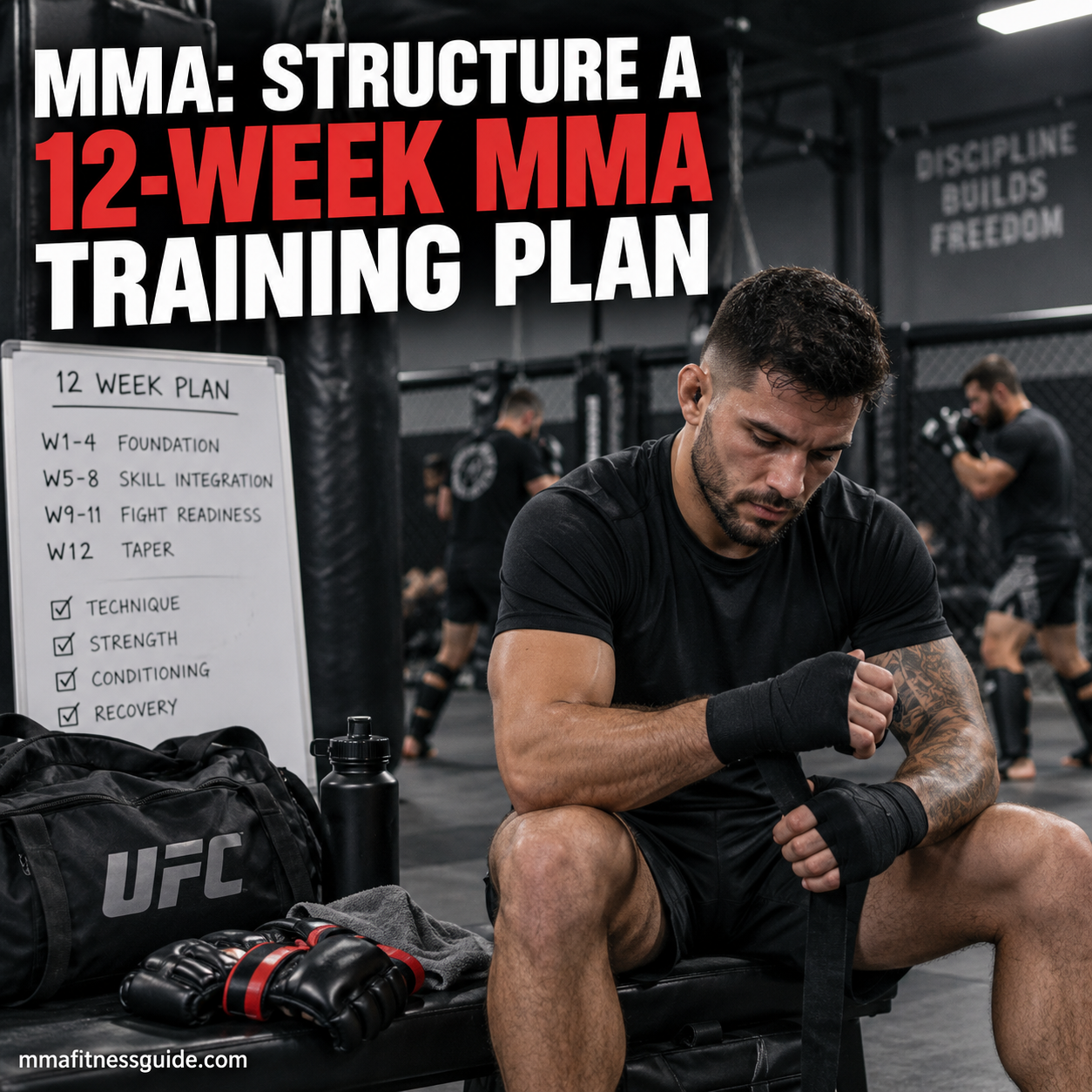
For a practical example, see how to structure a 12-week MMA training plan .
Mistake 10: Skipping Conditioning Outside Fight Camp
Some fighters maintain relatively little structured conditioning until a competition is scheduled.
They then attempt to develop their entire endurance capacity during a short fight camp.
This creates unnecessary pressure.
Rapidly increasing training volume may lead to excessive fatigue and can increase the risk of overuse problems.
Why Year-Round Conditioning Matters
Maintaining a reasonable conditioning foundation allows athletes to enter fight camp with an established level of fitness.
Instead of attempting to build everything at once, the camp can focus on refining specific qualities.
Year-round conditioning may also make training progression more manageable.
What Off-Camp Conditioning Should Include
A practical maintenance approach might involve:
- One or two aerobic sessions weekly
- Regular technical MMA training
- Strength training
- Occasional targeted intervals
- Planned recovery
The appropriate workload depends on the athlete’s experience and schedule.
Fight camp can then introduce more specific demands without requiring an abrupt increase from minimal activity.
For a detailed comparison, read our guide on training camps vs. year-round conditioning .
Mistake 11: Letting Sparring Replace Conditioning Entirely
Sparring creates substantial cardiovascular and muscular demands.
However, it is not always a reliable substitute for structured conditioning.
The intensity of sparring changes according to the partner, training objective, and technical situation.
One round might involve continuous exchanges.
Another may include extended periods of slower movement.
This variability makes it difficult to control conditioning intensity precisely.
Why Sparring Alone Is Not Enough
Sparring should primarily serve technical and tactical development.
Attempting to maximize conditioning during every round may encourage unnecessary intensity.
It can also increase contact exposure and recovery demands.
How to Fix It
Use sparring for its intended technical and tactical purposes.
Develop general aerobic endurance through lower-risk activities such as cycling, running, or rowing.
Use targeted intervals when a specific conditioning quality needs improvement.
This approach allows fighters to improve physical capacity without relying entirely on additional contact.
Mistake 12: Ignoring Breathing and Pace Control
Breathing and pacing influence how fighters manage effort during training and competition.
Some athletes hold their breath during striking combinations or grappling exchanges.
Others begin rounds at an intensity they cannot sustain.
These habits can contribute to unnecessary fatigue.
Avoid Unnecessary Breath-Holding
Brief bracing may occur naturally during forceful movements.
However, prolonged breath-holding during continuous activity can make breathing regulation more difficult.
Practice coordinated breathing during controlled drills.
For example, use natural exhalation during strikes while maintaining relaxed breathing between combinations.
Develop Better Pace Awareness
Not every exchange requires maximum effort.
Fighters must recognize when to accelerate and when to maintain a sustainable pace.
Controlled pad rounds can help develop this awareness.
Begin at a manageable intensity and introduce brief higher-output periods.
Return to controlled movement between bursts.
Practice Recovery Between Efforts
During interval training, use recovery periods to regain controlled breathing.
Avoid deliberately forcing extreme breathing patterns or prolonged breath holds.
The objective is efficient breathing and appropriate pacing rather than manipulating oxygen intake.
Mistake 13: Copying Other Fighters’ Conditioning Programs
Professional fighters often share demanding training routines online.
These workouts may include multiple daily sessions, extensive roadwork, high-intensity intervals, and large volumes of technical practice.
However, the visible workout represents only part of the athlete’s overall program.
Their training history, recovery resources, competition schedule, and coaching support may differ significantly from yours.
Why Copying Elite Programs Can Backfire
An advanced athlete may tolerate workloads that overwhelm a beginner.
A recreational fighter with a full-time job may have less time available for sleep and recovery.
Age, previous injuries, training experience, and individual responses to exercise also influence appropriate programming.
How to Build an Individualized Program
Start by assessing your current training schedule.
Identify how many demanding sessions you already perform.
Consider your primary conditioning limitation.
Then add the smallest practical amount of additional work needed to address it.
Increase volume gradually and monitor performance.
Beginners should also review our guide on avoiding common MMA beginner mistakes .
For athletes managing changing recovery needs, training for longevity and staying fit past 40 provides additional considerations.
What Smart Fighter Conditioning Looks Like
Effective MMA conditioning combines several physical qualities within a manageable training schedule.
A complete program should include aerobic development, targeted high-intensity work, sport-specific conditioning, and planned recovery.
The exact balance depends on the athlete’s needs.
Aerobic Development
Use sustained, manageable exercise to build endurance.
Cycling, running, rowing, and swimming are practical options.
The objective is to develop capacity without creating excessive fatigue.
Targeted High-Intensity Training
Use intervals to develop the ability to sustain and repeat demanding efforts.
Choose work and recovery periods according to the intended adaptation.
Avoid making every interval session a maximum-effort test.
Sport-Specific Conditioning
Include controlled technical drills that reflect the demands of MMA.
Maintain movement quality and avoid unnecessary contact.
Strength and Muscular Endurance
Strength training supports force production and physical preparation.
Muscular endurance work helps develop the ability to repeat submaximal efforts.
Both should be coordinated with technical practice.
Planned Recovery
Include easier sessions and rest days.
Adjust the program when fatigue accumulates.
The best conditioning program is one that develops fitness while allowing the athlete to continue improving technically.
Sample Weekly MMA Conditioning Schedule
The following template illustrates how a recreational or intermediate fighter might organize conditioning alongside technical practice.
It assumes the athlete already has a reasonable training foundation.
| Day | Training focus | Conditioning |
|---|---|---|
| Monday | Striking practice | No additional hard conditioning |
| Tuesday | Aerobic development | 30 minutes easy cycling |
| Wednesday | Grappling practice | Technical conditioning only |
| Thursday | Strength training | No additional conditioning |
| Friday | Interval training | 6 × 30-second efforts |
| Saturday | MMA technical practice | Moderate intensity |
| Sunday | Recovery | Rest or easy walking |
For Thursday’s strength session, avoid adding a demanding conditioning circuit if Friday’s intervals are a priority.
During Friday’s interval session, use approximately 90–120 seconds of easy recovery between efforts.
Begin below maximum intensity and maintain consistent output.
This is an illustrative schedule, not a universal prescription.
If Wednesday’s grappling session is especially demanding, Friday’s intervals may need to be reduced or moved.
The total workload matters more than following a rigid calendar.
How to Start Fixing These Conditioning Mistakes
You do not need to completely rebuild your training program overnight.
Begin by identifying the biggest sources of unnecessary fatigue and the most obvious gaps in your conditioning.
Step 1: Review Your Current Training
Write down every training session completed during a typical week.
Include sparring, wrestling, strength training, running, and conditioning circuits.
Mark which sessions are genuinely demanding.
This provides a clearer picture of your total workload.
Step 2: Identify Your Main Limitation
Consider where performance declines.
Do you struggle to maintain a steady pace?
Do repeated explosive efforts become progressively slower?
Does local muscular fatigue limit your grappling?
Do you arrive at training already exhausted?
These observations can help guide programming, although they do not replace formal fitness testing or coaching assessment.
Step 3: Reduce Unnecessary Intensity
Remove conditioning sessions that lack a clear purpose or repeatedly interfere with technical practice.
Replace some demanding work with manageable aerobic training when appropriate.
Step 4: Introduce Measurable Progression
Choose a few repeatable workouts.
Track duration, resistance, pace, output, and perceived effort.
Increase training demands gradually.
Step 5: Monitor Recovery
Pay attention to sleep, soreness, motivation, and performance.
If fatigue continues to accumulate, reduce workload and reassess the schedule.
Small, consistent improvements are generally more sustainable than dramatic increases in training volume.
How to Build Conditioning for Longer MMA Fights
Three-round and five-round fights require athletes to maintain performance across different total durations.
A longer fight creates additional demands on pacing, aerobic endurance, muscular endurance, and recovery between rounds.
However, preparing for five rounds does not simply mean performing every conditioning workout for 25 minutes.
The athlete still needs a balanced program.
Aerobic development supports sustained activity.
High-intensity intervals develop the ability to repeat demanding efforts.
Technical training improves movement efficiency and decision-making under pressure.
Pacing practice helps fighters distribute effort across rounds.
For a more detailed approach, explore our guide on how to build endurance for five-round fights .
Frequently Asked Questions About MMA Conditioning
How Often Should MMA Fighters Do Conditioning?
The appropriate frequency depends on the athlete’s total training workload.
Some fighters may benefit from two or three dedicated conditioning sessions weekly.
Others already receive substantial conditioning through technical practice and need less additional work.
Count demanding sparring and wrestling sessions when planning intensity.
Is Running Necessary for MMA Conditioning?
Running is useful but not mandatory.
Cycling, rowing, swimming, and other aerobic activities can develop cardiovascular fitness.
Running may be appropriate when an athlete tolerates it well and enjoys the activity.
Sport-specific conditioning should complement general aerobic training.
Should Every Conditioning Session Be High Intensity?
No.
High-intensity training is valuable, but excessive use can create unnecessary fatigue.
Lower-intensity aerobic sessions provide important benefits and are often easier to recover from.
Can Sparring Improve Conditioning?
Yes.
Sparring can create substantial cardiovascular and muscular demands.
However, its intensity is variable, and it involves contact-related risks.
Structured conditioning provides a way to develop physical qualities without relying entirely on sparring.
How Long Does It Take to Improve MMA Endurance?
Some athletes may notice improvements within several weeks of consistent training.
More substantial adaptations generally require longer periods.
Progress depends on initial fitness, training quality, recovery, and individual response.
Should I Do Conditioning After Strength Training?
It depends on the training objective.
If maximum strength is the priority, avoid consistently performing exhausting conditioning before heavy lifting.
Low-intensity aerobic work may be compatible with strength training.
Demanding intervals may be better scheduled separately when possible.
How Do I Know if I’m Doing Too Much Conditioning?
Persistent fatigue, declining performance, poor sleep, and difficulty recovering may indicate that your workload is excessive.
These symptoms can also have other causes.
Reduce unnecessary training stress and seek professional assessment when symptoms persist.
Final Thoughts
MMA conditioning is not a competition to see who can tolerate the most exhausting workout.
It is a structured process of developing the physical qualities required to perform demanding movements repeatedly.
The most common conditioning mistakes involve excessive intensity, inadequate aerobic development, poor recovery, and a lack of progression.
Fighters may also undermine their progress by copying inappropriate training programs, relying entirely on sparring, or confusing exhaustion with improvement.
Effective conditioning addresses these problems through deliberate planning.
Build a consistent aerobic foundation. Use high-intensity training strategically. Include sport-specific movement without compromising technical quality. Monitor recovery and adjust training volume when necessary.
Most importantly, evaluate conditioning by how it supports your overall MMA development.
The goal is to maintain effective movement, technical execution, and physical output throughout training and competition.
Stop chasing exhaustion and start building endurance that supports consistent performance.
Related MMA Conditioning and Training Guides
Continue improving your conditioning with these related articles from MMA Fitness Guide.
- Balancing Cardio and Strength for Optimal Performance — Learn how to organize cardiovascular and resistance training without creating unnecessary fatigue.
- How to Structure a 12-Week MMA Training Plan — Develop a progressive training schedule with appropriate conditioning and recovery.
- Training Camps vs. Year-Round Conditioning — Understand how conditioning priorities change throughout the training year.
- Periodization Training for Martial Artists — Organize training phases to develop fitness while managing accumulated fatigue.
- How to Build Endurance for Five-Round Fights — Explore the conditioning demands of longer MMA bouts and practical ways to prepare for them.