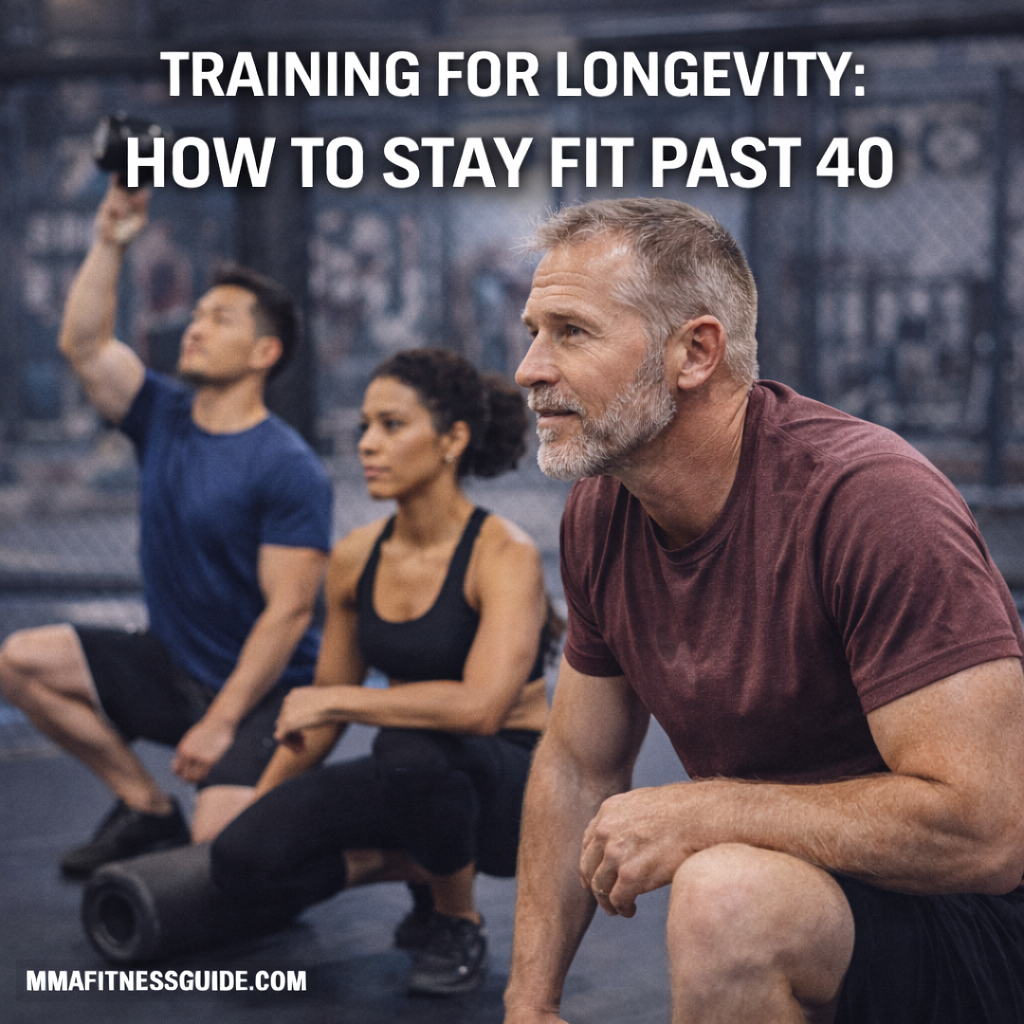
Training MMA past 40 isn’t about proving toughness—it’s about staying capable, healthy, and consistent for the long run. While recovery slows and injuries take longer to heal, many athletes discover that smarter training actually improves performance and enjoyment. Longevity-focused training allows you to keep sharpening skills, staying fit, and enjoying MMA without burning out or breaking down.
This guide explains how to train for longevity past 40 by adjusting intensity, recovery, mindset, and conditioning—without giving up progress or purpose.
Why Training Needs Change After 40
Age doesn’t end athletic potential, but it does change how the body responds to stress.
Common changes include:
- Slower recovery between sessions
- Increased joint stiffness
- Reduced connective tissue resilience
- Higher injury risk from volume overload
- Greater need for structured recovery
Ignoring these changes leads to layoffs. Respecting them extends careers.
Shift the Goal From Peak Performance to Sustainable Performance
Longevity training focuses on how long you can train, not just how hard.
Sustainable performance means:
- Consistent weekly training
- Fewer forced breaks due to injury
- Stable strength and conditioning
- Enjoyment rather than constant exhaustion
Many athletes train better overall once they stop chasing constant intensity.
Prioritize Movement Quality Over Volume
Poor movement accumulates damage over time.
Key priorities:
- Clean technique
- Controlled speed
- Balanced mechanics
- Reduced unnecessary tension
One focused, high-quality session beats three sloppy ones.
Strength Training for Longevity
Strength work becomes more important—not less—after 40.
Focus on Joint-Friendly Strength
Effective longevity-based strength training includes:
- Compound movements with controlled tempo
- Full range of motion
- Emphasis on stability and balance
- Moderate loads over max lifts
Strength supports joints, posture, and power without excessive wear.
Train Strength 2–3 Times Per Week
Recommended approach:
- Full-body or upper/lower splits
- Lower total volume
- Avoid training to failure
- Leave 1–2 reps in reserve
Strength should support MMA—not compete with it.
Conditioning Without Breaking Down
Conditioning keeps fighters sharp, but intensity must be managed.
Emphasize Aerobic Conditioning
Aerobic fitness improves:
- Recovery between rounds
- Heart health
- Fatigue resistance
- Overall work capacity
Examples:
- Zone 2 cardio
- Steady-state roadwork
- Cycling, rowing, or swimming
This type of conditioning supports longevity more than constant max-effort intervals.
Use High-Intensity Conditioning Sparingly
High-intensity work still matters—but in moderation.
Best practices:
- 1–2 hard conditioning sessions per week
- Short intervals
- Full recovery between efforts
- Avoid stacking with hard sparring days
Intensity is effective when it’s targeted.
Adjust Sparring for Longevity
Hard sparring is the biggest injury risk past 40.
Longevity-friendly sparring strategies:
- Reduce frequency, not skill work
- Emphasize technical and situational rounds
- Choose trusted partners
- Keep ego out of exchanges
- Increase light and medium-intensity rounds
You don’t need constant wars to stay sharp.
Mobility and Warm-Ups Become Non-Negotiable
Warm-ups and mobility are no longer optional.
Daily focus areas:
- Hips
- Thoracic spine
- Ankles
- Shoulders
- Neck
A proper warm-up:
- Improves performance
- Reduces injury risk
- Enhances movement confidence
Ten extra minutes here can save months of downtime.
Recovery Is Training After 40
Recovery isn’t rest—it’s preparation for the next session.
Key recovery priorities:
- Sleep consistency
- Hydration
- Nutrition timing
- Active recovery days
- Stress management
Training hard without recovering well shortens longevity fast.
Listen to Early Warning Signs
Pain signals matter more with age.
Pay attention to:
- Lingering soreness
- Joint stiffness that doesn’t improve
- Decreased motivation
- Declining movement quality
- Sleep disruption
Backing off early prevents forced layoffs later.
Nutrition for Training Longevity
Fueling correctly becomes more impactful after 40.
General principles:
- Adequate protein intake
- Consistent meals
- Hydration throughout the day
- Anti-inflammatory food choices
- Avoiding aggressive restriction
Nutrition supports recovery just as much as training structure.
Mental Approach: Training Smarter, Not Softer
Longevity training requires a mindset shift.
Key mental adjustments:
- Let go of comparison with younger athletes
- Value consistency over intensity
- Respect recovery days
- Focus on mastery, not dominance
Experience becomes your biggest advantage.
How Often to Train MMA Past 40
More isn’t always better.
Typical sustainable structure:
- 3–4 MMA sessions per week
- 2–3 strength sessions
- 1–2 conditioning-focused days
- At least 1 full rest day
Consistency over months matters more than volume in any given week.
Injury History Should Guide Training Choices
Past injuries inform future decisions.
Best practices:
- Modify vulnerable positions
- Strengthen surrounding muscles
- Communicate limitations with coaches
- Avoid unnecessary exposure to high-risk situations
Longevity means protecting known weak points.
Long-Term Benefits of Longevity Training
Athletes who train smart past 40 experience:
- Fewer injuries
- More enjoyment
- Better mental health
- Stronger community connection
- Lifelong fitness habits
MMA becomes part of life—not something you age out of.
Final Thoughts
Training for longevity past 40 isn’t about slowing down—it’s about staying in the game. By prioritizing movement quality, recovery, intelligent conditioning, and smart sparring, athletes can continue training MMA safely and effectively for years to come.
Longevity isn’t luck. It’s the result of consistent, thoughtful choices made every week.