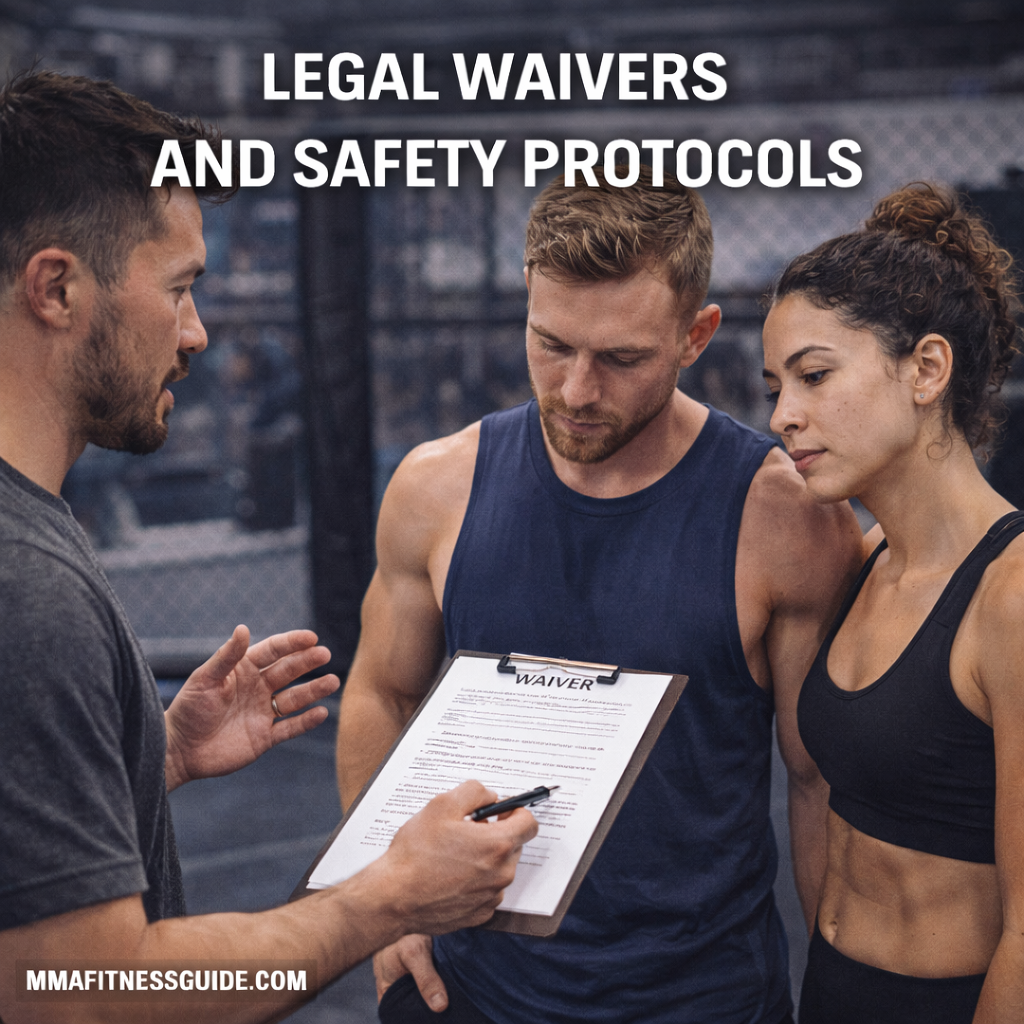
Running an MMA gym involves more than coaching technique and building fighters—it also requires protecting athletes, staff, and the business itself. Legal waivers and safety protocols are foundational tools that reduce risk, set expectations, and create a safer training environment. When done correctly, they protect everyone involved while supporting long-term gym credibility and sustainability.
This article explains the role of legal waivers and safety protocols in MMA, what they should include, and how gym owners can implement them effectively without harming trust or culture.
Why Legal Protection Matters in MMA Gyms
MMA is a high-risk sport by nature. Striking, grappling, takedowns, and live sparring all carry inherent injury risks.
Without proper legal and safety systems, gyms face:
- Liability exposure from injuries
- Disputes with members or families
- Insurance complications
- Reputation damage
- Financial instability
Waivers and protocols don’t eliminate risk—but they manage it responsibly.
What a Legal Waiver Does (and Doesn’t Do)
A legal waiver is a written agreement where participants acknowledge risks and agree not to hold the gym liable for certain injuries.
Waivers generally:
- Acknowledge inherent risks of MMA training
- Confirm voluntary participation
- Clarify member responsibility
- Protect against common liability claims
However, waivers do not:
- Protect against gross negligence
- Replace proper safety practices
- Excuse reckless behavior
- Override local laws
Waivers are a layer of protection—not a substitute for responsible operation.
Key Elements of an Effective MMA Waiver
A strong waiver should be clear, specific, and legally sound.
Common components include:
- Description of MMA-related risks
- Assumption of risk statement
- Release of liability clause
- Medical responsibility acknowledgment
- Emergency treatment consent
- Photography or media consent (optional)
- Signature and date
Legal language should be understandable—not intimidating.
Importance of Age and Parental Consent
Youth programs require additional protection.
Best practices include:
- Separate waivers for minors
- Parental or guardian signatures
- Clear age-specific risk explanations
- Emergency contact information
Never allow minors to train without documented consent.
When and How Waivers Should Be Signed
Timing matters.
Recommended practices:
- Waiver signed before first class
- No training until paperwork is complete
- Digital storage with secure access
- Easy retrieval if needed
Verbal acknowledgment is never enough.
Safety Protocols: The Other Half of Protection
Legal waivers work best alongside clear safety protocols.
Safety protocols demonstrate:
- Duty of care
- Professional standards
- Risk awareness
- Commitment to athlete well-being
They also strengthen legal defense if issues arise.
Core Safety Protocols Every MMA Gym Should Have
Controlled Sparring Rules
Clear sparring guidelines reduce injuries and conflict.
Examples:
- Defined intensity levels
- Coach supervision required
- Mandatory protective gear
- Immediate stoppage when needed
Uncontrolled sparring is one of the biggest legal risks.
Injury Reporting and Response Procedures
Every gym should have a response plan.
Protocols should include:
- Immediate training stoppage
- Basic first-aid procedures
- Injury documentation
- Return-to-training guidelines
- Emergency escalation steps
Consistency matters more than complexity.
Hygiene and Equipment Safety Standards
Unsanitary conditions can lead to illness and liability.
Safety standards should address:
- Mat cleaning schedules
- Shared equipment sanitation
- Open wound policies
- Personal hygiene expectations
Clean environments reduce health-related disputes.
Coach Qualifications and Oversight
Qualified supervision reduces risk dramatically.
Best practices:
- Certified coaches where applicable
- Clear authority during training
- Ongoing education
- Consistent rule enforcement
Coaches represent the gym legally and ethically.
Communicating Safety Without Killing Culture
Safety rules don’t have to feel restrictive.
Effective gyms:
- Explain the “why” behind rules
- Normalize safety as part of professionalism
- Encourage questions and feedback
- Enforce rules calmly and consistently
Athletes respect gyms that prioritize long-term health.
Documentation Beyond Waivers
Additional documentation strengthens protection.
Useful records include:
- Incident reports
- Attendance logs
- Equipment maintenance records
- Coach training certifications
Documentation supports accountability and clarity.
Insurance and Legal Support
Waivers and protocols should align with insurance coverage.
Gym owners should:
- Carry appropriate liability insurance
- Review waiver language with legal counsel
- Update documents as laws change
- Align protocols with insurer requirements
Prevention is always cheaper than litigation.
Common Mistakes Gym Owners Make
Avoid these pitfalls:
- Using generic waivers without customization
- Failing to update documents
- Enforcing rules inconsistently
- Ignoring minor injuries
- Assuming waivers alone provide full protection
Professionalism requires proactive effort.
Balancing Risk and Growth
Strong legal and safety systems actually help gyms grow.
They:
- Build trust with members
- Attract serious athletes
- Improve retention
- Reduce disruptions from injuries
- Protect long-term reputation
Safety isn’t a barrier—it’s a foundation.
Final Thoughts
Legal waivers and safety protocols are essential pillars of any successful MMA gym. When thoughtfully designed and consistently enforced, they protect athletes, coaches, and business owners alike. More importantly, they create an environment where people can train hard, progress confidently, and stay healthy over time.
Professional gyms don’t rely on luck—they rely on structure, responsibility, and care.