Introduction
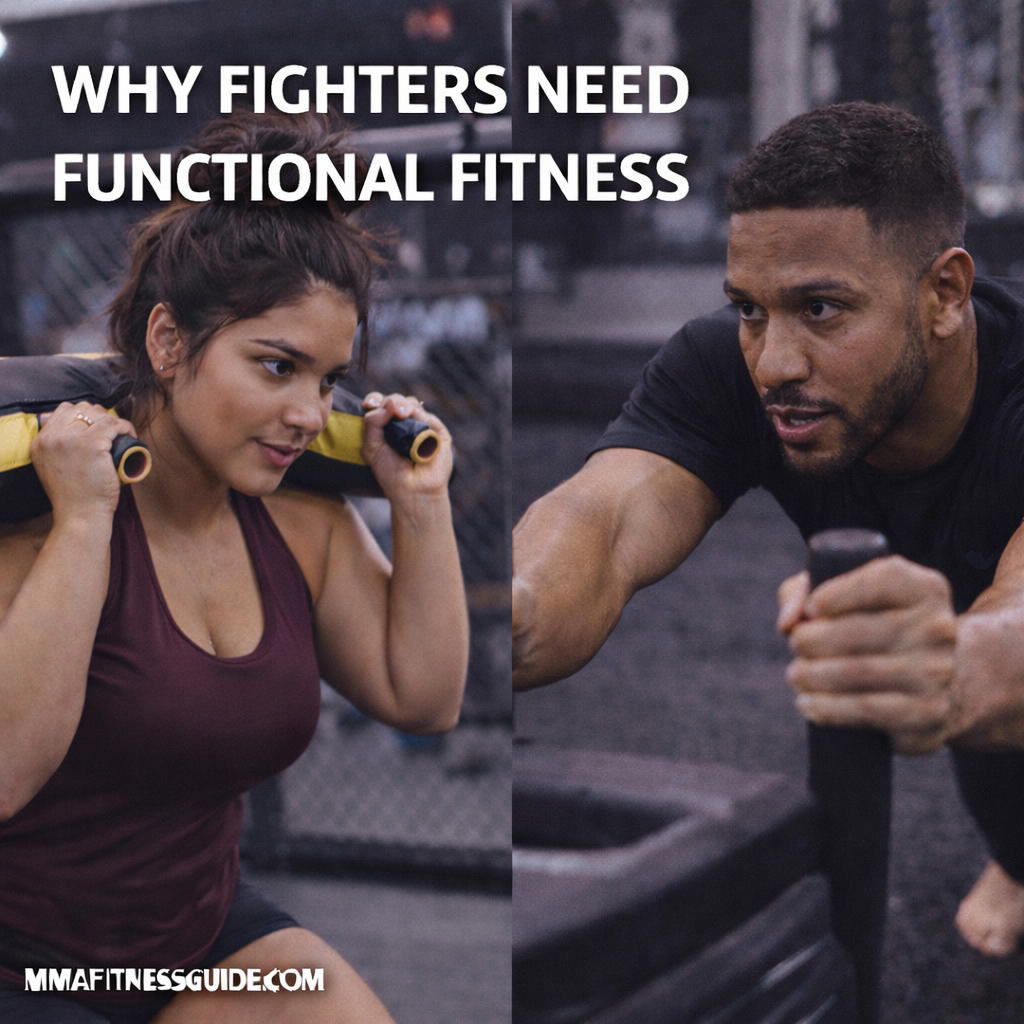
MMA is unpredictable. Fighters strike, wrestle, scramble, clinch, and defend under constant fatigue and pressure. Because of this, traditional gym training alone isn’t enough. Fighters need functional fitness—training that improves how the body moves, produces force, and resists fatigue in real-world combat situations.
Functional fitness isn’t about looking strong. It’s about being strong, coordinated, and resilient when it matters most.
What Functional Fitness Really Means
Functional fitness focuses on movements, not muscles in isolation.
It emphasizes:
- Multi-joint movements
- Coordination and balance
- Core stability
- Strength through full ranges of motion
The goal is transferable strength that shows up in the cage.
How MMA Demands Functional Strength
Every MMA exchange is dynamic.
Examples include:
- Driving through takedowns
- Resisting opponent pressure
- Rotating explosively for strikes
- Stabilizing during scrambles
These actions require integrated, whole-body strength.
Functional Fitness vs Traditional Bodybuilding
Traditional bodybuilding trains muscles in isolation.
Functional fitness:
- Trains movement patterns
- Builds coordination under load
- Improves strength in unstable positions
A fighter with functional strength performs better under chaos.
Improving Force Transfer
Power in MMA comes from the ground up.
Functional training improves:
- Hip-to-hand power transfer
- Rotational strength
- Stability during explosive movements
This leads to harder strikes and stronger grappling.
Core Stability for Fighters
The core connects everything.
Functional core training:
- Resists rotation and flexion
- Stabilizes during strikes and takedowns
- Protects the spine under load
A strong core improves both offense and defense.
Balance and Body Awareness
MMA is rarely symmetrical.
Functional fitness improves:
- Single-leg strength
- Balance during transitions
- Awareness in awkward positions
Better balance means fewer wasted movements.
Injury Prevention Through Functional Training
Many injuries happen in compromised positions.
Functional fitness helps by:
- Strengthening joints through range
- Improving control under fatigue
- Reducing compensations
Durable movement reduces breakdown.
Conditioning That Matches Fighting Demands
Functional conditioning mirrors fight energy systems.
It emphasizes:
- Repeated explosive efforts
- Short recovery windows
- Movement-based fatigue
This prepares fighters for real rounds—not just machines.
Functional Fitness for Grappling
Grappling demands constant tension.
Functional training supports:
- Grip endurance
- Isometric strength
- Positional stability
Strength that lasts matters more than max lifts.
Functional Fitness for Striking
Striking relies on coordination.
Functional benefits include:
- Better footwork control
- Improved rotation speed
- More stable base for power
Efficient movement amplifies striking effectiveness.
Examples of Functional Movements for Fighters
Common functional exercises include:
- Squats and hinges
- Carries and drags
- Rotational throws
- Pushes and pulls
Simple movements, trained intelligently, deliver results.
Training Under Fatigue
Fights happen while tired.
Functional training:
- Builds coordination under fatigue
- Improves decision-making when exhausted
- Reduces technique breakdown
This separates conditioned fighters from gassed ones.
Why Machines Have Limited Value
Machines remove stabilizing demands.
While useful occasionally, they:
- Don’t reflect real movement
- Limit joint control development
- Reduce carryover to fighting
Free movement better prepares fighters.
Functional Fitness Across Skill Levels
All fighters benefit.
Beginners:
- Learn proper movement patterns
- Build joint resilience
Advanced fighters:
- Enhance efficiency
- Maintain longevity
The approach scales with experience.
Functional Fitness and Longevity
Longevity requires intelligent training.
Functional fitness:
- Reduces overuse injuries
- Maintains joint health
- Supports consistent training
Healthy fighters improve longer.
Integrating Functional Fitness Into MMA Training
Functional training should support skill work.
Best practices include:
- Short, focused sessions
- Low interference with sparring
- Intentional exercise selection
Strength supports fighting—not the other way around.
Common Mistakes Fighters Make
Avoid these errors:
- Chasing max lifts year-round
- Ignoring movement quality
- Overcomplicating workouts
Simple, consistent training wins.
Final Thoughts
Functional fitness is essential for MMA fighters because it builds strength, conditioning, and resilience that directly transfer to combat. Fighters don’t need isolated muscle size—they need coordinated power, balance, and durability under pressure.
Train movements, not just muscles. That’s how functional fitness turns gym work into fight performance.