
Introduction
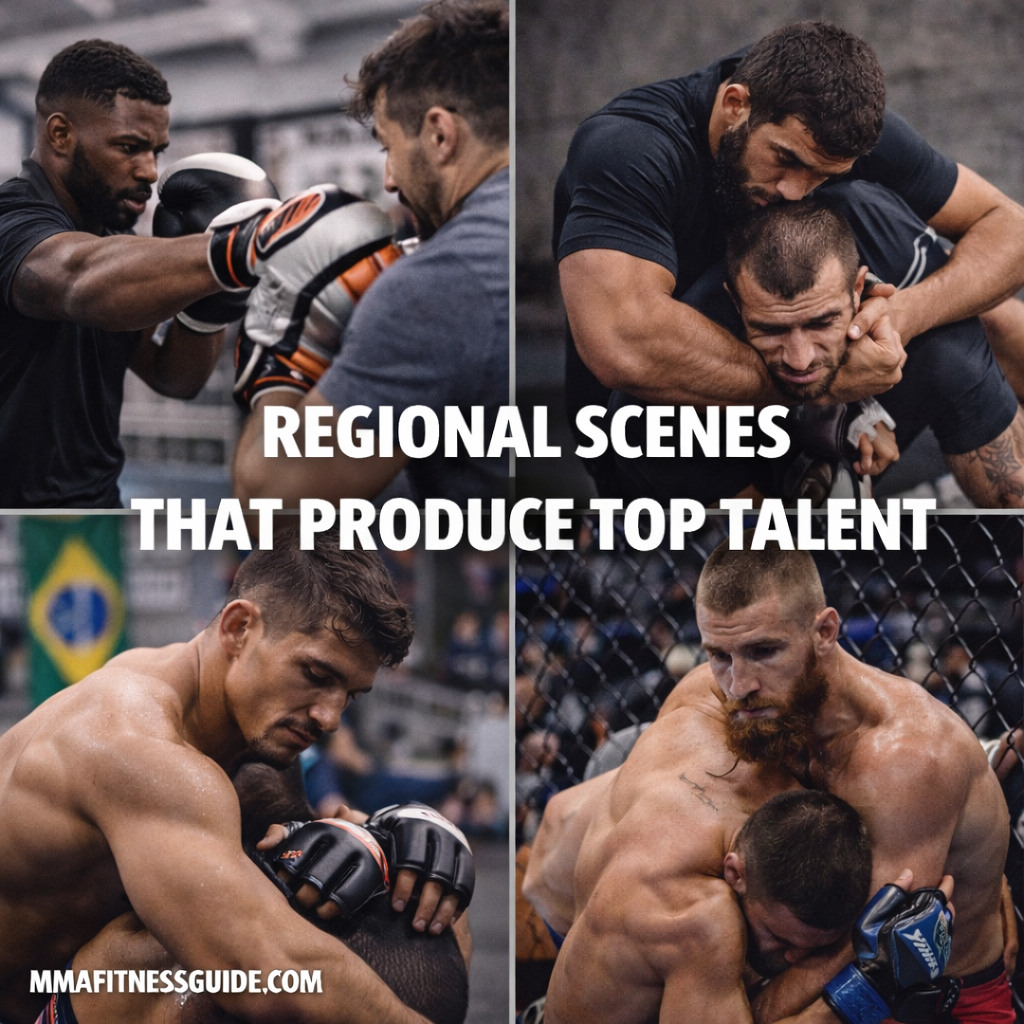
Elite MMA fighters rarely emerge in isolation. Behind almost every top athlete is a regional scene that shaped their style, mindset, and development. Certain cities, gyms, and regions consistently produce world-class talent due to culture, coaching depth, competition level, and training infrastructure.
Understanding these regional fight scenes reveals how environment plays a crucial role in creating champions—and why some areas become talent pipelines generation after generation.
Why Regional Fight Scenes Matter
MMA is not just an individual sport; it’s an ecosystem. Regional scenes create shared standards, rivalries, and development pathways that push fighters to higher levels.
Strong regional scenes typically offer:
- High-level coaching networks
- Consistent amateur and professional competition
- Gyms that foster accountability and toughness
- Cultural acceptance of combat sports
- A clear pathway from beginner to elite
Where you train can influence how far you go.
Southern California: A Global MMA Hub
Southern California has long been one of the most influential MMA regions in the world.
Why it produces elite fighters:
- High concentration of top gyms
- Year-round training conditions
- Access to elite wrestling, boxing, and BJJ
- Strong amateur circuits
- Deep talent pools that push daily competition
Fighters from this region often benefit from early exposure to high-level training environments.
Las Vegas: The Fight Capital Effect
Las Vegas has evolved from a fight destination into a full-time training powerhouse.
Key advantages include:
- Proximity to major promotions and events
- Access to elite coaches and sports science
- High-performance training centers
- Constant exposure to top-tier fighters
The professional atmosphere attracts athletes who are serious about long-term careers.
Brazil: The Birthplace of Modern MMA Culture
Brazil’s influence on MMA is unmatched, particularly in grappling and submission fighting.
What defines the Brazilian scene:
- Deep roots in Brazilian Jiu-Jitsu
- Cultural pride in fighting arts
- Early competition exposure
- Tough gym cultures emphasizing resilience
Brazilian fighters often develop exceptional guard skills, submission awareness, and mental toughness.
Dagestan and the Caucasus Region: Wrestling Dominance
The Caucasus region, especially Dagestan, has become synonymous with elite grappling and pressure fighting.
Key traits of this scene:
- Lifelong wrestling development
- Extreme physical conditioning
- Strong discipline and structure
- Emphasis on control and dominance
Fighters from this region are known for relentless pressure, endurance, and grappling superiority.
Eastern Europe: Grit and Discipline
Eastern European regions have produced increasingly dominant MMA talent.
Why the scene is growing:
- Strong backgrounds in wrestling, sambo, and boxing
- Military-style discipline in training
- Cultural emphasis on toughness
- Rapidly improving MMA infrastructure
These fighters often bring a composed, methodical approach to competition.
Japan: Technical Precision and Tradition
Japan’s MMA history has shaped some of the sport’s most technical fighters.
Distinct features include:
- Respect for martial arts tradition
- Technical striking and movement
- Strong judo and wrestling influence
- Emphasis on performance and professionalism
Japanese fighters often display exceptional timing, balance, and fight IQ.
The Midwest United States: Wrestling Foundations
Many top American fighters come from Midwest wrestling backgrounds.
Why this region matters:
- High-level scholastic wrestling systems
- Competitive youth sports culture
- Physical and mental toughness development
- Strong transition from wrestling to MMA
These fighters often excel in takedowns, top control, and grinding fight styles.
Why Gyms Matter More Than Geography Alone
While regions matter, gyms are the true engines of talent development.
Elite gyms typically provide:
- Coaching continuity
- Internal competition
- Clear development pathways
- Strong leadership and culture
A single gym can elevate an entire region’s reputation.
The Role of Competition Density
Talent grows fastest where competition is frequent and challenging.
High-output regions offer:
- Regular amateur events
- Tough local rivalries
- Pressure-tested development
- Faster learning curves
Iron sharpens iron, especially in combat sports.
How Regional Identity Shapes Fighting Style
Regional scenes often produce recognizable styles.
Examples include:
- Wrestling-heavy pressure fighters
- Submission-focused grapplers
- Technical strikers with strong footwork
- Clinch and cage-control specialists
Environment influences how fighters solve problems under pressure.
Can Fighters Succeed Outside Major Regions?
Yes—but it often requires relocation or travel.
Successful fighters from smaller scenes often:
- Seek elite training camps
- Travel for higher-level competition
- Build networks beyond their home region
- Invest heavily in coaching access
Talent can emerge anywhere, but environment accelerates development.
The Evolution of Regional Scenes
As MMA grows globally, new regions continue to emerge.
Contributing factors include:
- Increased access to coaching education
- Online training resources
- International competition exposure
- Growing amateur infrastructures
The next talent hotbed may already be forming.
Final Thoughts
Regional scenes play a powerful role in producing top MMA talent. Culture, coaching, competition, and opportunity combine to shape fighters long before they reach the global stage. While individual dedication matters, environment often determines how fast—and how far—a fighter can go.
Champions are built through community, not isolation.