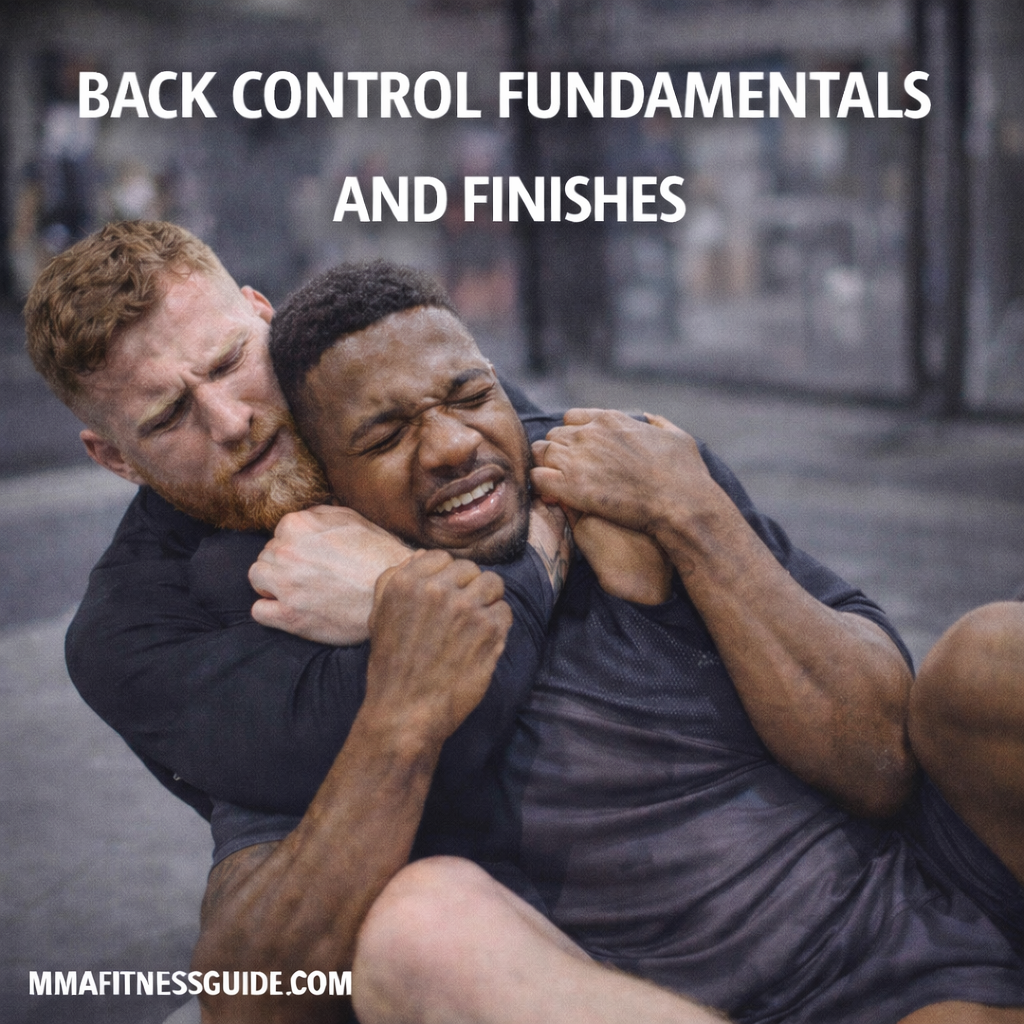
Back control is one of the most dominant positions in MMA and grappling. When you control an opponent’s back, you limit their offense, control their movement, and open the door to high-percentage finishes. At every level of MMA, fighters who understand back control fundamentals consistently outperform those who rely only on strength or speed.
This guide covers the essential principles of back control, common mistakes, and the most effective finishes fighters should master.
Why Back Control Is So Powerful in MMA
Back control offers both offensive and defensive advantages.
Key benefits include:
- Limited opponent striking options
- High finishing potential
- Strong control with minimal energy
- Reduced risk compared to top positions
- Psychological pressure on the opponent
In MMA, few positions offer this level of control with such low risk.
Understanding Proper Back Control Positioning
Effective back control starts with correct positioning.
Core elements include:
- Chest-to-back connection
- Hips tight to the opponent
- Head positioned to prevent turning
- Constant pressure without squeezing excessively
Control comes from alignment, not muscle tension.
Hooks vs Body Triangle
Using Hooks Effectively
Hooks provide mobility and control.
Benefits of hooks include:
- Easier transitions between sides
- Better adjustment during scrambles
- Reduced leg fatigue
- Flexibility against explosive opponents
Hooks are ideal for beginners and dynamic MMA situations.
When to Use a Body Triangle
The body triangle offers strong upper-body control.
Advantages include:
- Limiting opponent hip movement
- Freeing hands for attacks
- Increased pressure during strikes or chokes
Be cautious with the body triangle against larger or highly explosive opponents.
Hand Fighting Fundamentals
Hand fighting determines success from back control.
Key principles include:
- Always protect the choking arm
- Control wrists, not hands
- Strip defensive grips patiently
- Use two-on-one control when possible
Winning hand fights creates finishing opportunities.
Head and Shoulder Positioning
Upper-body positioning enhances control.
Focus on:
- Keeping your head tight to theirs
- Using shoulder pressure to limit turns
- Staying glued during movement
- Preventing the opponent from placing their head on the mat
Small adjustments make a big difference.
Common Ways Fighters Lose Back Control
Avoid these common mistakes:
- Crossing feet incorrectly
- Squeezing legs constantly
- Reaching too aggressively for chokes
- Falling to the wrong side during scrambles
- Losing chest-to-back contact
Patience preserves dominance.
Striking From Back Control in MMA
Back control isn’t only about submissions.
Effective MMA options include:
- Short punches and elbows
- Forcing defensive reactions
- Opening hands for choke entries
- Accumulating damage safely
Strikes create opportunities without risking position.
High-Percentage Finishes From Back Control
Rear Naked Choke
The most reliable finish.
Key details include:
- Chin tuck management
- Shoulder pressure
- Gradual tightening
- Correct arm positioning
The choke doesn’t require squeezing — it requires precision.
Short Choke
The short choke is effective when space is limited.
Best used when:
- Opponent defends the rear naked choke
- Chin stays tucked
- Space is tight against the cage
It applies pressure quickly and efficiently.
Collar Tie and Jaw Pressure Finishes
Sometimes the chin won’t lift.
Options include:
- Sliding under the jawline
- Applying steady jaw pressure
- Transitioning to other chokes
Stay patient and methodical.
Using the Cage for Back Control
The cage enhances control.
Benefits include:
- Limiting opponent movement
- Preventing rolls
- Creating leverage for strikes and chokes
Use the cage as a third limb.
Conditioning and Endurance for Back Control
Maintaining back control requires endurance.
Develop it through:
- Positional sparring rounds
- Grip endurance drills
- Isometric holds
- Breathing control
Relaxed control lasts longer.
Drills to Improve Back Control
Effective drills include:
- Back control retention rounds
- Hand fighting isolation drills
- Escape-and-recapture drills
- Slow-pressure finishing drills
Repetition builds instinct.
Applying Back Control in MMA Safely
In MMA, safety matters.
Remember to:
- Protect your head during transitions
- Avoid crossing ankles incorrectly
- Be aware of illegal strikes
- Maintain posture against cage scrambles
Control first, finish second.
Final Thoughts
Few positions pay off like back control once you actually own it. Fighters who master its fundamentals gain a reliable path to victory through control, damage, and submissions. The key isn’t rushing finishes — it’s maintaining pressure, winning hand fights, and applying techniques patiently.
When back control becomes a place of comfort rather than urgency, finishes come naturally. Master the fundamentals, and this position will become one of your greatest weapons.