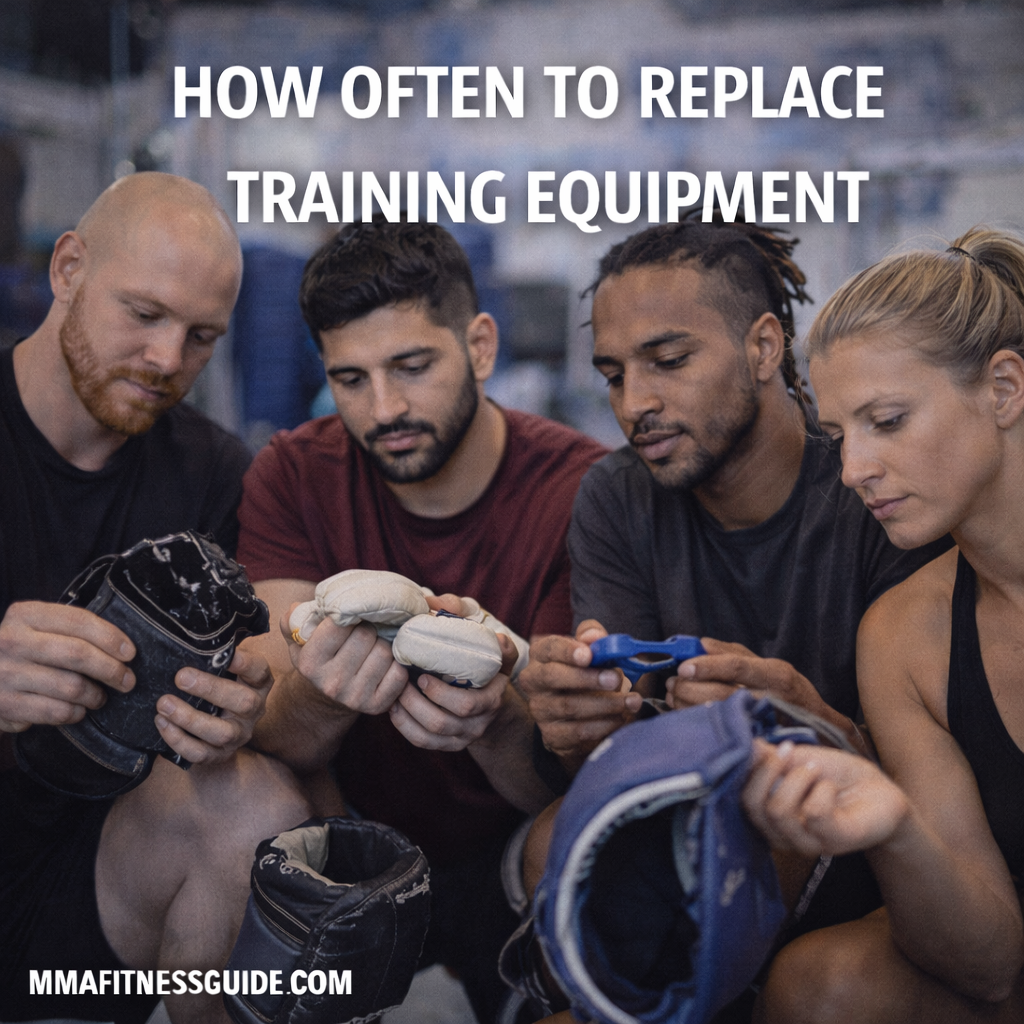
MMA training equipment takes a beating. From gloves and shin guards to rash guards and mouthguards, your gear absorbs sweat, impact, and constant friction. Using worn-out equipment doesn’t just affect comfort — it can increase injury risk, reduce training quality, and create hygiene problems.
Knowing when to replace your training gear helps you stay safe, train effectively, and avoid preventable setbacks. Here’s how often common MMA equipment should actually be replaced, and the warning signs to watch for.
Why Replacing MMA Training Equipment Matters
Worn gear doesn’t perform the way it should.
Old or damaged equipment can lead to:
- Reduced impact protection
- Increased risk of hand, foot, or joint injuries
- Poor hygiene and odor buildup
- Distracting discomfort during training
- Equipment failure during sparring
Replacing gear on time is part of smart training.
Gloves: When to Replace Them
Gloves are one of the most important pieces of MMA gear.
Signs Your Gloves Need Replacing
Replace gloves when you notice:
- Padding feels flat or uneven
- Wrist support weakens
- Seams split or tear
- Gloves no longer hold shape
- Strong odor that doesn’t improve with cleaning
Using broken-down gloves increases injury risk for you and your partners.
General Replacement Timeline
For regular training:
- Bag gloves: every 6–12 months
- Sparring gloves: every 9–18 months
Heavy use may shorten this timeline.
Shin Guards and Sparring Protection
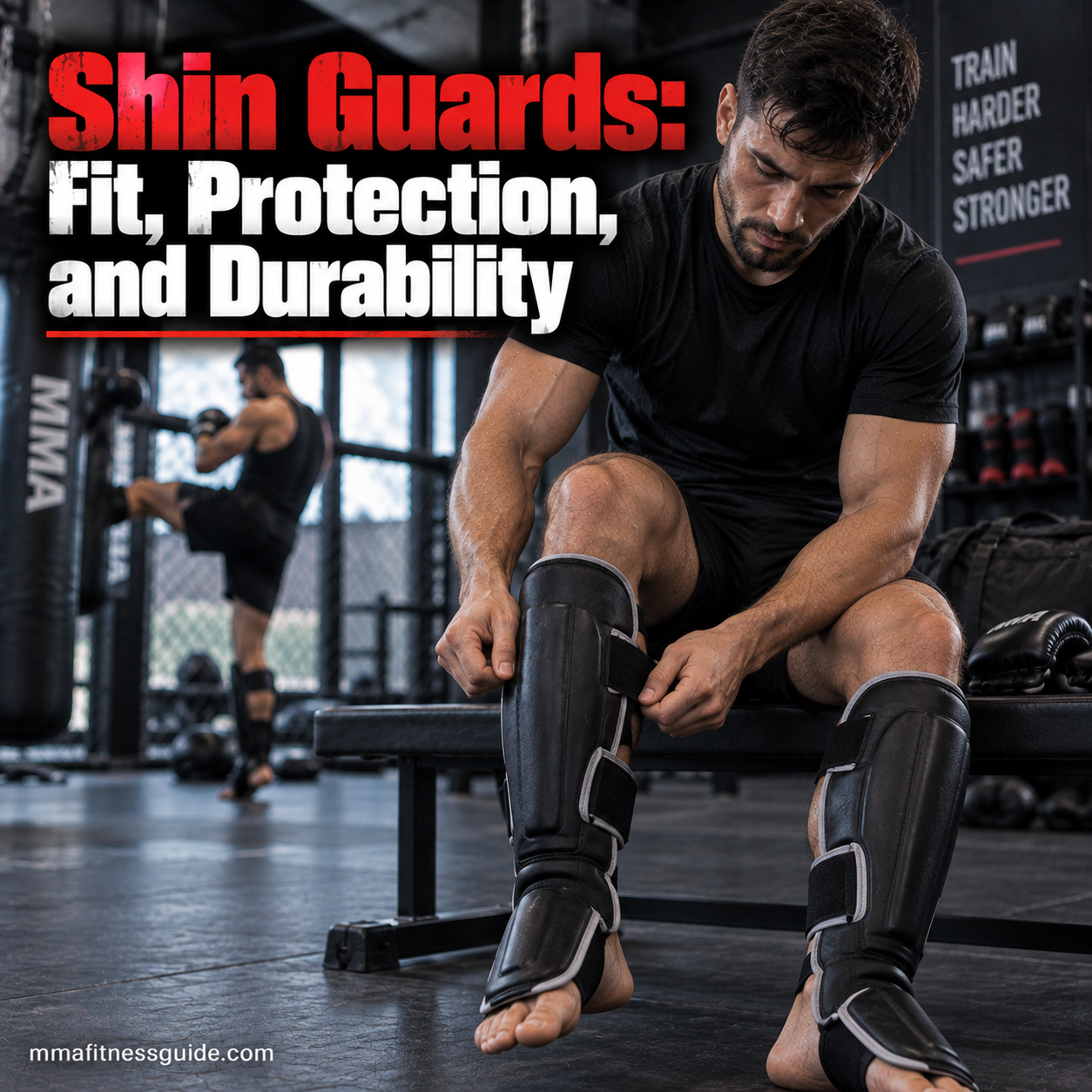
Shin guards absorb repeated impact.
Replacement Signs
Watch for:
- Thinning or compressed padding
- Loose straps or Velcro
- Guards shifting during movement
- Increased bruising despite proper technique
Once padding breaks down, protection drops quickly.
Typical Lifespan
- Light to moderate use: 12–24 months
- Heavy sparring schedules: closer to 12 months
Mouthguards: Replace More Often Than You Think
Mouthguards wear down with use.
Replace your mouthguard if:
- It no longer fits snugly
- Bite alignment feels off
- Cracks or tears appear
- Breathing becomes restricted
- You’ve experienced significant impact
Boil-and-bite mouthguards typically last 6–12 months.
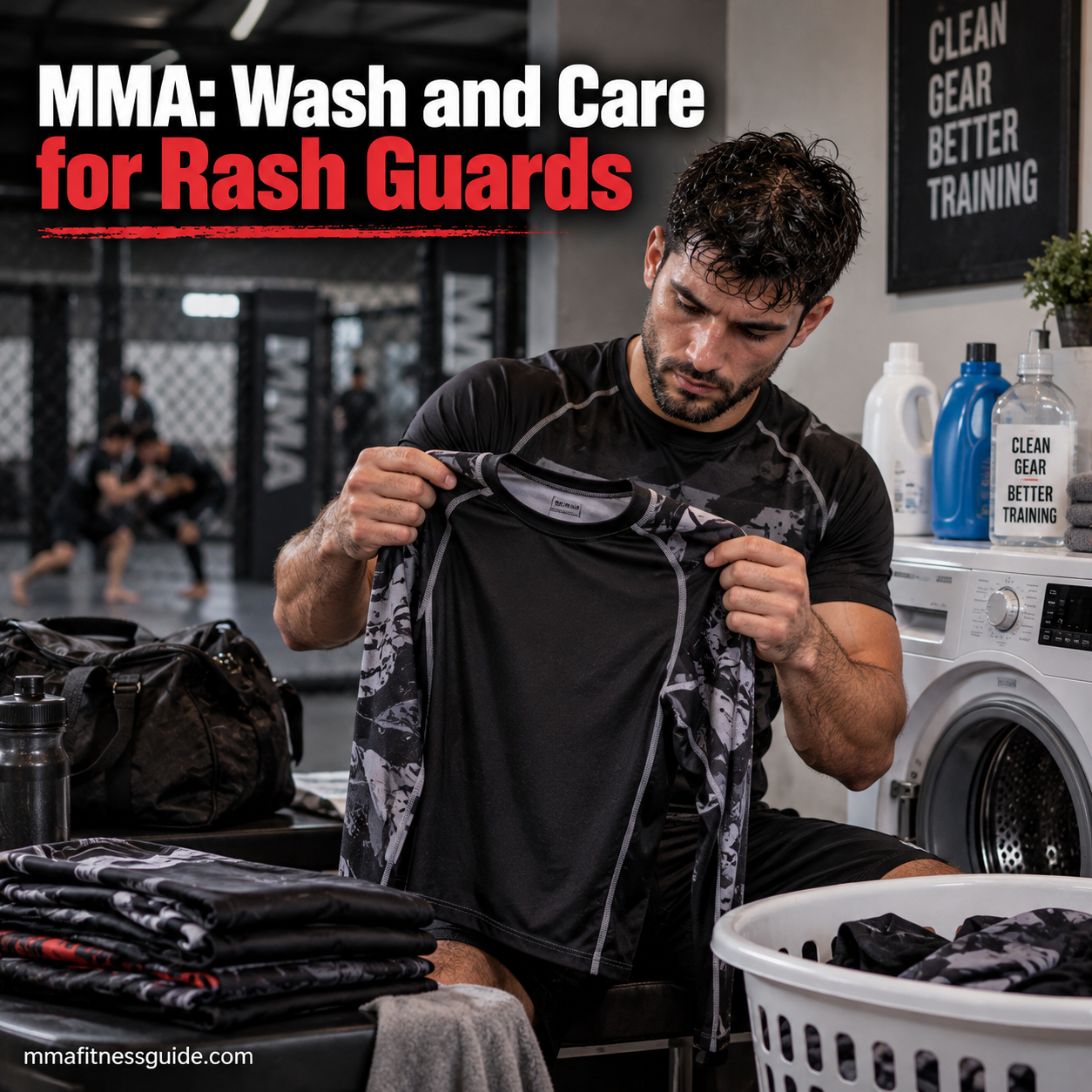
Rash Guards and Training Apparel
Clothing doesn’t last forever under MMA demands.
Signs of Wear
Replace rash guards when:
- Fabric thins or stretches out
- Compression is lost
- Seams tear
- Skin irritation increases
- Odors persist after washing
Worn apparel can cause chafing and skin infections.
Replacement Frequency
- Heavy training: every 6–12 months
- Moderate training: up to 18 months
Groin Guards and Protective Cups
Protective gear must stay reliable.
Replace groin protection if:
- Padding cracks or hardens
- Straps lose elasticity
- Fit shifts during movement
- Discomfort increases
Protective gear failure is not worth the risk.
Headgear and Optional Protection
If you use headgear, inspect it regularly.
Replace when:
- Padding compresses permanently
- Straps stretch or break
- Fit becomes unstable
- Protection feels inconsistent
Safety gear must fit correctly to work.
Hand Wraps and Ankle Supports
Smaller items wear out faster.
Replace hand wraps when:
- Fabric frays
- Elastic stretches out
- Wraps no longer provide support
Most wraps last several months with frequent washing.
Hygiene and Equipment Lifespan
Proper care extends gear life.
Good habits include:
- Air-drying equipment after every session
- Cleaning gear regularly
- Rotating multiple sets when possible
- Avoiding storing wet gear in bags
Poor hygiene shortens lifespan and creates health risks.
When to Replace Gear Early
Sometimes replacement is necessary sooner.
Replace equipment early if:
- You increase training intensity
- You begin harder sparring
- Gear no longer meets safety standards
- Fit changes due to body composition
Progress demands better protection.
Budgeting for Equipment Replacement
Plan ahead to avoid surprises.
Smart strategies include:
- Replacing one item at a time
- Prioritizing safety gear
- Tracking purchase dates
- Investing in durability over aesthetics
Planned upgrades save money long-term.
Gear Mistakes That Cost More Than a Replacement
Avoid these mistakes:
- Training with damaged gear
- Ignoring minor wear signs
- Overextending equipment lifespan
- Choosing aesthetics over protection
Your health is worth the replacement cost.
Final Thoughts
Replacing MMA training equipment on time is part of responsible training. Gear protects your body, supports performance, and keeps training partners safe. When equipment starts to fail, performance and safety follow.
Pay attention to wear signs, prioritize protective items, and view replacements as investments in your longevity. Smart fighters don’t wait for gear to fail — they stay ahead of it.