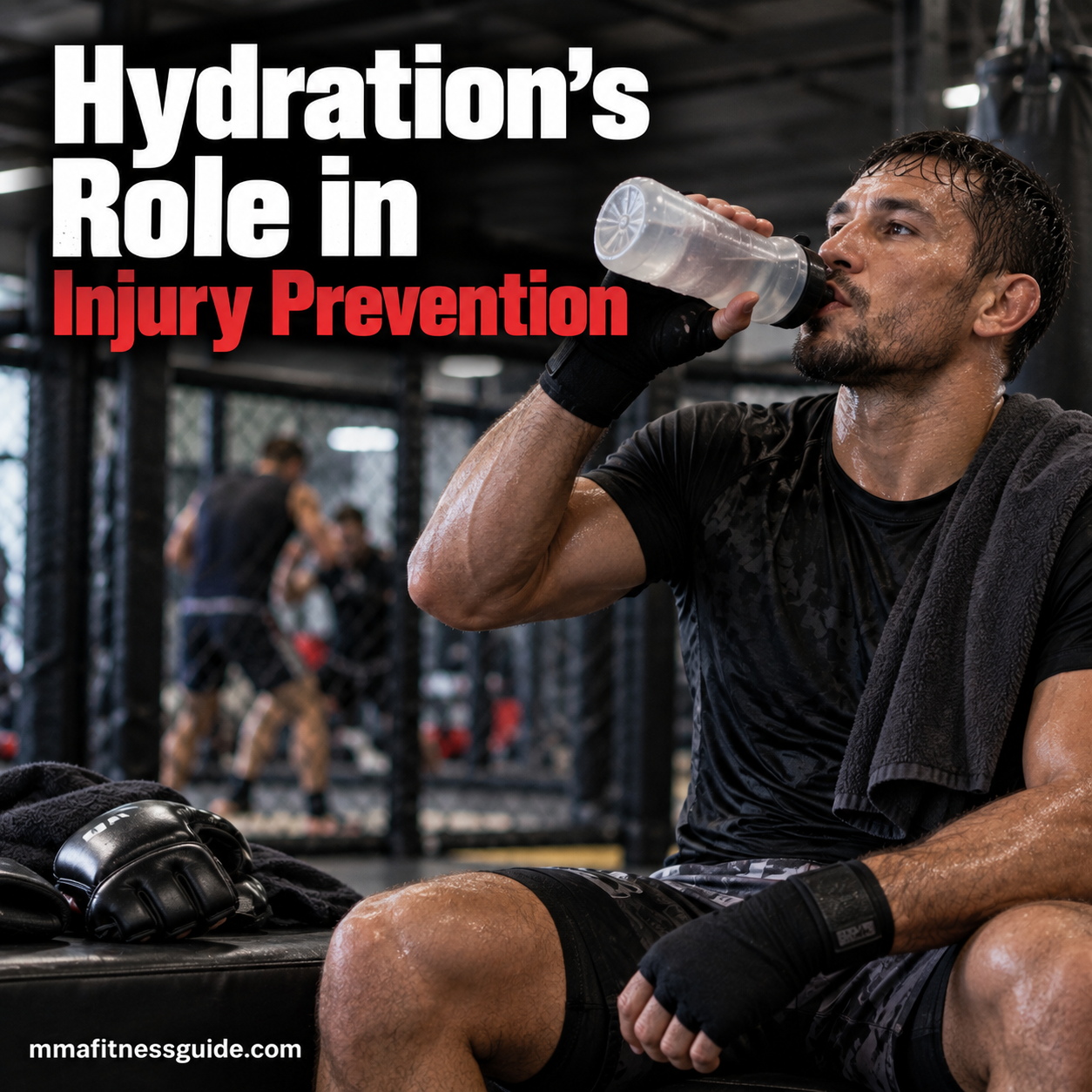
A fighter can lose a significant amount of fluid during a hard session of pad work, wrestling, sparring, or conditioning—especially in a hot gym or during two-a-day training. As those losses accumulate, fatigue rises, concentration can slip, and muscles may not perform as consistently during explosive movements.
That matters for injury prevention. A tired fighter who reacts a fraction slower, loses coordination during a scramble, or struggles to maintain technique late in a session may be more likely to land awkwardly, overextend a joint, or strain a fatigued muscle.
Consistent hydration helps maintain normal muscle and nervous-system function, regulate body temperature, and replace fluids lost through sweat. For MMA athletes, managing those losses before, during, and after training is part of staying prepared for the next round—not just avoiding thirst.
Why Hydration Matters More Than Fighters Realize
Water is involved in nearly every physiological process that keeps fighters healthy.
Proper hydration supports:
- Muscle elasticity
- Joint lubrication
- Nervous system function
- Temperature regulation
- Nutrient delivery
When hydration drops, tissues become less resilient and more prone to strain and damage.
How Dehydration Increases Injury Risk
Dehydration doesn’t just cause fatigue—it changes how the body moves and absorbs force.
Common effects include:
- Reduced muscle flexibility
- Slower reaction time
- Impaired coordination
- Increased cramping
- Decreased shock absorption
These changes raise the likelihood of strains, pulls, and joint injuries.
Muscle Function and Hydration
Muscle tissue relies heavily on water.
Reduced Elasticity and Increased Strain
Well-hydrated muscles:
- Lengthen and contract efficiently
- Absorb force better
Dehydrated muscles:
- Become stiff
- Fatigue faster
- Are more prone to strains
This is especially dangerous during explosive movements like shots, kicks, and scrambles.
Cramping and Spasms
Dehydration often contributes to:
- Muscle cramps
- Sudden spasms
- Loss of control
Cramping during training increases injury risk by disrupting movement patterns.
Joint Health and Hydration
Joints depend on fluid for smooth, pain-free movement.
Synovial Fluid and Joint Protection
Hydration supports synovial fluid, which:
- Lubricates joints
- Reduces friction
- Cushions impact
Dehydration reduces joint lubrication, increasing wear and tear.
Increased Joint Stress
Poor hydration can:
- Increase joint stiffness
- Reduce range of motion
- Elevate ligament and tendon strain
This affects knees, shoulders, hips, and ankles—common injury sites in MMA.
Hydration and Tendon Health
Tendons adapt slowly compared to muscles.
Dehydration can:
- Reduce tendon elasticity
- Increase stiffness
- Slow tissue recovery
This raises the risk of overuse injuries like tendinitis.
Nervous System Function and Injury Risk
Hydration also affects the nervous system.
Dehydration can lead to:
- Slower reaction times
- Poor balance
- Reduced proprioception
In combat sports, delayed reactions can cause awkward landings or mistimed movements.
Fatigue, Hydration, and Injury
Fatigue is a major injury risk factor—and dehydration accelerates fatigue.
Early Onset Fatigue
Dehydrated fighters often:
- Tire sooner
- Lose technical sharpness
- Compensate with poor mechanics
Poor mechanics increase injury risk late in sessions.
Decision-Making Under Fatigue
Mental fatigue caused by dehydration can:
- Reduce awareness
- Delay reactions
- Increase mistakes
Injury often occurs when focus drops.
Hydration During High-Volume Training
Fight camps and heavy training weeks increase hydration needs.
Factors that raise fluid demands:
- Multiple daily sessions
- High sweat rates
- Hot environments
- Protective gear usage
Underestimating hydration during these periods is common—and dangerous.
Weight Cutting and Injury Risk
Weight cutting complicates hydration management.
Chronic Dehydration Outside Fight Week
Many fighters stay mildly dehydrated year-round.
This can lead to:
- Poor tissue quality
- Increased injury frequency
- Slower recovery
Hydration shouldn’t be sacrificed outside short, strategic cuts.
Rehydration After Weight Cuts
Improper rehydration:
- Weakens muscles
- Increases cramping
- Impairs coordination
Rehydration quality affects injury risk as much as performance.
Electrolytes and Injury Prevention
Hydration isn’t just water.
Why Electrolytes Matter
Electrolytes support:
- Muscle contraction
- Nerve signaling
- Fluid balance
Low electrolytes increase cramping and fatigue.
Sweat Loss and Electrolyte Depletion
Fighters lose significant electrolytes through sweat, especially sodium.
Replacing only water can dilute electrolytes, worsening performance and increasing injury risk.
Signs Fighters Are Underhydrated
Dehydration often goes unnoticed.
Common signs include:
- Frequent muscle tightness
- Headaches
- Dark urine
- Fatigue during warm-ups
- Poor recovery between sessions
These are early warning signs—not just inconveniences.
Hydration and Recovery Between Sessions
Recovery is where injuries are prevented.
Proper hydration:
- Supports muscle repair
- Reduces soreness
- Maintains tissue elasticity
Dehydration slows recovery, increasing cumulative stress.
Practical Hydration Strategies for Fighters
Simple habits protect long-term health.
Daily Hydration Habits
- Drink consistently throughout the day
- Don’t rely solely on thirst
- Monitor urine color
- Increase intake on training days
Consistency matters more than volume at once.
Hydration During Training
- Sip fluids during long sessions
- Include electrolytes during heavy sweat loss
- Avoid waiting until exhaustion
Proactive hydration reduces breakdown.
Post-Training Rehydration
After training:
- Replace lost fluids
- Include electrolytes
- Pair hydration with nutrition
This supports faster recovery.
Common Hydration Mistakes Fighters Make
Avoid these pitfalls:
- Only hydrating during training
- Ignoring electrolytes
- Chronic mild dehydration
- Overusing caffeine without fluid replacement
Small mistakes compound over time.
Hydration as an Injury Prevention Tool
Hydration isn’t just about feeling better—it’s about durability.
Well-hydrated fighters:
- Move more efficiently
- Recover faster
- Handle training stress better
Injury prevention starts with basic habits.
Final Thoughts
Hydration plays a crucial role in injury prevention for MMA fighters. By supporting muscle elasticity, joint health, nervous system function, and recovery, proper hydration helps fighters withstand the physical demands of training and competition.
In a sport where small margins matter, hydration is one of the simplest yet most powerful tools available. Protecting your body starts with consistently supplying it with what it needs most—water and balance.