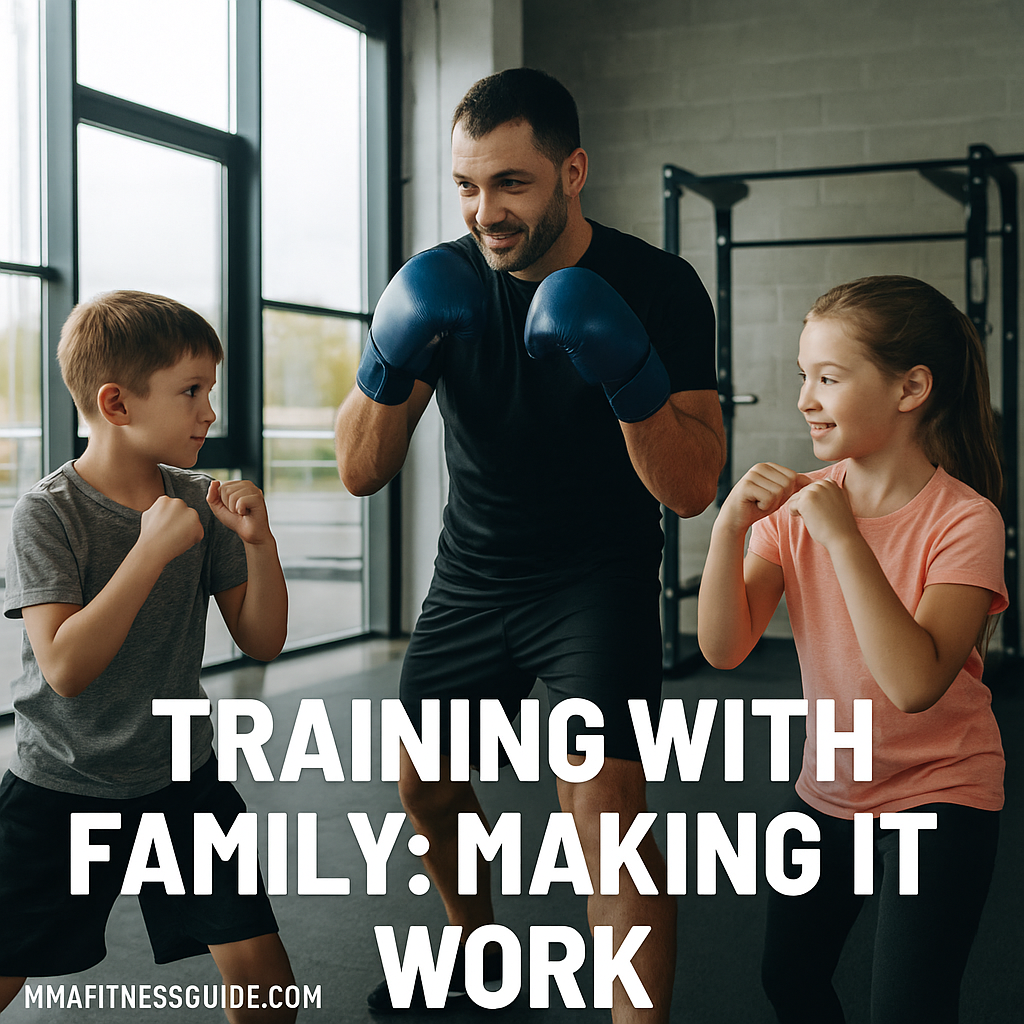
Training for MMA or fitness goals can be demanding — early mornings, long sessions, and constant recovery routines. But what happens when you have a family who also needs your time and energy? Balancing training with family life is one of the toughest challenges for athletes and fitness enthusiasts alike. The good news? You can make it work — and even make it stronger.
Why Family Support Matters in MMA Training
No fighter or fitness enthusiast succeeds alone. Family support builds:
- Consistency: Encouragement keeps you accountable on hard days.
- Balance: Loved ones help you manage stress and recovery.
- Perspective: They remind you that health and relationships go hand in hand.
Training with family isn’t just about sharing workouts — it’s about sharing purpose.
How to Balance Training and Family Life
If you’re serious about your goals but want to stay present at home, these strategies help you find balance without losing focus.
1. Schedule Training Like an Appointment
Don’t rely on “finding time.” Put your workouts on the calendar the same way you would a meeting or your child’s soccer game. Consistency helps your family plan around your sessions.
2. Communicate Your Goals
Be open about your training schedule, rest days, and upcoming events. When family members understand your “why,” they’re more likely to support your commitment — and remind you to rest when needed.
3. Shorten, Don’t Skip
A full hour at the gym isn’t always possible. Try a 30-minute focused session at home. Shadowbox, do bodyweight circuits, or hit a short cardio burst. Something is always better than nothing.
4. Combine Family Time with Fitness
Turn activity into bonding time:
- Go for family walks or bike rides.
- Set up light pad work or balance games with kids.
- Teach them basic MMA movements — safely and playfully.
These moments create memories while keeping everyone active.
5. Share Wins and Progress
Celebrate small milestones together — your first pull-up, your partner’s first 5K, your kid’s improved coordination. When your family sees results, they’ll feel part of your success story.
The Mental Benefits of Family Training
Beyond fitness, training with family builds:
- Patience: You learn to adjust pace and expectations.
- Empathy: You see others’ progress through a coaching lens.
- Connection: Shared effort deepens trust and teamwork.
Fighters often say the cage tests more than your body — it tests your relationships and your mindset. When your family is part of the process, you grow together.
Practical Tips for Home Training With Family
- Use minimal equipment. Resistance bands, mats, or a jump rope are all you need.
- Set clear boundaries. Designate a short “training window” to avoid distractions.
- Keep it fun. Mix in challenges, music, or games for kids.
- Rotate roles. One day you lead the workout, next time your partner or child picks an exercise.
Making fitness a shared ritual helps everyone develop discipline — not just the fighter.
When You Need Solo Time
It’s okay to need your own space. Solo training is where you reset mentally and refine skills. Balance team workouts with personal sessions that let you decompress and focus on technique or meditation.
Remember, a strong family unit supports your training — but a balanced athlete supports the family too.
Key Takeaway
You don’t have to choose between being a dedicated athlete and an involved family member. With planning, communication, and flexibility, you can train hard and build stronger relationships at home.
“When family and fitness move together, everyone wins.”