For beginners starting a fitness routine, consistency matters more than intensity. One of the simplest and most effective ways to stay consistent is tracking daily steps and activity goals. You don’t need intense workouts every day to make progress — steady movement builds habits, supports recovery, and improves overall health.
This guide explains how tracking steps and daily activity helps beginners stay active, how to set realistic goals, and how to use step tracking without overcomplicating fitness.
Why Daily Activity Matters for Beginners
Structured workouts are important, but daily movement fills the gaps between training sessions.
Daily activity helps with:
- Building baseline fitness
- Improving cardiovascular health
- Supporting fat loss
- Enhancing recovery between workouts
- Reducing stiffness and joint discomfort
- Creating sustainable habits
For beginners, movement outside the gym often matters more than occasional hard workouts.
What Counts as Daily Activity?
Daily activity includes more than just formal exercise.
Examples include:
- Walking throughout the day
- Taking stairs instead of elevators
- Light household chores
- Standing and moving during breaks
- Active commuting
- Light mobility or stretching sessions
All movement counts toward your daily total.
Why Step Tracking Is Effective
Steps provide a simple, objective measurement of activity.
Benefits of step tracking include:
- Easy to understand
- Encourages consistent movement
- Reduces reliance on motivation
- Provides clear daily targets
- Helps prevent long sedentary periods
Step goals create structure without pressure.
How Many Steps Should Beginners Aim For?
There’s no universal number, but guidelines help.
Starting Step Goals
For beginners:
- 4,000–6,000 steps per day is a good starting point
- Gradually increase as consistency improves
- Focus on daily averages, not perfection
Consistency matters more than hitting a specific number.
Progressing Your Step Goal
Increase gradually by:
- Adding 500–1,000 steps per day every few weeks
- Using walks as active recovery
- Adjusting goals based on energy levels
Small increases add up over time.
Steps vs Other Activity Metrics
Steps are useful, but they aren’t the only measure.
Other activity metrics include:
- Active minutes
- Calories burned
- Heart rate zones
- Distance walked
For beginners, steps are usually the simplest and least stressful metric to track.
Using Step Tracking Without Obsession
Tracking should support health, not control it.
Healthy tracking habits include:
- Viewing step goals as guidelines, not rules
- Allowing lower-activity days
- Avoiding guilt over missed targets
- Adjusting goals during illness or recovery
Flexibility supports long-term adherence.
How Step Tracking Supports Recovery
Light movement improves recovery.
Daily walking helps by:
- Increasing circulation
- Reducing muscle soreness
- Supporting joint mobility
- Improving sleep quality
On rest days, steps keep you active without overloading the body.
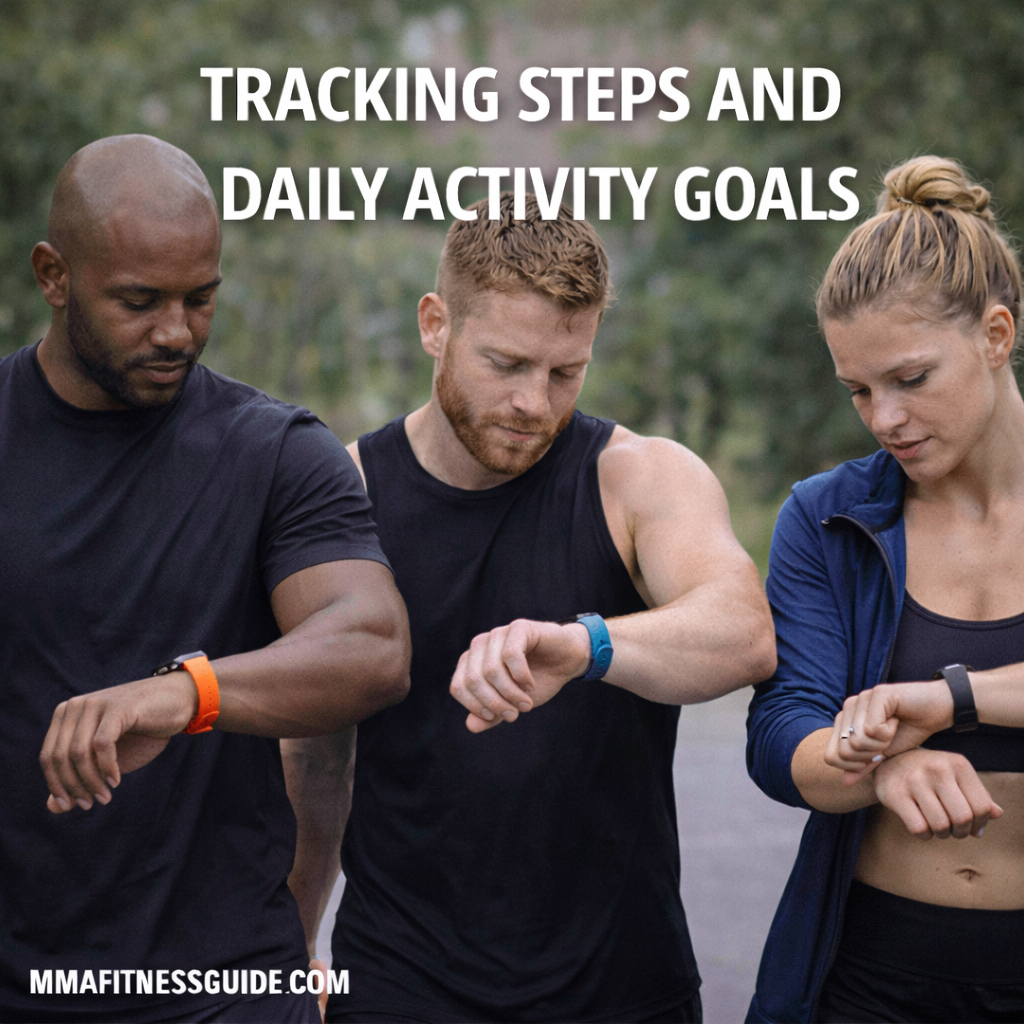
Tools for Tracking Steps
Most beginners already have access to step tracking.
Common options include:
- Smartphones
- Fitness watches
- Activity trackers
- Health apps
Choose a tool that’s easy to use and check consistently.
Creating Daily Activity Goals Beyond Steps
Steps are a foundation, not the finish line.
Additional activity goals may include:
- Standing up every hour
- Short mobility breaks
- Daily stretching routines
- Light cardio sessions
Variety keeps activity engaging.
Common Beginner Mistakes
Avoid these pitfalls:
- Setting goals too high too soon
- Comparing step counts to others
- Ignoring rest and recovery
- Treating steps as punishment
Activity should support your life, not control it.
Final Thoughts
Tracking steps and daily activity goals is one of the easiest ways for beginners to build consistency, improve health, and support fitness progress. You don’t need extreme workouts to move forward — regular movement adds up.
Focus on sustainable goals, track without obsession, and let daily activity become a natural part of your routine. Over time, these small habits create big results.