Healing Like a Fighter
In combat sports, injuries aren’t a matter of if — but when.
From muscle strains to joint issues, every fighter faces wear and tear over time. What separates professionals from amateurs isn’t avoiding injuries altogether — it’s how they recover and rebuild.
That’s where physical therapy (PT) becomes a game-changer.
Why Physical Therapy Matters for Fighters
Physical therapy isn’t just for post-surgery rehab — it’s a crucial part of long-term athletic performance.
In MMA, fighters combine striking, grappling, and conditioning — movements that place extreme demands on muscles, joints, and connective tissue.
Physical therapy helps by:
- Reducing pain and inflammation
- Restoring joint mobility
- Correcting muscle imbalances
- Preventing re-injury through proper movement patterns
- Improving strength and flexibility for better performance
Simply put, PT keeps fighters in the fight.
Common Injuries in Combat Sports
Fighters face a wide range of injuries from repetitive stress and high-impact training.
Most common injuries include:
- Shoulder strains from overuse or grappling
- Lower back pain from poor lifting or posture
- Knee ligament injuries (ACL, MCL)
- Ankle sprains from footwork or kicks
- Neck tension from clinch work
- Elbow and wrist pain from striking mechanics
Physical therapy focuses on identifying the root cause, not just treating the symptom — ensuring the body heals stronger than before.
The Recovery Process: Step-by-Step
1. Assessment and Diagnosis
A physical therapist evaluates your movement, posture, and injury history to find weaknesses or dysfunction.
2. Manual Therapy
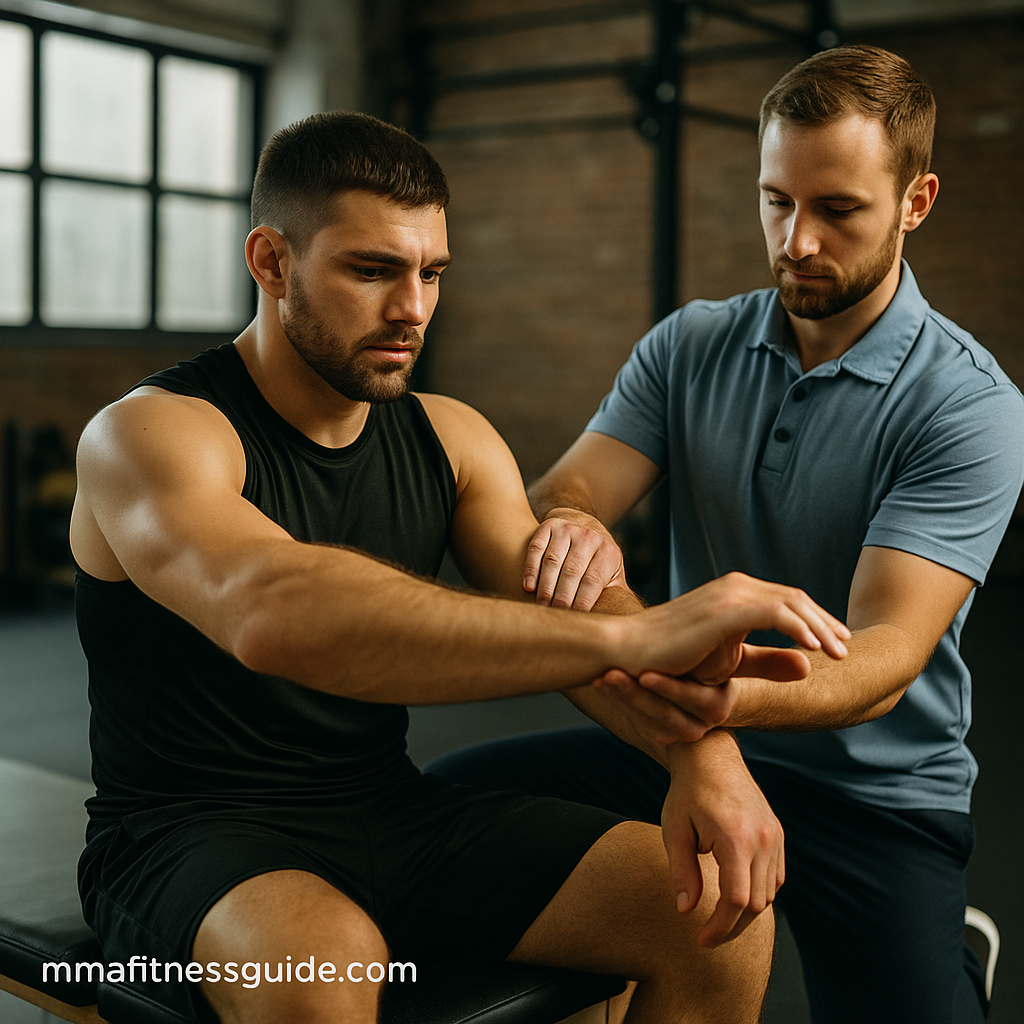
Hands-on techniques like soft tissue massage, joint mobilization, and dry needling help reduce stiffness and improve circulation.
3. Rehabilitation Exercises
Customized programs rebuild strength, stability, and flexibility in affected areas.
These exercises often include resistance bands, stability balls, and functional movement drills.
4. Movement Retraining
Therapists correct improper mechanics — like over-rotating punches or poor takedown posture — that lead to recurring injuries.
5. Performance Reintegration
Gradually reintroducing sport-specific drills ensures a safe return to full-speed training and competition.
Preventive Physical Therapy
You don’t have to wait for an injury to see a physical therapist.
Many fighters schedule maintenance sessions every few weeks to stay ahead of problems.
Preventive PT focuses on:
- Strengthening weak muscle groups
- Improving joint stability
- Enhancing mobility and balance
- Identifying early warning signs of strain
Think of it as a regular tune-up — not a repair.
How PT Enhances Performance
Physical therapy doesn’t just fix injuries; it optimizes performance by:
- Increasing explosive movement through better muscle activation
- Improving range of motion for kicks and submissions
- Enhancing body awareness for smoother transitions
- Building joint stability for more confident striking and grappling
A fighter who moves efficiently hits harder, reacts faster, and recovers quicker.
The Mental Aspect of Recovery
Injuries can take a mental toll.
Physical therapy provides a structured path back to training, helping athletes rebuild confidence while staying disciplined.
Knowing you’re healing under expert supervision reduces anxiety — a crucial part of maintaining motivation during downtime.
When to See a Physical Therapist
Consider PT if you experience:
- Pain that lasts more than a week
- Limited movement or stiffness
- Recurring injuries
- Chronic soreness that doesn’t improve with rest
Early intervention often prevents small issues from turning into major setbacks.
Working With a PT as a Fighter
For the best results, choose a therapist who understands combat sports mechanics — not just general fitness.
Look for professionals who have worked with MMA fighters, wrestlers, or boxers and understand sport-specific demands.
Bonus tip: Bring videos of your training to help the therapist analyze movement patterns in real context.
Key Takeaways
- Physical therapy is essential for recovery and long-term fighter health.
- It helps prevent injuries, corrects movement issues, and restores strength.
- Preventive PT improves mobility, performance, and mental confidence.
- Working with a combat-sport specialist ensures targeted, effective care.
As Bas Rutten once said,
“Injuries will happen. The goal is not to avoid them, but to overcome them.”
Physical therapy helps fighters do exactly that — come back stronger, smarter, and more resilient.