Introduction
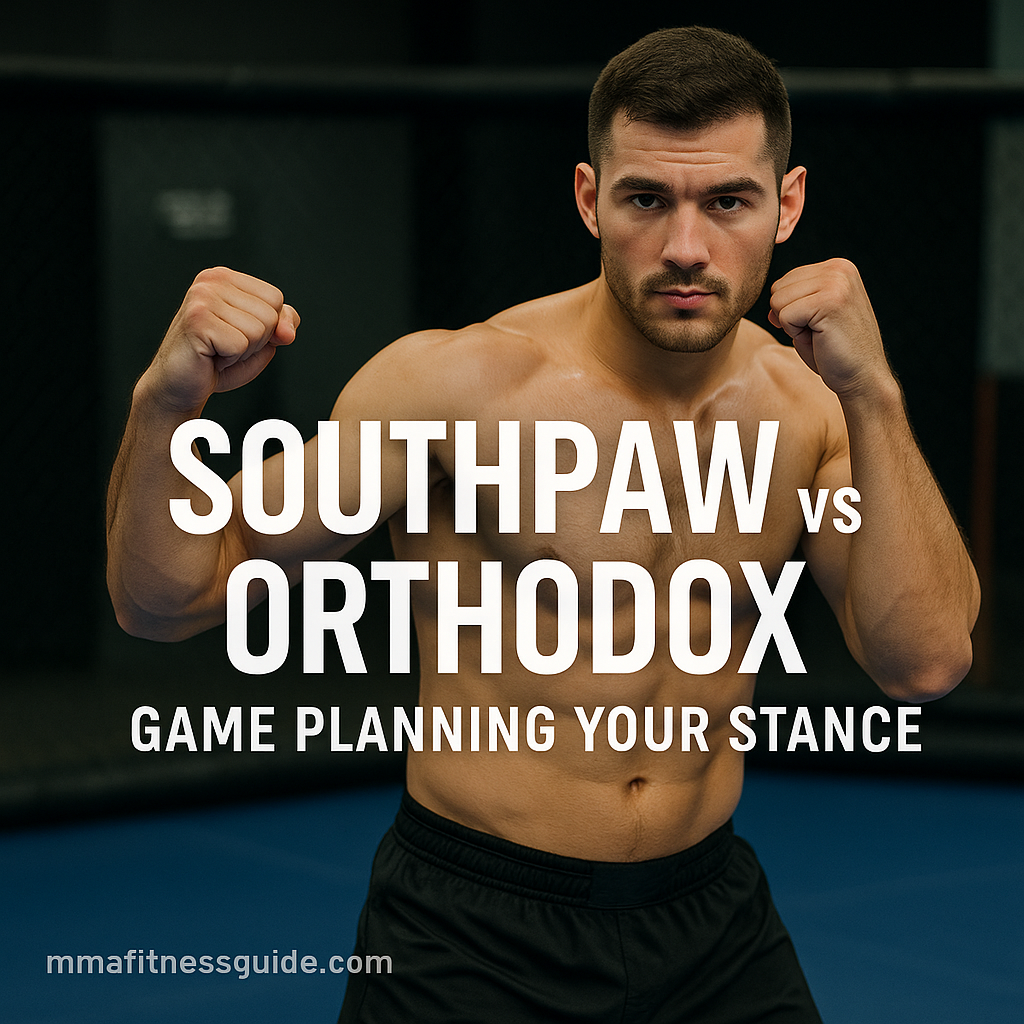
One of the first decisions every fighter makes — whether consciously or not — is choosing a stance: orthodox (left foot forward) or southpaw (right foot forward). Your stance shapes everything in a fight: your angles, your power shots, your defense, and even how your opponents approach you.
Some fighters stay loyal to one stance. Others switch fluidly mid-fight to create openings. But no matter your approach, understanding the strengths and weaknesses of each stance helps you build a smarter game plan.
Let’s break down what makes each stance unique — and how to use them to your advantage in MMA.
What Is Orthodox?
Orthodox is the most common stance in combat sports.
Left foot forward
Right hand is the power hand
Most right-handed people naturally choose orthodox because they feel more coordinated and balanced this way.
Strengths:
- easier to learn for beginners
- most partners and opponents fight orthodox
- strong right cross and right kick
- cleaner defensive mechanics
- predictable angles (in a good way)
Weaknesses:
- other orthodox fighters know how to attack your angles
- southpaw fighters may feel “awkward” to engage
- predictable entries if you don’t mix things up
Orthodox is reliable, simple, and works for most fighters.
What Is Southpaw?
Southpaw is less common — fighters lead with their right foot forward and use their left hand as the power side.
Right foot forward
Left hand is the power hand
Many fighters choose southpaw to become “awkward,” even if they’re naturally right-handed.
Strengths:
- creates unfamiliar angles for opponents
- left cross becomes a weapon
- open-side kicks land cleanly
- great for counterstriking
- foot-position advantage when used well
Weaknesses:
- fewer training partners to practice against
- weak defense on lead-hand side if footwork is sloppy
- more vulnerable to strong open-side kicks
- requires good angle management
Southpaw is a stance built for creativity and tactical edge.
The Battle of Lead Foot Position
When an orthodox fighter faces a southpaw, the fight becomes a lead-foot battle.
Both fighters will fight to get their lead foot outside the opponent’s lead foot.
Why?
Because the fighter with the outside angle gets:
- a straight path for their cross
- easier access to the open side
- safer defensive exits
- better position for head movement
Orthodox wants the outside angle.
Southpaw wants the outside angle.
Whoever wins this angle often controls the striking exchanges.
Best Attacks for Orthodox Fighters vs Southpaws
1. Outside Foot → Right Cross
Your biggest weapon against southpaw.
2. Outside Angle → Right Body Kick
Lands clean on the open side.
3. Left Hook After the Cross
Keeps you safe while pressuring.
4. Double Jab Into Angle Step
Closes distance without getting countered.
5. Right Low Kick
Southpaw can’t check this as easily.
Best Attacks for Southpaw Fighters vs Orthodox
1. Left Cross Down the Middle
The southpaw signature.
2. Left Body Kick
Targets the open side beautifully.
3. Right Hook Into Exit
Cuts the angle and avoids the counter.
4. Lead Hand Control (Hand Fighting)
Southpaws love hand traps and parries.
5. Left Straight to Rear Uppercut
Destroys fighters who slip the wrong way.
Defense Changes Based on Stance
Your stance shapes how you defend.
Orthodox defensive priorities vs Southpaw:
- watch for the left cross
- keep your lead hand active
- avoid circling toward their power side
- stay disciplined with the right-side guard
Southpaw defensive priorities vs Orthodox:
- slip outside the right hand
- use long lead hand frames
- keep right shoulder high on entries
- avoid stepping into their right body kick
Good defense is all about line awareness — knowing where the power is coming from.
Should You Switch Stances?
Modern MMA rewards versatile fighters.
Stance switching helps with:
- confusing pressure
- angle creation
- changing rhythm
- hiding your power side
- resetting exchanges
But you shouldn’t switch stances if you:
- don’t train both sides equally
- lose balance when switching
- can’t defend well in your weak stance
- only switch when tired (bad habit)
Start small — add stance switches during shadowboxing, then padwork, then drilling, then sparring.
How to Choose the Right Stance for You
Ask yourself:
1. Are you right-hand dominant?
Orthodox feels natural, southpaw gives strategic advantage.
2. Are you long and rangy?
Southpaw helps control distance and angles.
3. Are you pressure-heavy?
Orthodox tends to feel sturdier for forward aggression.
4. Do you prefer counterstriking?
Southpaw shines for counter fighters.
5. Do you kick a lot?
Southpaw kickers create big problems for orthodox opponents.
There is no wrong choice — just the stance that fits your style.
A Simple Stance-Based Game Plan Template
If you’re Orthodox:
- fight for the outside angle
- win the jab battle
- use the right kick often
- lead with the double jab
- avoid circling toward their left hand
If you’re Southpaw:
- jab and hand fight
- punish the body and open side
- win the angle with your lead foot
- use left cross as your centerpiece
- control distance with feints
Clear patterns lead to better results.
Final Thoughts
Your stance isn’t just a preference — it’s a strategic foundation. Whether you fight orthodox or southpaw, learning how each stance shapes your attacks, defenses, and angles makes you a smarter, more complete MMA fighter.
Master your stance. Understand your opponent’s stance. And build your game plan around the battle of angles, timing, and positioning.
That’s how you turn a simple foot position into a winning strategy.