Introduction
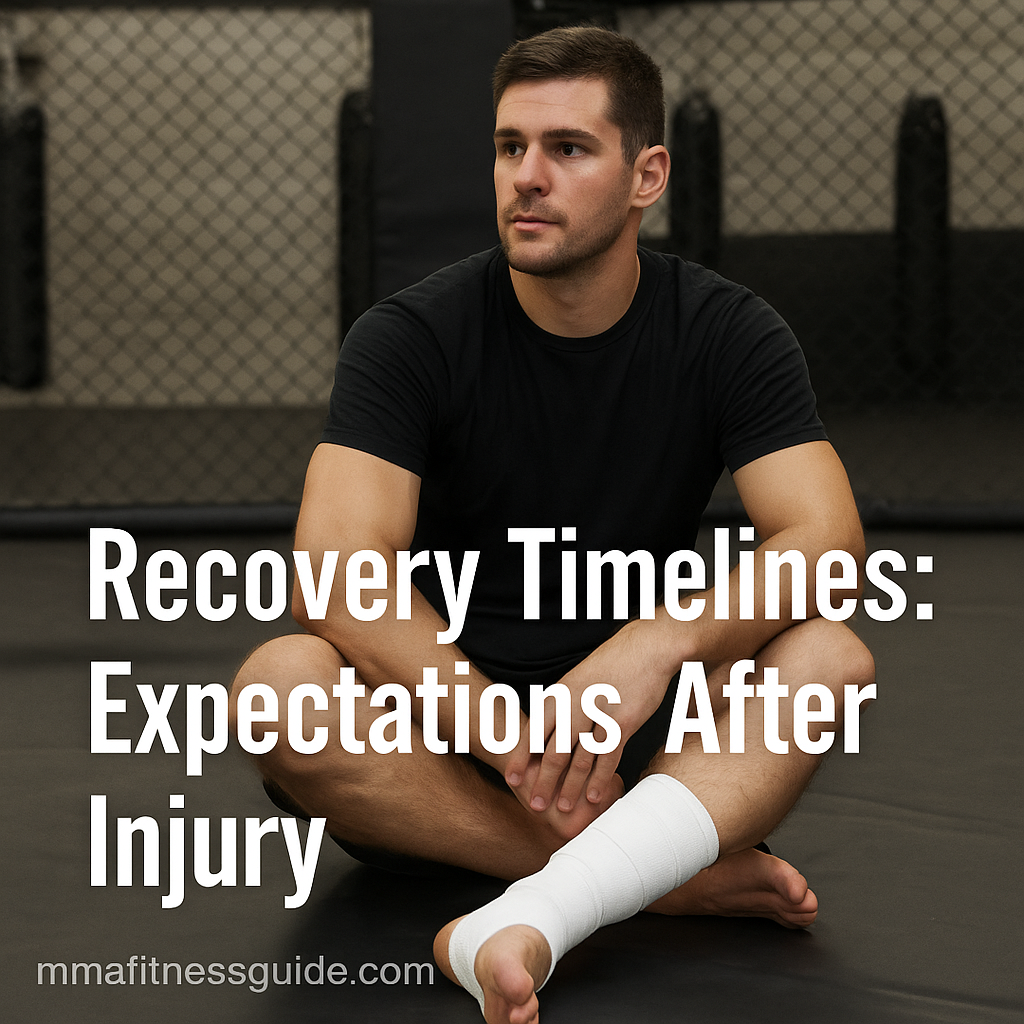
Recovering from an injury is one of the most frustrating parts of combat sports. You want to get back on the mats, keep improving, and stay consistent — but pushing too soon can turn a minor injury into a long-term problem. Knowing realistic recovery timelines helps you stay patient, avoid setbacks, and return to training stronger than before.
Here’s what you can expect from common MMA injuries and how to manage recovery the smart way.
Why Recovery Timelines Matter in MMA
MMA involves striking, grappling, twisting, impact, and fast directional changes — so injuries heal differently than in non-contact sports.
Good recovery timelines help you:
- avoid reinjury
- reduce long-term damage
- plan your training phases
- rebuild confidence
- return safely and consistently
Without a timeline, fighters often rush back and repeat the same cycle.
General Healing Timeline Basics
Every injury goes through three stages:
1. Inflammation Phase (0–5 days)
- swelling
- soreness
- heat
- reduced range of motion
Focus: rest, compression, elevation, gentle movement
2. Repair Phase (5–21 days)
- tissue rebuilding
- strength slowly returns
- pain decreases
Focus: light activity, mobility, gradual loading
3. Remodeling Phase (3 weeks–6 months)
- tissues regain strength
- stiffness improves
- stability returns
Focus: progressive strength work, technique drills, controlled training
Full recovery takes place across all three phases — not just when pain goes away.
Common MMA Injuries & Their Typical Recovery Timelines
Below are realistic general timelines. Individual healing varies.
1. Minor Muscle Strains (Grade 1)
Timeline: 1–3 weeks
Examples:
- light hamstring pull
- slight groin tweak
- minor back strain
Symptoms:
- mild soreness
- slight stiffness
- no major swelling
Return-to-training strategy:
- mobility first
- technique-only drills
- avoid explosive actions early
2. Moderate Muscle Strains (Grade 2)
Timeline: 3–8 weeks
Examples:
- deeper hamstring strain
- moderate groin pull
- abdominal strain
Return-to-training strategy:
- light positional rolling
- reduced striking intensity
- build strength before speed
3. Bruises & Impact Trauma
Timeline: 3–10 days (mild) | 2–3 weeks (hard impact)
Common in:
- shins
- forearms
- ribs
- quad “dead leg”
Return-to-training strategy:
- pad work okay early
- delay heavy sparring
- ice for pain, heat for stiffness
4. Wrist or Ankle Sprains (Grade 1–2)
Timeline: 2–8 weeks
Symptoms:
- swelling
- instability
- sharp pain with movement
Return-to-training strategy:
- technique drilling
- avoid explosive pivots
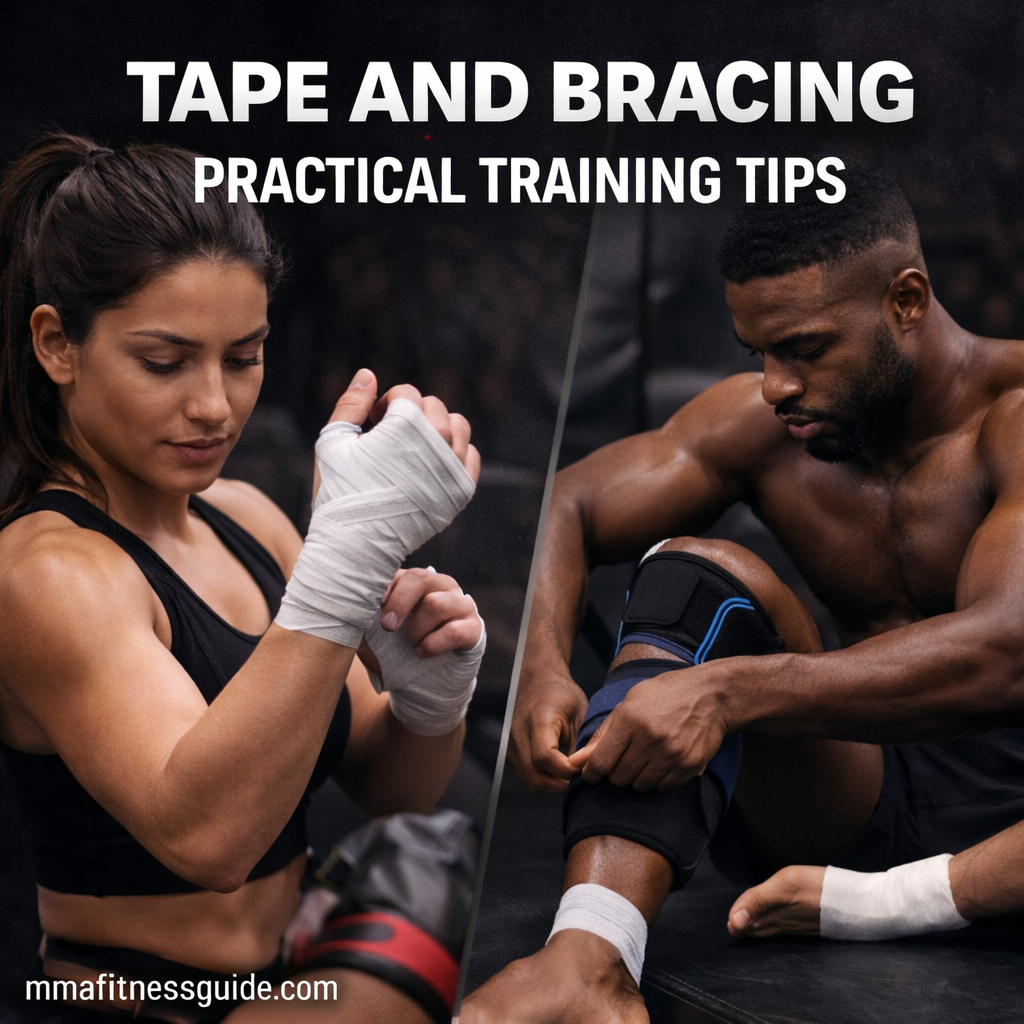
- wrapping or bracing for transition period
5. Rib Injuries (Bruised or Cartilage Strain)
Timeline: 3–8 weeks
Ribs heal slowly due to constant breathing movement.
Return-to-training strategy:
- light drilling first
- avoid hard grappling
- no heavy body shots
6. Small Joint Injuries (Fingers, Toes)
Timeline: 1–4 weeks
These are annoying but usually manageable.
Return-to-training strategy:
- tape properly
- avoid twisting pressure
- limit grip-heavy rounds
7. Tendonitis (Wrist, Elbow, Knee, Shoulder)
Timeline: 4–12 weeks
Often from overuse — not one specific injury.
Return-to-training strategy:
- reduce volume
- light technique
- ice after training
- strengthen stabilizer muscles
8. Concussion (Mild)
Timeline: 1–4+ weeks depending on symptoms
Return-to-training strategy:
- only return when symptom-free
- no sparring until cleared
- gradual cardio → drilling → light padwork → sparring
Never rush concussion recovery.
9. Knee Injuries (Patella strain, MCL sprain)
Timeline:
- Mild MCL: 2–6 weeks
- Moderate: 6–12 weeks
- Patellar strain: 2–8 weeks
Return-to-training strategy:
- limit twisting
- build quad/hamstring stability
- slow re-entry to takedowns
10. Shoulder Injuries
Timeline:
- Minor strain: 1–3 weeks
- Rotator cuff irritation: 4–12 weeks
Return-to-training strategy:
- restore range of motion
- prioritize stability work
- avoid explosive punches early
Signs You’re Ready to Return to Training
Return only when you can:
- move joint through full range
- apply light force without pain
- maintain balance and stability
- train technique without compensation
- sleep without irritation
If pain increases after training, you returned too soon.
Signs You’re Not Ready to Return Yet
Stop training immediately if you feel:
- sharp pain
- swelling after training
- joint instability
- locking or catching
- tingling or numbness
These are warning signs of incomplete healing.
How to Speed Up Recovery (Safely)
✔ Light mobility daily
Keeps tissues loose and reduces stiffness.
✔ Strengthen stabilizer muscles
Small muscle groups protect joints more than heavy lifting.
✔ Use heat for stiffness, cold for swelling
Simple but effective.
✔ Sleep 7–9 hours
Healing happens faster during deep sleep.
✔ Hydrate + eat enough protein
Tissue repair depends on nutrition.
✔ Avoid diving back into sparring first
Work your way up:
- cardio
- mobility
- drilling
- padwork
- light grappling
- controlled sparring
- full training
Final Thoughts
Injuries are frustrating, but recovery is part of a long martial arts journey. Understanding timelines helps you avoid setbacks, train smarter, and heal properly. With patience, smart progressions, and good habits, you can return to the gym stronger and more prepared than before.
Train hard — but recover even smarter.