After a fight, your body enters deep repair mode. You’ve pushed through adrenaline, explosive bursts, dehydration, muscle damage, and mental stress. What you eat in the hours and days after competition plays a major role in how fast you recover — and how soon you can return to training.
Post-fight nutrition isn’t about celebration meals (that can come later). It’s about restoring energy, rebuilding muscle, reducing inflammation, and supporting the immune system. This guide breaks down what fighters should eat immediately after a fight, later that night, and in the days that follow.
What Your Body Needs After a Fight
A fight drains multiple systems at once. The right foods help repair them.
Your body needs:
- Protein for muscle repair
- Carbohydrates to restore glycogen
- Electrolytes to rehydrate
- Healthy fats to reduce inflammation
- Antioxidants to help recovery
- Easy-to-digest foods that don’t overwhelm the stomach
Recovery begins the moment the fight ends.
Phase 1: Immediately After the Fight (0–2 Hours)
Right after a fight, your body might not want a big meal. This phase is about hydration, electrolytes, and light energy.
Best immediate options:
- Coconut water or electrolyte drinks
- Fruit (banana, berries, orange slices)
- Protein shake (whey or plant-based)
- Greek yogurt
- Rice cakes or light carbs
- Bone broth for minerals
Why this works:
- Replaces lost fluids
- Provides quick energy
- Gives your muscles amino acids for early repair
- Easy on the stomach
If you can’t stomach food, sip fluids and eat small bites.
Phase 2: First Full Meal (2–6 Hours After the Fight)
This is the meal that sets the tone for recovery. It should be balanced, nutrient-dense, and moderate in size.
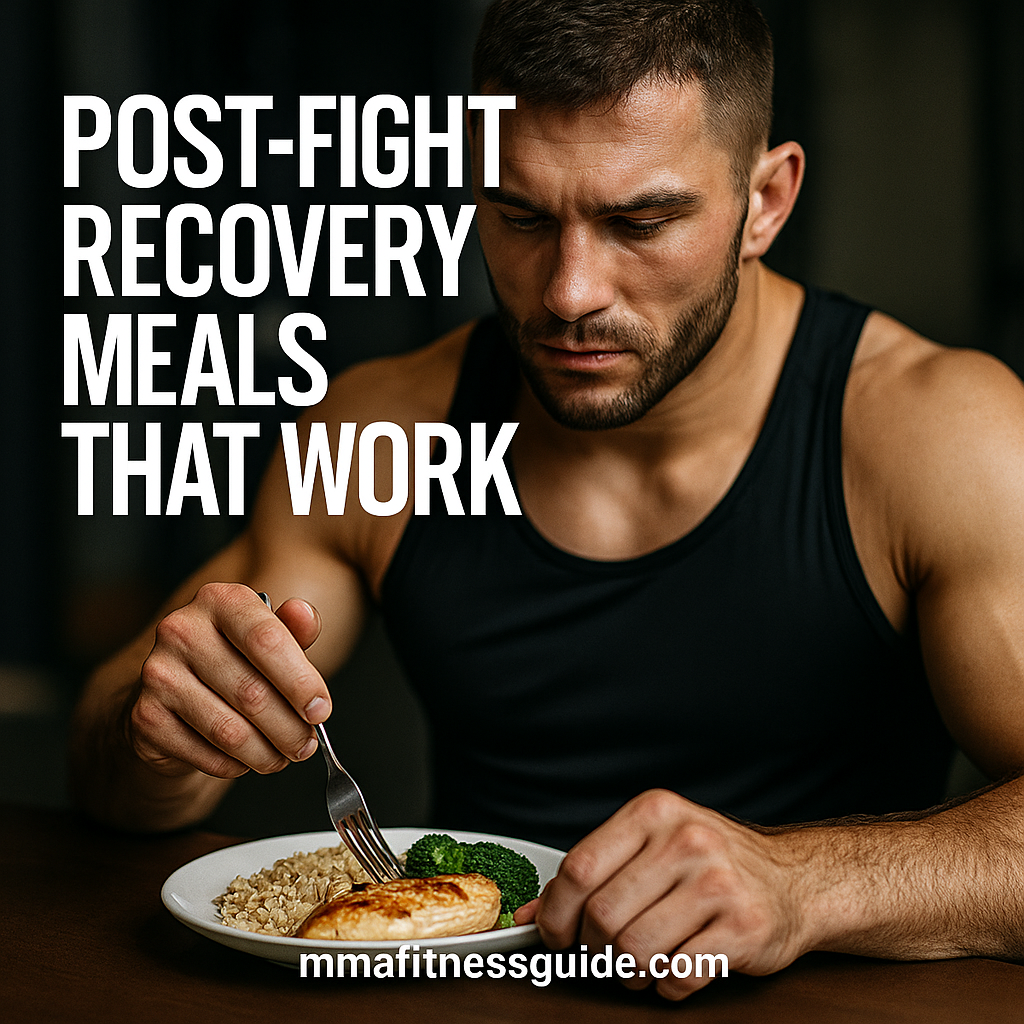
Ideal Post-Fight Meal:
- Lean protein: chicken, salmon, turkey, eggs, tofu
- Clean carbs: rice, quinoa, potatoes, pasta
- Colorful veggies: spinach, carrots, peppers, broccoli
- Healthy fats: olive oil, avocado, nuts
Example plates:
- Grilled salmon + rice + steamed veggies
- Chicken burrito bowl with avocado
- Turkey stir-fry with veggies and noodles
- Eggs, potatoes, and sautéed greens
- Shrimp and rice with a side salad
Why this works:
- Rebuilds damaged muscle fibers
- Replenishes energy stores
- Reduces inflammation
- Rehydrates with water-rich veggies
Avoid heavy fried foods at this stage — save it for the celebration meal.
Phase 3: Late-Night Recovery Meal (If You’re Still Hungry)
Fights often end late, and adrenaline may keep you awake. If you need a small meal before bed:
Good options:
- Cottage cheese + fruit
- Oatmeal with honey
- Protein shake + banana
- Turkey sandwich
- Whole-grain toast with almond butter
Choose foods higher in casein protein, which supports overnight muscle repair.
Phase 4: The Next Morning
Fight hangover is real — stiffness, soreness, mental fatigue, dehydration. Breakfast should help hydrate and re-energize.
Best next-morning breakfast:
- Eggs + whole-grain toast + fruit
- Smoothie with protein, berries, greens, and oats
- Greek yogurt bowl with honey + granola
- Oatmeal + nuts + banana
- Breakfast burrito with eggs and vegetables
Add electrolytes:
- Coconut water
- Salted water
- Electrolyte packets
This restores fluid balance and boosts energy.
Anti-Inflammatory Foods Every Fighter Should Eat
These help reduce swelling, soreness, and oxidative stress:
- Berries
- Pineapple (bromelain reduces inflammation)
- Spinach and leafy greens
- Turmeric + black pepper
- Ginger
- Salmon / sardines (omega-3s)
- Olive oil
- Walnuts / almonds
Include these in your meals for 2–3 days after the fight.
Foods to Avoid Right After the Fight
- Heavy fried meals
- Ultra-greasy junk food
- Excessive alcohol
- Super spicy dishes
- Large amounts of sugar
These slow down recovery and may upset your stomach after exertion.
Celebrate after your first recovery meal — not before.
Hydration Strategy After a Fight
Rehydration is just as important as food.
Recommended:
- Water (steady sips, not all at once)
- Electrolytes
- Broth-based soups
- Herbal tea
- Fruit-infused water
Avoid chugging huge amounts at once — it can cause nausea.
What to Eat in the 48 Hours After a Fight
Focus on nutrient density and steady energy.
Best choices:
- Lean proteins
- Whole grains
- Veggies + leafy greens
- Soups and broths
- Smoothies
- Fruit
- Omega-3 sources
- Moderate carbs with every meal
Your body is still repairing muscle fibers and rehydrating.
Meal Examples for Days 1–2 Post-Fight
Recovery Bowl
Chicken, quinoa, spinach, olive oil, roasted veggies.
Anti-Inflammatory Omelet
Eggs, spinach, tomatoes, turmeric, avocado.
Lean Fighter Plate
Turkey, rice, sweet potato, steamed greens.
Smoothie Meal
Protein powder, berries, oats, almond milk, banana.
High-Protein Soup
Chicken soup with vegetables, rice noodles, herbs.
These support muscle repair and reduce soreness.
Supplements That May Help (Optional)
Not required, but helpful:
- Omega-3 fish oil
- Turmeric + ginger
- Magnesium
- Collagen peptides
- Vitamin C and zinc
- Whey protein or plant protein
Always use supplement brands you trust.
Final Thoughts: Eat to Recover, Then Celebrate
The right post-fight meals help you:
- Heal faster
- Reduce soreness
- Restore energy
- Support your immune system
- Bounce back into training safely
Recover first — celebrate second. Your body will thank you.