
Wrestling Setups for Successful Takedowns

Male MMA wrestler executing a clean takedown setup inside a gym, with bold white text reading Wrestling Setups for Successful Takedowns.
A focused male fighter demonstrating proper wrestling setups for high-percentage MMA takedowns.

Great takedowns don’t start with strength — they start with setups. In MMA, where opponents strike, sprawl, and counter from every angle, clean wrestling entries require timing, deception, and proper positioning. Whether you’re a wrestler transitioning to MMA or a striker learning grappling fundamentals, mastering setups is what turns takedowns from “hope shots” into high-percentage weapons.

This guide breaks down the most effective wrestling setups for MMA, why they work, and how to train them for real fight success.

Continue reading “Wrestling Setups for Successful Takedowns”

Post-Fight Recovery Meals That Work

Close-up of a muscular male fighter eating a clean post-fight recovery meal of chicken, rice, and broccoli with white title text reading Post-Fight Recovery Meals That Work.
A dedicated MMA fighter refueling with a nutritious post-fight recovery meal to support muscle repair and overall recovery.

After a fight, your body enters deep repair mode. You’ve pushed through adrenaline, explosive bursts, dehydration, muscle damage, and mental stress. What you eat in the hours and days after competition plays a major role in how fast you recover — and how soon you can return to training.

Post-fight nutrition isn’t about celebration meals (that can come later). It’s about restoring energy, rebuilding muscle, reducing inflammation, and supporting the immune system. This guide breaks down what fighters should eat immediately after a fight, later that night, and in the days that follow.

Continue reading “Post-Fight Recovery Meals That Work”

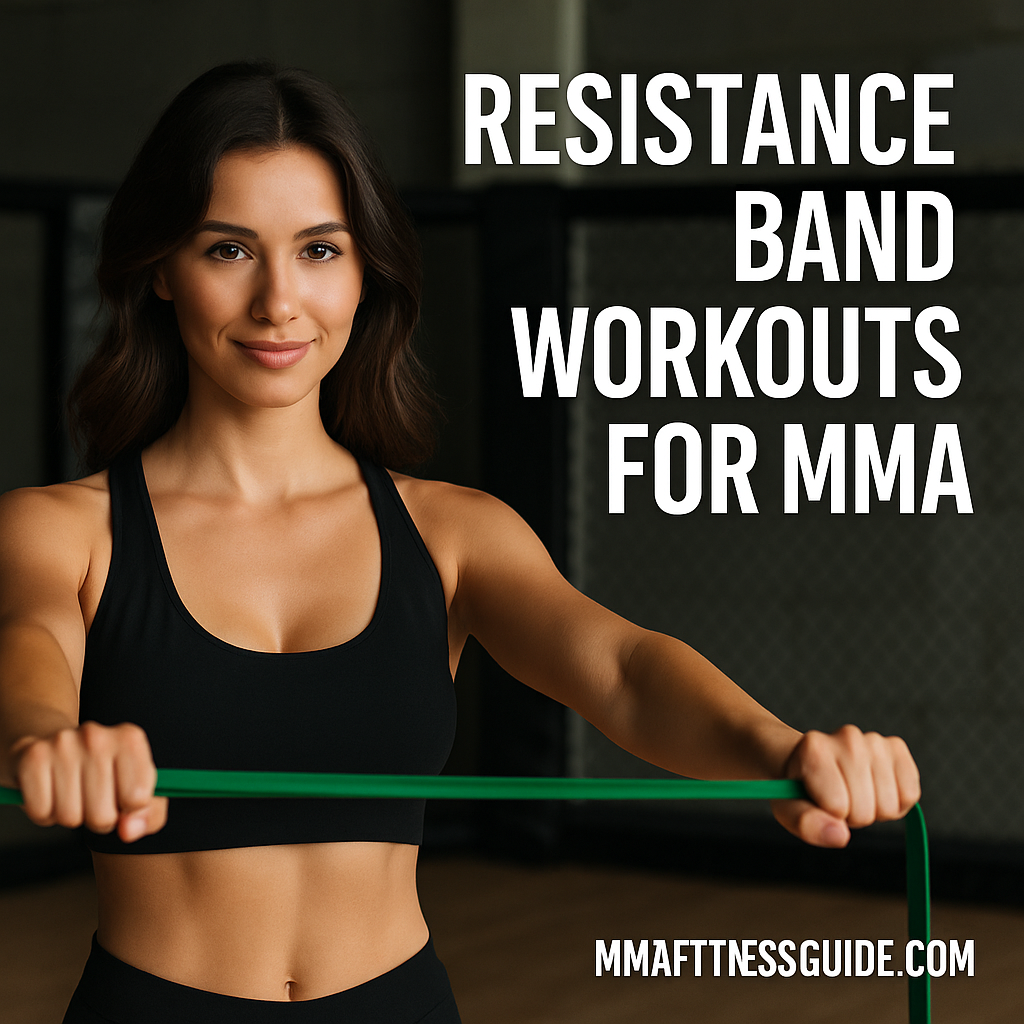
Resistance Band Workouts for MMA

Female MMA athlete performing a resistance band pull-apart exercise in a gym with bold white title text reading Resistance Band Workouts for MMA.
A focused female fighter training with resistance bands to build strength, mobility, and fight-ready conditioning.

Resistance bands are one of the most underrated tools in MMA training. They’re portable, joint-friendly, affordable, and incredibly effective for building functional strength, explosive power, mobility, and injury-resistant muscles. Whether you train in a gym, outdoors, or at home, bands give fighters a way to strengthen fight-specific movement patterns without stressing the joints like heavy weights sometimes do.

This guide breaks down the best resistance band exercises for MMA, how to use them for strength and conditioning, and how to structure band-focused workouts that translate directly into better striking, grappling, and overall athletic performance.

Continue reading “Resistance Band Workouts for MMA”

Writing a Business Plan for a Fight Gym

Male gym owner writing a business plan at a desk with a laptop, shown with bold white title text about creating a business plan for a fight gym.
A dedicated male gym owner drafting a detailed business plan for launching a fight gym.

Opening a fight gym is a dream for many martial artists — but passion alone isn’t enough. A successful MMA, Muay Thai, BJJ, or striking gym needs a clear business plan that outlines your vision, budget, structure, and long-term strategy. This plan becomes your guide for launching, managing, and growing the gym sustainably.

A strong business plan also helps you secure loans, attract investors, and make smarter decisions before you even open your doors.

This guide walks you through how to write a complete, effective business plan specifically tailored for fight gyms.

Continue reading “Writing a Business Plan for a Fight Gym”

MMA: Build a Supportive Gym Community

Group of male MMA athletes smiling and shaking hands inside a gym with bold white text reading Build a Supportive Gym Community.
Male fighters building a positive, supportive MMA gym community through teamwork and camaraderie.

A great MMA gym isn’t built on equipment, branding, or even talent — it’s built on people. A supportive gym community helps beginners feel welcome, keeps members motivated, and creates an environment where everyone grows, from hobbyists to aspiring fighters.

Whether you’re a coach, gym owner, or student, you play a part in the culture. This guide breaks down how to build a strong MMA gym community where people feel safe, encouraged, and connected.

Continue reading “MMA: Build a Supportive Gym Community”

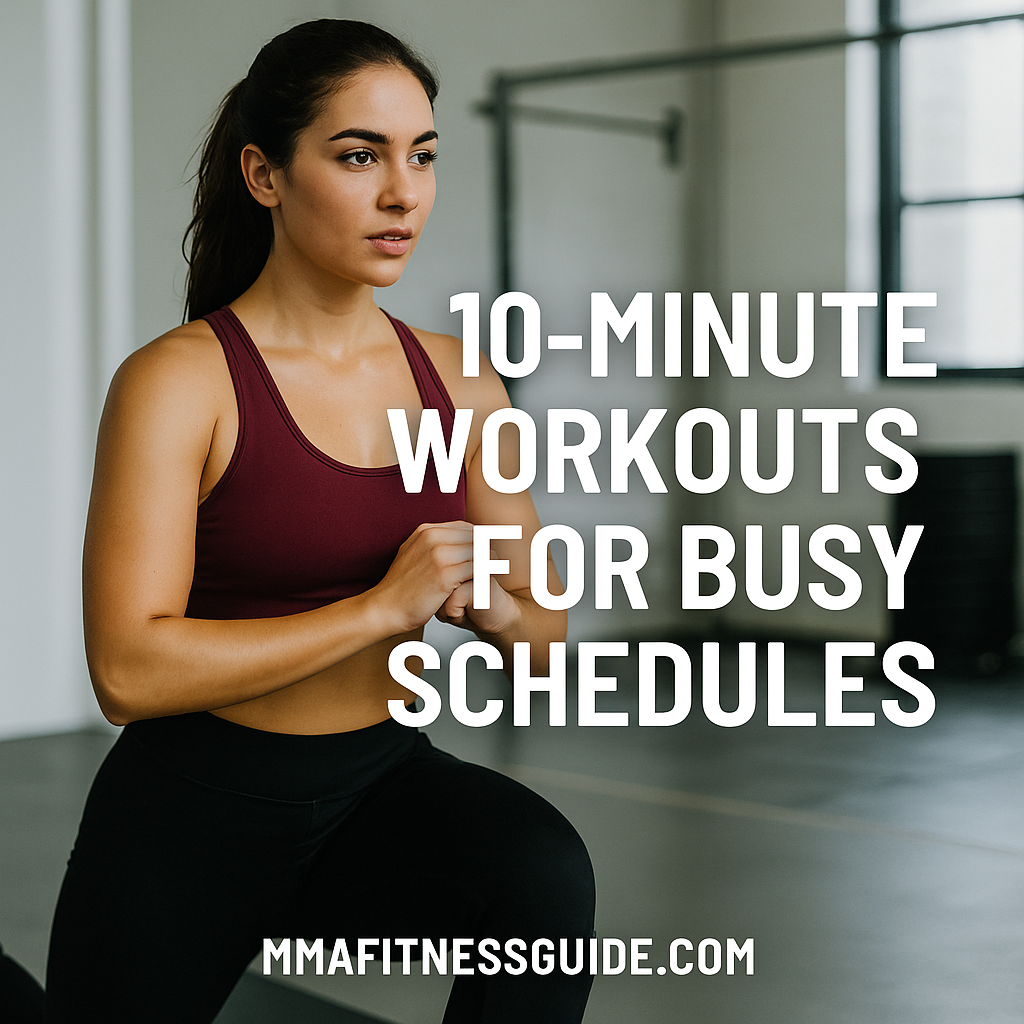
10-Minute Workouts for Busy Schedules

Fit young woman performing a lunge exercise in a bright gym with bold white title text promoting 10-minute workouts for busy schedules.
A focused female athlete demonstrating a quick, effective workout for people with busy schedules.

Finding time to train can be tough — especially if you juggle work, family, school, or unpredictable hours. But staying fit doesn’t require hour-long gym sessions. In fact, 10-minute workouts can boost your conditioning, mobility, and overall health when done consistently.

Short, focused sessions help beginners stay active without feeling overwhelmed. They also keep you connected to your goals, even on the busiest days. This guide gives you fast, effective 10-minute workouts perfect for anyone who wants to stay consistent, build momentum, and improve fitness in a tight schedule.

Continue reading “10-Minute Workouts for Busy Schedules”

The Evolution of Weight Classes in MMA

Male MMA fighter adjusting a mechanical weight scale with bold white title text about the evolution of weight classes in MMA.
A focused MMA athlete checking his weight on a scale, representing the evolution and importance of weight classes in mixed martial arts.

In the early days of MMA, weight didn’t matter — at least not officially. Fighters stepped into the ring (or cage) with enormous size differences, relying purely on skill, toughness, and adaptability. But as the sport grew, weight classes became essential for fighter safety, fair competition, and the development of more specialized skillsets.

This guide explores how MMA weight classes evolved from the wild days of no-rules tournaments to the modern, structured divisions recognized worldwide.

Continue reading “The Evolution of Weight Classes in MMA”

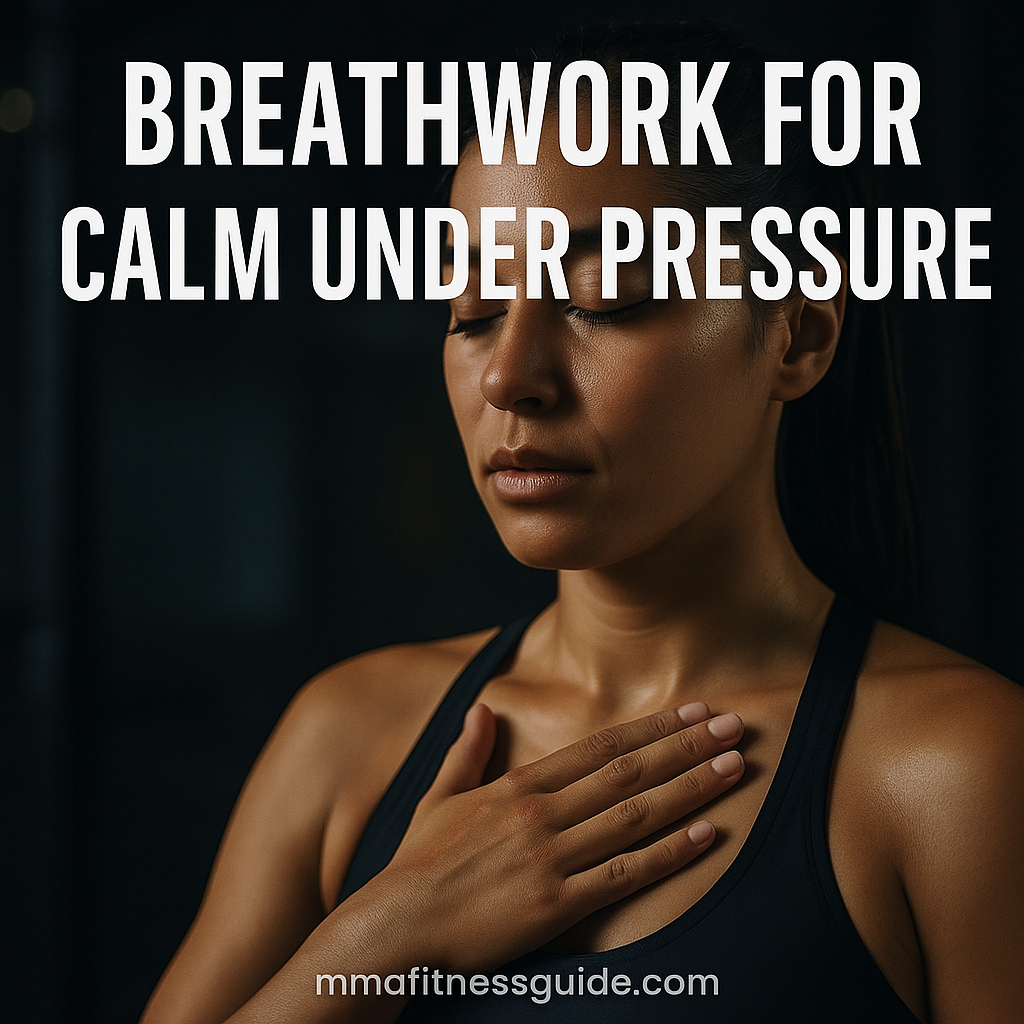
Breathwork for Calm Under Pressure

Female MMA athlete practicing calm, controlled breathwork with her hand on her chest, shown with white title text about breathwork for calm under pressure.
A focused female fighter demonstrating breathwork techniques to stay calm under pressure, emphasizing relaxation and mental control.

In MMA, pressure comes in many forms — hard sparring rounds, conditioning sets, weight cuts, crowds, competition nerves, and even everyday stress outside the gym. Fighters who can control their breathing perform better, think clearer, and recover faster. Breathwork is one of the most powerful tools a fighter can use, and it costs nothing but a few minutes of intentional practice.

This guide breaks down simple, effective breathwork methods that help fighters stay composed, relaxed, and mentally sharp in high-pressure situations.

Continue reading “Breathwork for Calm Under Pressure”

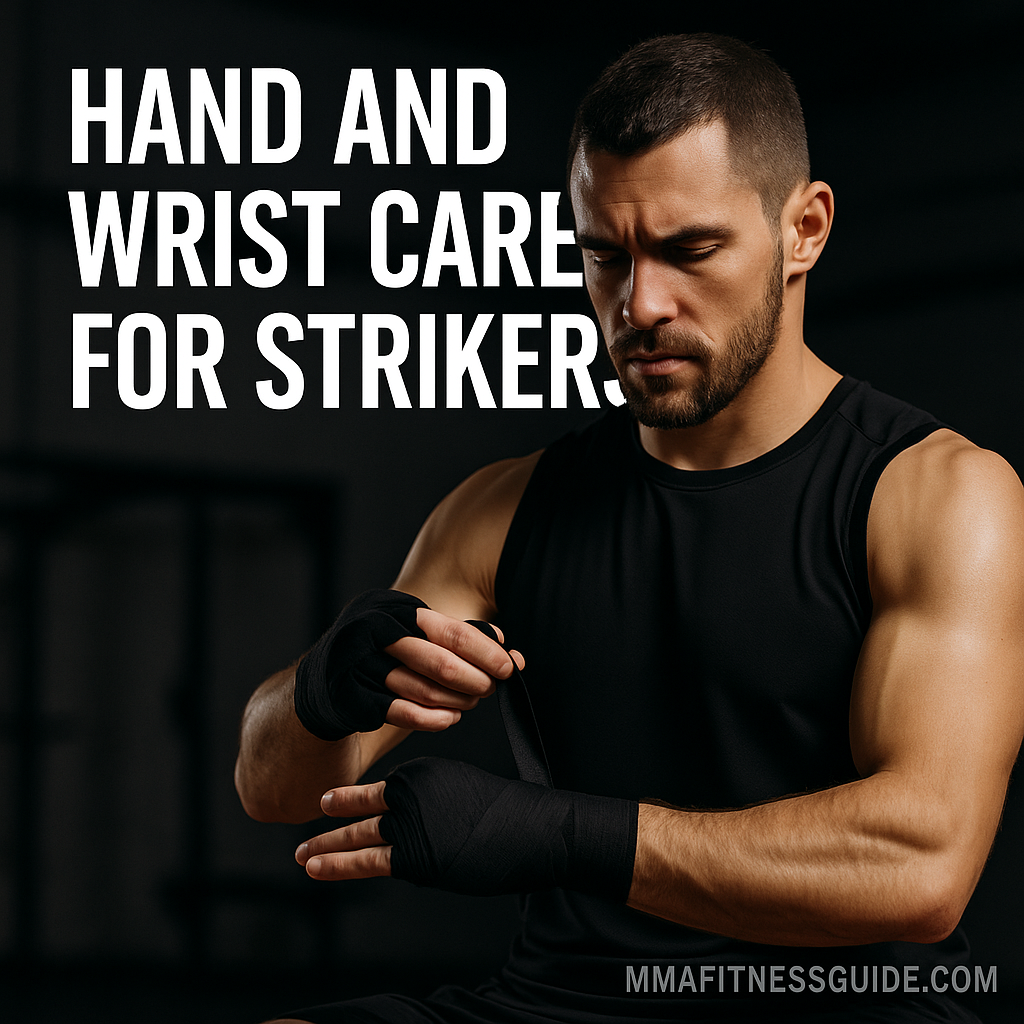
Hand and Wrist Care for Strikers

Male MMA striker wrapping his hands in a dim gym, demonstrating proper hand and wrist care with bold white title text.
A focused MMA fighter wrapping his hands as part of essential hand and wrist care for strikers.

Striking puts massive stress on the hands and wrists — especially in MMA, Muay Thai, and boxing, where fighters throw hundreds of punches per session. Even with wraps and gloves, small repetitive impacts add up over time, leading to soreness, swelling, and long-term damage if not properly managed.

Hand and wrist care isn’t optional for strikers. It’s a non-negotiable part of training longevity. This guide covers the best ways to protect your hands, strengthen the supporting muscles, and prevent the most common injuries in striking-heavy training.

Continue reading “Hand and Wrist Care for Strikers”

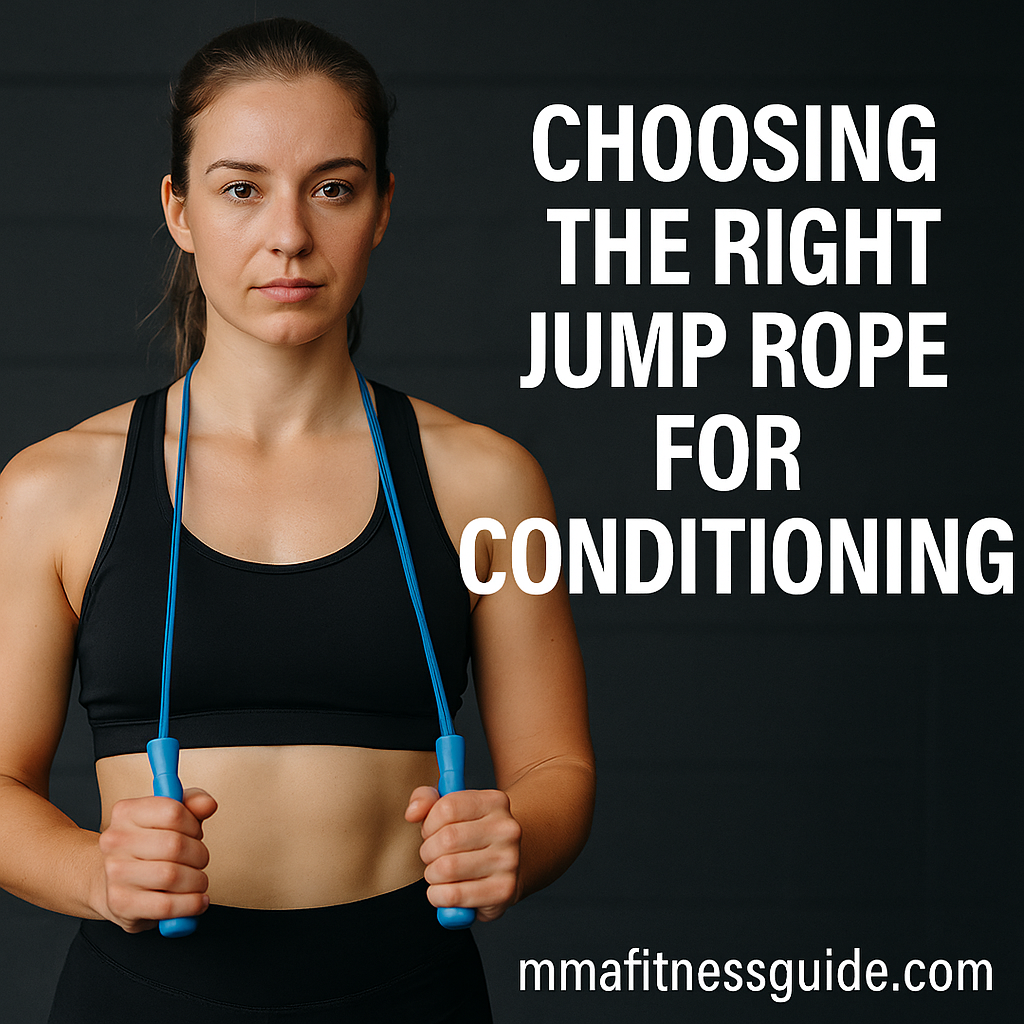
Choosing the Right Jump Rope for Conditioning

Female athlete holding a blue jump rope in a gym setting with white title text about choosing the right jump rope for conditioning.
A focused female athlete holding a jump rope, highlighting how fighters can choose the right rope for conditioning.

Jump rope training is one of the most effective conditioning tools for fighters. It improves footwork, timing, rhythm, coordination, endurance, and overall athleticism — all while putting minimal stress on the joints compared to running.

But not all jump ropes are the same. From speed ropes to heavy ropes, each type serves a different purpose in building a fighter’s conditioning. Choosing the right rope can elevate your training and help you develop the movement quality MMA demands.

This guide breaks down the types of jump ropes, what to look for, and how fighters can choose the best rope for their goals.

Continue reading “Choosing the Right Jump Rope for Conditioning”