Muay Thai, often called the “Art of Eight Limbs,” is one of the most effective and respected striking systems used in modern mixed martial arts and combat fitness training. Known for its use of fists, elbows, knees, and shins, Muay Thai develops full-body strength, endurance, balance, and mental toughness through disciplined, high-intensity movement.
For MMA fitness enthusiasts, Muay Thai is more than a fighting style — it is a complete conditioning system. Its emphasis on coordinated strikes, controlled breathing, and repetitive drills makes it an excellent foundation for improving cardiovascular health, muscular endurance, and overall athletic performance. Whether you are new to MMA-inspired fitness or looking to enhance your current training routine, Muay Thai offers scalable benefits for all experience levels.
This guide explains the fundamentals of Muay Thai, why it plays such a major role in MMA fitness, and how it can be trained safely and effectively as part of a conditioning-focused workout program.
What Is Muay Thai?
Muay Thai is a traditional martial art originating from Thailand that focuses on powerful, efficient striking using multiple points of contact. Unlike styles that rely primarily on punches and kicks, Muay Thai incorporates close-range techniques, balance control, and continuous movement to create a physically demanding training system.
In modern MMA fitness programs, Muay Thai techniques are often adapted for conditioning rather than competition. Drills may include shadowboxing, pad work, controlled combinations, and bodyweight movements designed to elevate heart rate and build endurance without requiring full sparring or combat experience.
Because Muay Thai emphasizes rhythm, posture, and controlled repetition, it is widely used in fitness training to improve coordination, agility, and total-body engagement.
Understanding the “Art of Eight Limbs”
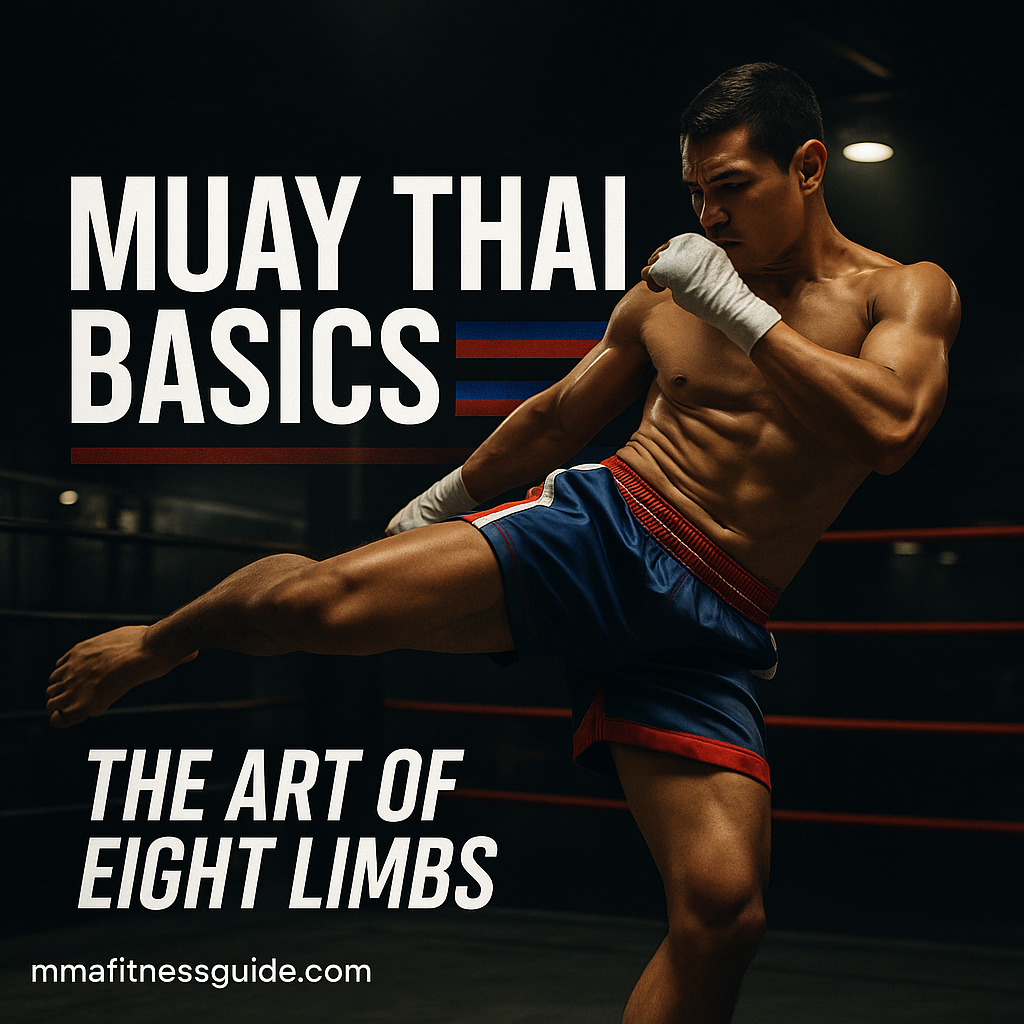
The phrase “Art of Eight Limbs” refers to the eight primary points of contact used in Muay Thai training. These include:
- Two fists for punching techniques
- Two elbows for close-range strikes
- Two knees for powerful upward and forward movements
- Two shins for kicks and defensive checks
Training these movements together develops balance, timing, and muscular coordination. From a fitness perspective, this approach forces the body to work as a connected system rather than isolating individual muscle groups.
Repeated use of these techniques engages the core, hips, shoulders, and legs simultaneously, making Muay Thai-based workouts highly effective for building functional strength and endurance.
Why Muay Thai Is Effective for MMA Fitness
Muay Thai training is particularly effective for MMA fitness because it combines cardiovascular conditioning with strength and mobility in a single discipline. Continuous striking drills elevate heart rate quickly, while controlled movements improve joint stability and muscular endurance.
Unlike traditional cardio workouts, Muay Thai conditioning emphasizes explosive motion followed by controlled recovery. This mirrors the demands of high-intensity interval training and makes it well-suited for improving stamina and work capacity.
Additionally, Muay Thai training promotes mental focus and discipline. Maintaining proper form while fatigued encourages body awareness, breathing control, and efficient movement patterns — all valuable traits for long-term fitness development.
Core Muay Thai Movements Used in Fitness Training
In MMA-inspired fitness programs, Muay Thai movements are often simplified and structured for conditioning purposes. Common training elements include:
- Punching combinations for upper-body endurance
- Controlled knee strikes to build hip strength and balance
- Kicking drills to improve leg power and flexibility
- Footwork patterns to enhance agility and coordination
These movements can be performed with minimal equipment and adjusted for different fitness levels, making Muay Thai accessible to beginners while still challenging for experienced athletes.
Beginner Training Context
Beginners should focus on learning basic movement patterns, posture, and controlled technique. Early training sessions are best kept short and structured, emphasizing proper form rather than intensity.
At this level, Muay Thai-inspired workouts may include light shadowboxing, simple combinations, and rest periods between rounds. The goal is to build familiarity with movement while gradually improving endurance and coordination.
Beginners benefit most from consistency, proper warm-ups, and allowing adequate recovery time between training sessions.
Intermediate Training Context
Intermediate trainees can begin increasing workout intensity by extending training rounds and combining movements into longer sequences. Conditioning drills may include timed intervals, moderate-pace combinations, and controlled pad or bag work if available.
As conditioning improves, footwork and balance become more important. Training at this level often emphasizes maintaining proper technique while fatigued, which helps improve muscular endurance and cardiovascular efficiency.
Rest and recovery remain essential, as increased intensity places greater demand on joints and connective tissue.
Advanced Training Context
Advanced MMA fitness training incorporates high-intensity circuits, extended rounds, and complex movement combinations. At this stage, workouts are designed to challenge endurance, power, and mental focus simultaneously.
Because training demands are higher, advanced athletes must pay close attention to recovery strategies such as stretching, hydration, and rest days. Injury prevention becomes just as important as performance, especially when training multiple times per week.
Advanced Muay Thai-based conditioning is best approached with structured programming and awareness of physical limits.
Common Mistakes in Muay Thai Fitness Training
Many people new to Muay Thai-inspired workouts make the mistake of prioritizing intensity over form. Poor technique can reduce effectiveness and increase the risk of strain or injury.
Other common issues include skipping warm-ups, training too frequently without rest, and neglecting mobility or recovery work. Sustainable progress comes from balanced training that respects the body’s need for adaptation and recovery.
Training Safety Notice
Muay Thai and MMA-style workouts are physically demanding and may not be suitable for everyone. Always train within your current fitness level, use proper technique, and consult a qualified professional before beginning any new training program. Adequate warm-ups, rest periods, and recovery strategies are essential for reducing the risk of injury and supporting long-term fitness.
Final Thoughts
Muay Thai’s reputation as the “Art of Eight Limbs” reflects its effectiveness as both a martial art and a fitness discipline. When adapted for MMA fitness training, it provides a powerful way to build endurance, strength, coordination, and mental resilience.
Whether you are just starting your fitness journey or looking to enhance your conditioning routine, Muay Thai-inspired training offers scalable, full-body benefits that can support long-term athletic development when practiced safely and consistently.