Introduction
Sparring is one of the most demanding parts of MMA training. Your body needs to move fast, react quickly, change levels, and absorb impact — all while staying relaxed and controlled. That’s why a proper joint-focused warm-up is essential. Tight joints slow you down, make movements sloppy, and increase the risk of injury.
The good news is that warming up your joints doesn’t take long. With a few simple drills, you can prepare your body, move more smoothly, and spar with better confidence and safety.
Here’s a beginner-friendly joint warm-up routine designed specifically for MMA sparring.
Why Joint Warm-Ups Matter for Sparring
Joint warm-ups help you:
- Improve mobility
- Activate stabilizer muscles
- Increase blood flow
- Reduce stiffness
- Move more fluidly during scrambles
- Stay safer during sudden transitions
- Prevent common injuries
Tight joints are one of the biggest factors behind strains, tweaks, and roll-stopping injuries.
Step 1: Neck Mobility
The neck is heavily involved in clinching, pummeling, and grappling. Keeping it loose helps prevent strains.
Drills (20–30 seconds each):
- Slow circles
- Side-to-side looks
- Up-and-down nods
- Gentle ear-to-shoulder stretches
Keep everything slow and controlled — never force neck movements.
Step 2: Shoulder Activation
Shoulders handle punches, defensive blocks, underhooks, sprawls, and posting. They must be warmed up before sparring.
Drills:
- Arm circles (forward + backward, 20 seconds each)
- Scapula rolls
- Light band pull-aparts
- Internal and external rotations
These activate rotator cuffs and prepare the shoulders for fast reactions.
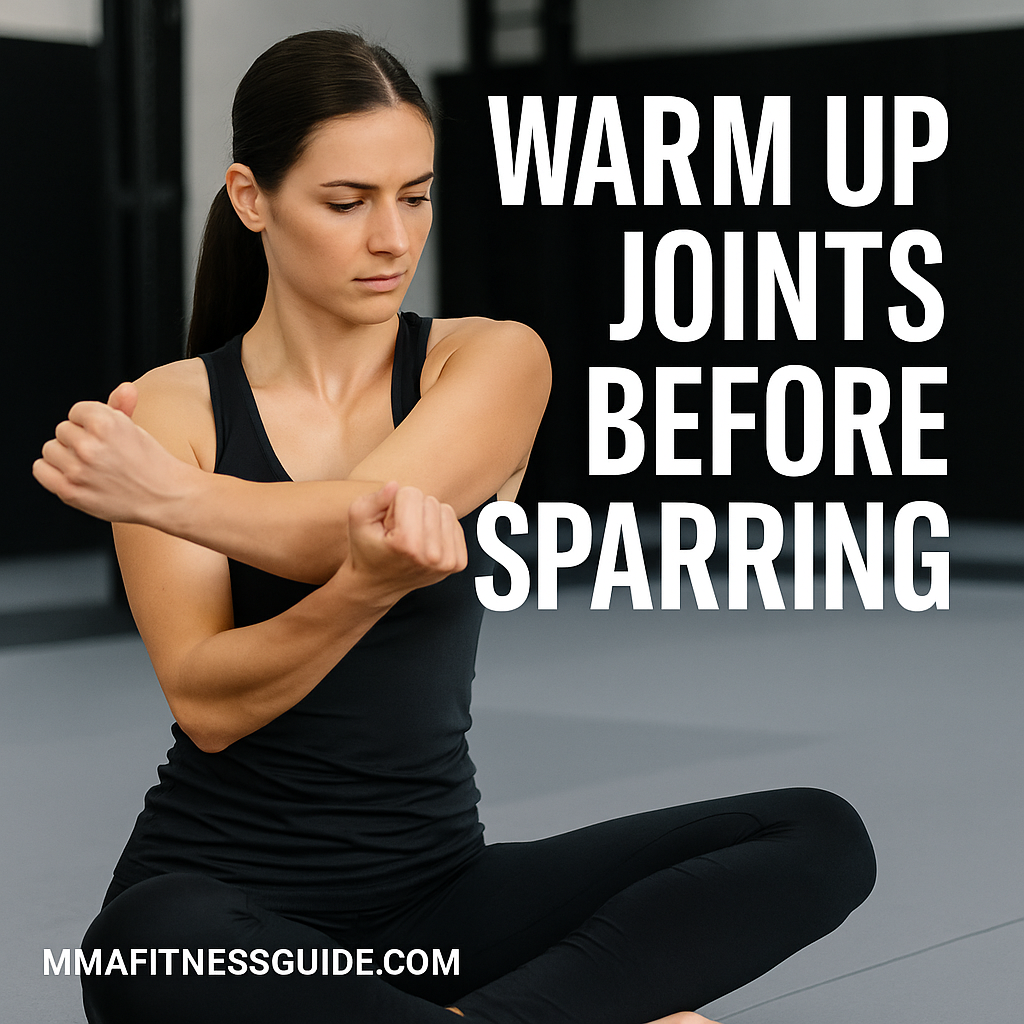
Step 3: Elbows and Wrists
These joints take a lot of impact during punching and grappling.
Wrist Warm-Ups:
- Wrist circles
- Palm-down and palm-up stretches
- Light knuckle push-up holds (5–10 seconds)
Elbow Warm-Ups:
- Slow extensions
- Light resistance-band curls
- Triceps extensions
Warm joints absorb force better and help prevent tendonitis.
Step 4: Spine and Torso Mobility
You use your spine constantly when slipping punches, rotating hips, or defending takedowns.
Drills:
- Cat-cow (10 reps)
- Torso twists
- Side bends
- Hip-to-shoulder rotations
A loose spine gives you smoother movement during striking and scrambles.
Step 5: Hips and Glutes
Hips generate power for kicks, sprawls, and takedowns. Tight hips are one of the biggest sparring liabilities.
Drills:
- Hip circles (both directions)
- Leg swings (front/back + side-to-side)
- Glute bridges (10–15 reps)
- Deep squat sit (10–20 seconds)
Loose hips lead to faster kicks and better balance.
Step 6: Knees and Ankles
Knees take pressure during movement, shots, and checks. Ankles must stay mobile for quick footwork.
Ankle Drills:
- Ankle circles
- Toe-to-shin lifts
- Heel raises
Knee Warm-Ups:
- Light knee bends
- Controlled step forwards/backs
- Short-level change drills
Good knee and ankle mobility improves movement and reduces awkward landings.
Step 7: Controlled Shadowboxing
Now that all major joints are activated, combine everything into fluid movement.
Focus on:
- Loose shoulders
- Smooth pivots
- Gentle head movement
- Slow punching combinations
- Gradual increase in intensity
This bridges the gap between warm-up and sparring.
Step 8: Light Grappling Movement (Optional)
For MMA sparring, add simple grappling-specific movements:
- Hip escapes
- Technical stand-ups
- Shoulder rolls
- Sprawls (very light)
- Pummeling with a partner
10–20 seconds per drill is enough to wake up the body.
Common Mistakes to Avoid
Beginners often skip warm-ups or rush them, leading to preventable issues.
Avoid:
- Jumping straight into sparring
- Fast, forced joint movements
- Static stretching only
- Cold punches or takedowns
- Ignoring neck or shoulder mobility
A clean warm-up takes just 5–8 minutes but drastically reduces injury risk.
Quick 5-Minute Warm-Up Routine (Simple Version)
If you’re short on time, use this:
Minute 1: Neck + shoulder mobility
Minute 2: Wrists + elbows
Minute 3: Spine and torso mobility
Minute 4: Hips + ankles
Minute 5: Slow shadowboxing
Effective, quick, and sparring-ready.
Final Thoughts
Warming up your joints before sparring is one of the easiest ways to stay safe and move better. With just a few minutes of focused mobility and activation, your punches will feel smoother, your reactions sharper, and your takedowns cleaner. Make joint warm-ups a consistent part of your routine, and your performance — and longevity — will improve immediately.