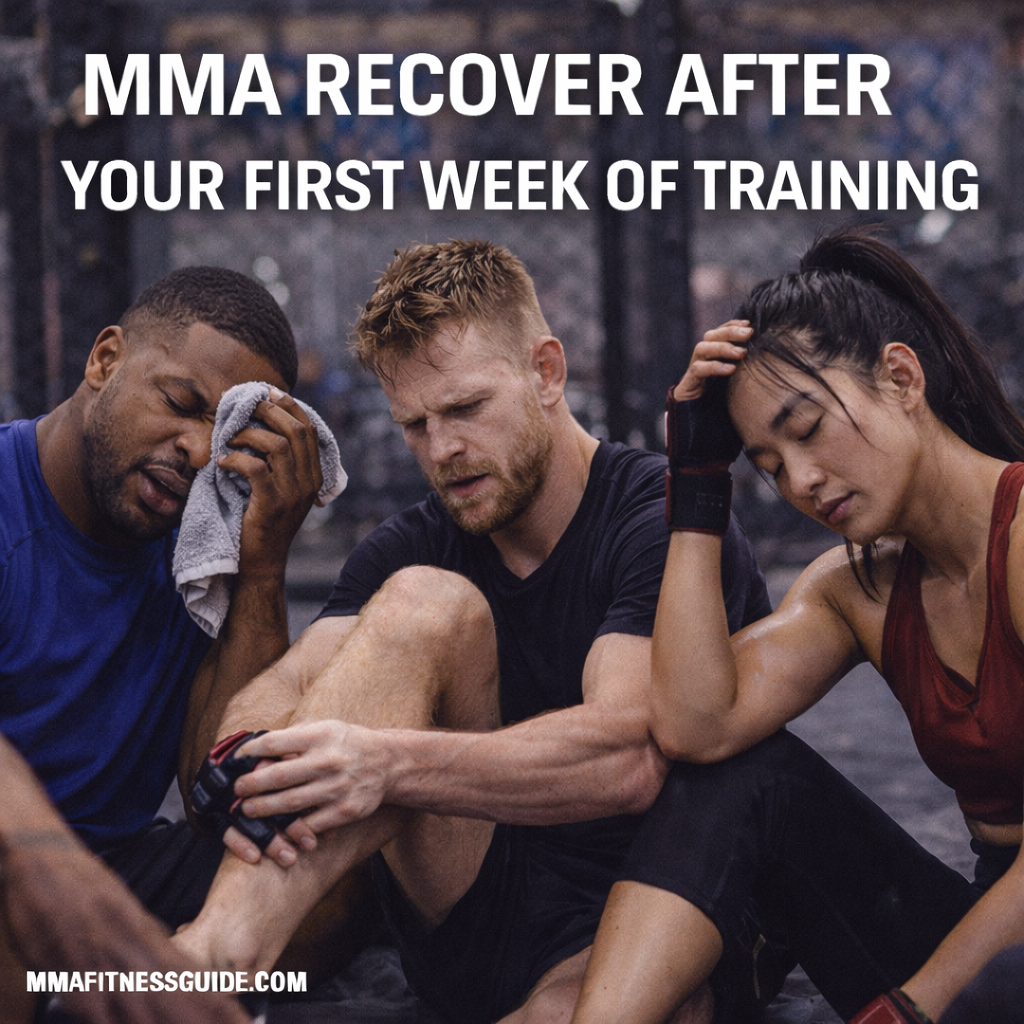
Your first week of MMA training is exciting—but it can also leave your body feeling sore, fatigued, and overwhelmed. New movements, unfamiliar conditioning, and constant muscle engagement place stress on areas you may not have used much before. Recovery after your first week is essential for preventing injury, improving performance, and ensuring you actually want to keep training.
This guide explains how beginners can recover properly after their first week of MMA, what sensations are normal, and how to set yourself up for long-term progress.
What to Expect After Your First Week of MMA
Most beginners experience a mix of physical and mental fatigue.
Common post-week-one sensations include:
- Muscle soreness in the legs, hips, back, and shoulders
- Grip and forearm fatigue
- Stiffness when waking up
- Mild bruising from drilling or light sparring
- Mental overload from learning new skills
These reactions are normal and temporary when managed correctly.
Why Recovery Matters for Beginners
Recovery isn’t a bonus—it’s part of training.
Proper recovery helps:
- Reduce injury risk
- Improve technique retention
- Restore energy levels
- Prevent burnout
- Build consistency
Skipping recovery often leads to missed sessions or unnecessary setbacks.
Step 1: Prioritize Sleep Immediately
Sleep is the most powerful recovery tool you have.
Aim for:
- 7–9 hours per night
- Consistent sleep and wake times
- A dark, cool sleeping environment
Your body repairs muscles, regulates hormones, and consolidates learning during sleep.
Step 2: Hydrate More Than You Think You Need
MMA training causes significant fluid loss.
Hydration supports:
- Muscle recovery
- Joint lubrication
- Reduced soreness
- Better energy levels
Drink water consistently throughout the day, not just during training.
Step 3: Eat to Recover, Not to Restrict
Beginners often under-eat after starting MMA.
Focus on:
- Balanced meals with protein, carbohydrates, and fats
- Regular meal timing
- Post-training meals or snacks
- Avoiding aggressive dieting during your first weeks
Your body needs fuel to adapt to training stress.
Step 4: Use Light Movement for Active Recovery
Complete rest isn’t always the best option.
Helpful active recovery options include:
- Walking
- Light cycling
- Easy stretching
- Mobility routines
Light movement increases blood flow and highlights stiffness that needs attention.
Step 5: Stretch Gently—Don’t Force It
Stretching should feel relieving, not painful.
Focus on:
- Hips
- Hamstrings
- Back
- Shoulders
- Neck
Gentle stretching helps restore range of motion without irritating sore muscles.
Step 6: Expect Soreness—but Learn to Read It
Soreness is normal after your first week.
Normal soreness:
- Feels dull or achy
- Improves with light movement
- Decreases over a few days
Warning signs:
- Sharp or stabbing pain
- Pain that worsens with movement
- Swelling or loss of function
When in doubt, back off and ask for guidance.
Step 7: Take a Strategic Rest Day
Rest days help adaptation happen.
A good rest day includes:
- Light movement
- Extra hydration
- Proper meals
- Relaxation and stress reduction
Rest days are not a sign of weakness—they’re part of progress.
Step 8: Manage Mental Fatigue
Mental exhaustion is common for beginners.
You may feel:
- Overwhelmed by information
- Frustrated by mistakes
- Slower reaction times
This improves with time. Your brain is learning a new language of movement.
Step 9: Avoid These Common Beginner Recovery Mistakes
Avoid:
- Training hard every day
- Ignoring pain signals
- Skipping meals
- Trying to “push through” exhaustion
- Comparing yourself to experienced teammates
Recovery supports consistency—not laziness.
Step 10: Adjust Expectations for Week Two
Week two should feel slightly better—not perfect.
Focus on:
- Showing up consistently
- Moving a bit more comfortably
- Learning one or two things per session
- Recovering better than week one
Progress compounds quickly when recovery is respected.
How Long Does Beginner Soreness Last?
For most beginners:
- Peak soreness: 24–72 hours
- Noticeable improvement: 3–7 days
- Full adaptation: several weeks of consistent training
Your body adapts faster than you think when supported properly.
When to Take Extra Caution
Pause training and reassess if you experience:
- Sharp or radiating pain
- Severe joint discomfort
- Lingering swelling
- Pain that doesn’t improve with rest
Early caution prevents long-term issues.
Final Thoughts
Recovering after your first week of MMA training is just as important as the training itself. Prioritizing sleep, hydration, nutrition, light movement, and realistic expectations helps your body adapt safely and keeps motivation high.
MMA is a long-term journey. Taking care of your body early ensures you can keep training, learning, and enjoying the process well beyond your first week.