Introduction
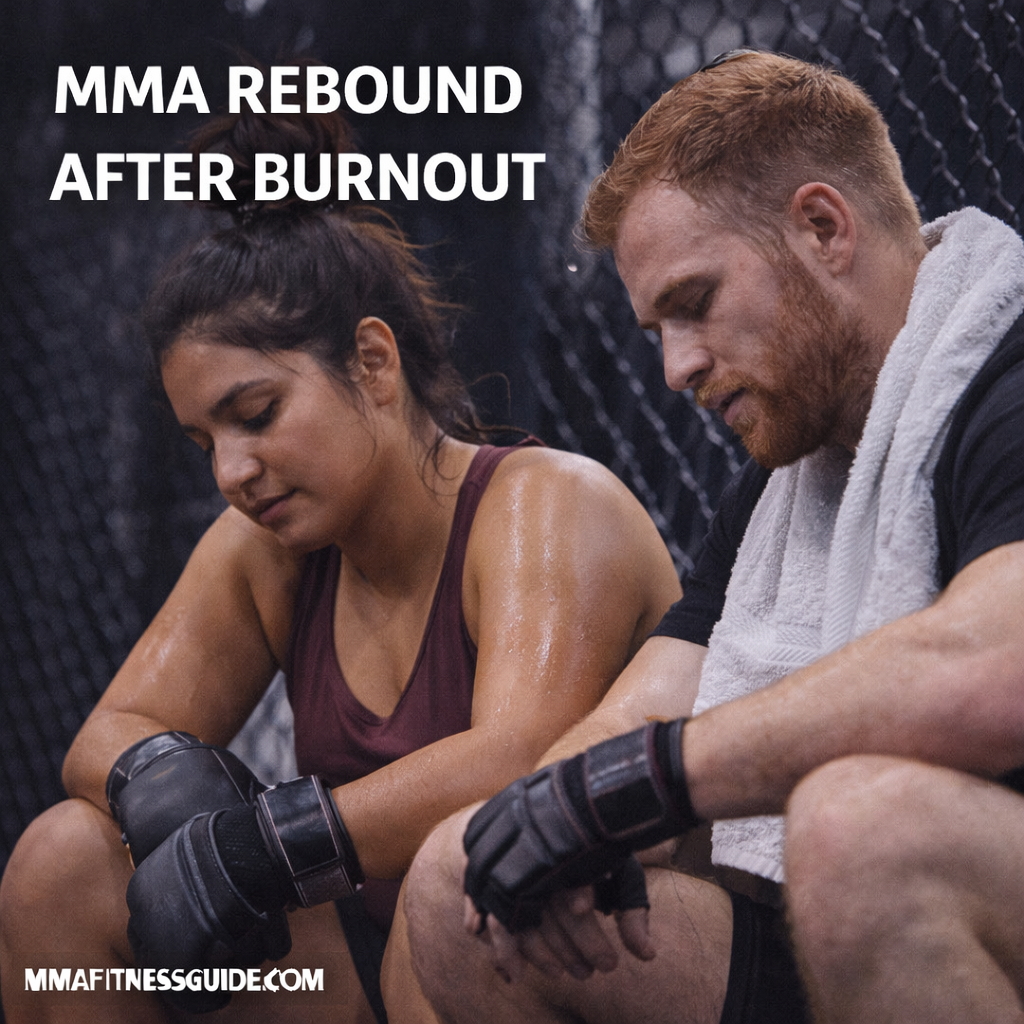
Burnout is common in MMA. The physical grind, constant pressure to improve, weight management, and mental intensity can drain even the most passionate athletes. When burnout hits, motivation fades, performance drops, and training feels heavy rather than rewarding.
Rebounding after burnout isn’t about pushing harder—it’s about resetting intelligently and rebuilding your relationship with training.
What MMA Burnout Really Looks Like
Burnout isn’t just physical exhaustion.
Common signs include:
- Loss of motivation to train
- Persistent fatigue
- Irritability or emotional flatness
- Declining performance
- Increased injury frequency
Ignoring these signals often deepens burnout.
Why Burnout Happens in MMA
Several factors contribute to burnout.
Key contributors include:
- Excessive training volume
- Constant high intensity
- Poor recovery and sleep
- Pressure to perform or compete
- Lack of variety or autonomy
Burnout builds gradually—not overnight.
Step One: Acknowledge the Burnout
The first step is honesty.
Acknowledge:
- You’re not weak
- Burnout is a signal, not a failure
- Recovery is productive
Acceptance allows change.
Step Two: Temporarily Reduce Training Load
You don’t need to quit—just adjust.
Helpful strategies:
- Reduce weekly sessions
- Lower sparring intensity
- Focus on technique over intensity
Less can be more during recovery phases.
Shift Focus From Outcome to Process
Burnout thrives on outcome obsession.
Reframe training around:
- Skill development
- Movement quality
- Enjoyment
Process-focused training restores intrinsic motivation.
Reintroduce Play and Exploration
Structured intensity isn’t the only way to train.
Try:
- Light technical sparring
- New martial arts styles
- Movement-based sessions
Playfulness rebuilds curiosity.
Address Sleep and Recovery First
Burnout cannot resolve without rest.
Prioritize:
- Consistent sleep schedules
- Relaxation routines
- Mobility and recovery work
Energy returns when recovery improves.
Nutrition During Burnout Recovery
Undereating worsens burnout.
Support recovery with:
- Adequate calories
- Balanced macronutrients
- Regular meals
Fueling properly restores hormonal balance.
Take a Break From Weight Cutting
Weight management adds stress.
During burnout:
- Maintain natural bodyweight
- Avoid restrictive diets
- Focus on health
Cutting while burned out prolongs recovery.
Reevaluate Goals and Timelines
Goals may need adjusting.
Ask yourself:
- Are goals still meaningful?
- Is the timeline realistic?
- Do expectations match current capacity?
Alignment reduces pressure.
Communicate With Coaches and Training Partners
Burnout thrives in silence.
Open communication helps:
- Adjust expectations
- Modify training plans
- Maintain support systems
Honesty strengthens relationships.
Limit External Pressure and Noise
Social media amplifies burnout.
Consider:
- Reducing online comparison
- Limiting constant fight content
- Creating mental space
Less noise improves focus.
Gradual Return to Intensity
Don’t rush the comeback.
Progress by:
- Reintroducing intensity slowly
- Monitoring energy levels
- Taking rest days seriously
Sustainable return beats fast relapse.
Mental Skills for Burnout Recovery
Mindset tools support recovery.
Helpful practices:
- Journaling
- Breathing exercises
- Visualization focused on enjoyment
Mental recovery supports physical recovery.
Recognizing When Professional Help Is Needed
Sometimes burnout overlaps with mental health challenges.
Seek support if:
- Motivation doesn’t return
- Mood remains low
- Anxiety or depression increases
Support is strength, not weakness.
Lessons Burnout Teaches Fighters
Burnout often provides clarity.
Common lessons include:
- Recovery is training
- Balance improves longevity
- Self-awareness prevents extremes
Many fighters return stronger and wiser.
Preventing Future Burnout
Prevention requires intention.
Key habits:
- Periodized training
- Scheduled deloads
- Honest self-checks
- Balanced identity beyond fighting
Longevity requires balance.
Final Thoughts
Rebounding after burnout in MMA isn’t about toughness—it’s about intelligence. Fighters who listen to their bodies, adjust their training, and rebuild motivation thoughtfully often return with renewed passion and improved performance.
Burnout doesn’t mean the end of your journey. It’s often the beginning of a healthier, more sustainable one.