Introduction
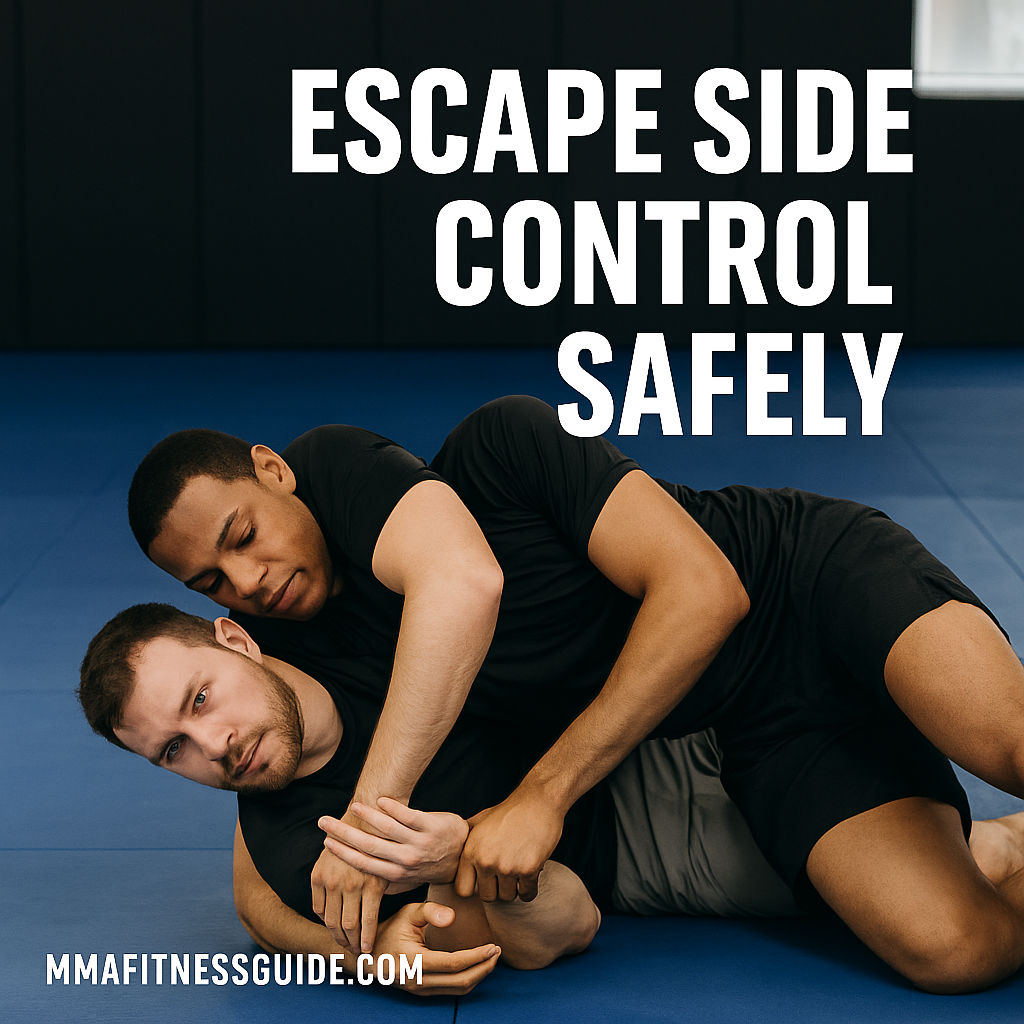
Side control is one of the toughest positions for beginners to escape. When someone is on top of you with heavy pressure, it can feel like you’re stuck with no way out. But escaping side control doesn’t require strength — it requires calmness, smart frames, and small movements that create enough space to recover.
With the right technique, you can stay safe, protect yourself, and work your way back into a better position. Here’s a simple guide to escaping side control safely in MMA.
Why Side Control Feels Hard to Escape
Side control is powerful because your opponent can:
- Apply chest pressure
- Control your hips
- Block your movement
- Pin your shoulders
- Attack submissions
- Transition to mount
But the good news is that small, technical adjustments can create enough space to escape even against heavier opponents.
Step 1: Stay Calm and Protect Yourself
Beginners often panic and push wildly, which makes escapes harder.
Instead, focus on:
- Staying tight
- Keeping elbows close to your ribs
- Using slow, controlled breathing
- Keeping your chin tucked
- Avoiding explosive bridges that waste energy
A calm mindset helps you think clearly and move efficiently.
Step 2: Build Your Frames
Frames are your main escape tools. They help you create space when someone is crushing you.
Your key frames:
1. Forearm across their collarbone or jaw
This keeps their chest off you.
2. Elbow tight against your ribs
Prevents them from sliding into mount.
3. Near-side hand on their hip or bicep
Controls their movement and blocks pressure.
Frames turn side control into a winnable position.
Step 3: Get Off Your Back
You cannot escape if your back is flat on the mat.
Use a small bridge to turn onto your side — not a huge, explosive one.
You want to:
- Get your bottom shoulder off the ground
- Shift your hips slightly toward them
- Face them at a slight angle
Being on your side gives you leverage and makes guard recovery easier.
Step 4: Create Space With a Hip Escape (Shrimp)
Once you have your frames set and your body angled, perform a small, controlled hip escape.
How to shrimp from side control:
- Push into your frame to create space
- Slide your hips away
- Bring your knees toward your chest
- Insert a knee back inside to recover guard
Small movements matter more than power.
Step 5: Recover Guard
As soon as you create space, you can re-establish guard.
Options include:
- Closed guard
- Half guard
- Butterfly hooks
- Knee shield
Recovering any guard is better than staying stuck on bottom.
Step 6: Use the Underhook Escape (The Strong Reversal Option)
If the opportunity is there, underhooks are one of the most effective ways to escape.
Steps:
- Get your near-side arm under their armpit
- Turn onto your side
- Drive up onto your elbow
- Come to your knees
- Take the back or stand up into a wrestling position
Underhooks help you escape and reverse pressure at the same time.
Step 7: Bridge-and-Roll Escape (If They Make a Mistake)
This escape works when their weight is too close to your head.
To roll safely:
- Bridge straight up
- Roll toward them while keeping your elbows tight
- Use your legs to drive through
- Come to top position
This isn’t always available, but great to use when they’re off-balance.
Step 8: Avoid Common Mistakes
Beginners often get stuck because they make these errors:
- Pushing straight up with arms
- Keeping the back flat
- Forgetting to frame
- Letting the opponent isolate an arm
- Only using strength
- Trying to bench press the top person
Correct technique matters more than power.
Step 9: Train Escapes at Low Speed First
Positional sparring helps build real confidence.
Practice:
- Starting in bottom side control
- Slowly building frames
- Shrimping correctly
- Recovering guard
- Using underhooks to scramble
Add speed once your technique feels clean.
When to Stay in Side Control Instead of Rushing Out
In MMA, sometimes rushing the escape gives your opponent openings for:
- Arm triangles
- Americana locks
- Knee-on-belly strikes
- Mount transitions
If your opponent is attacking aggressively, stay tight, protect yourself, and wait for them to overcommit. Smart escapes often happen when they try to advance too quickly.
Final Thoughts
Side control feels overwhelming at first, but with the right frames, angles, and movements, you can escape safely and consistently. Stay calm, protect your arms, build space slowly, and recover guard or scramble when the opportunity opens. Over time, you’ll become harder to hold down — and more confident in your ground defense.