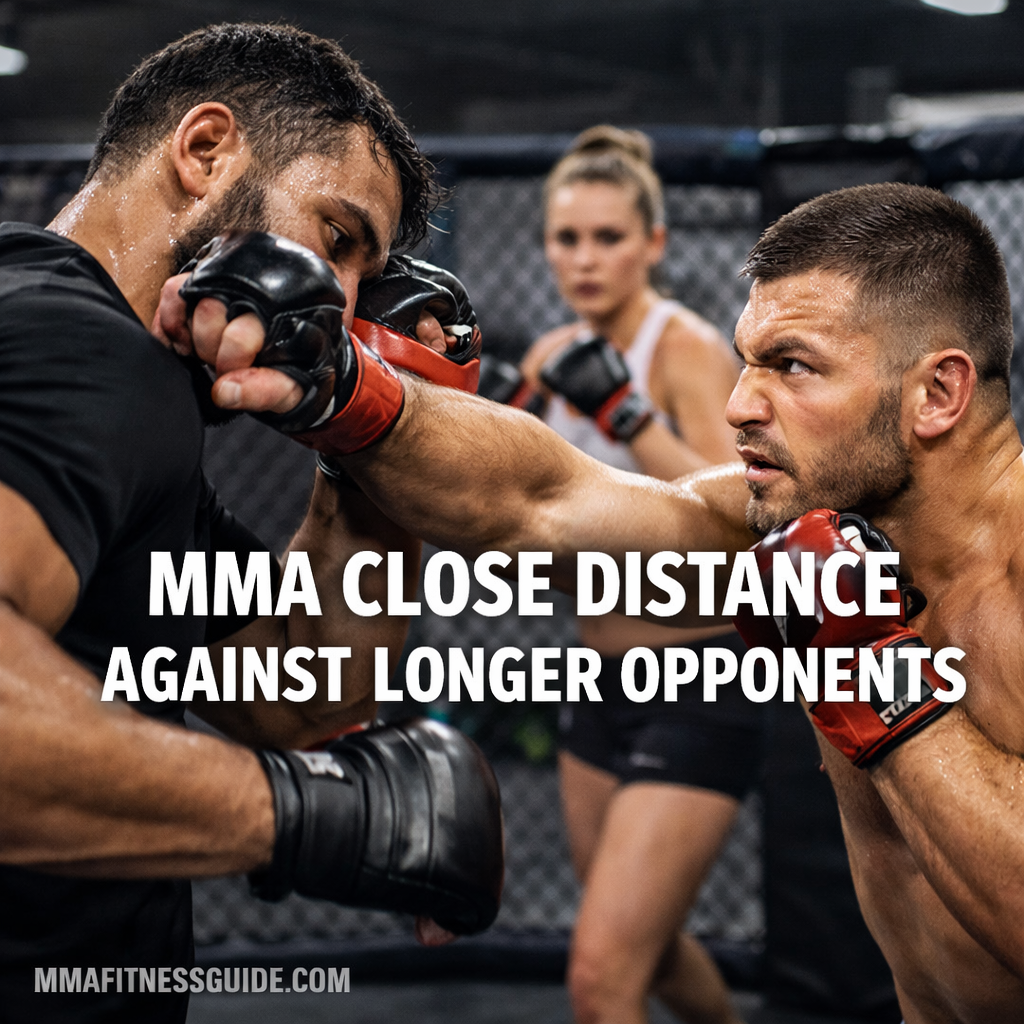
Fighting a longer opponent is one of the most common challenges in MMA. Fighters with longer reach can control range, land strikes from safety, and punish entries if distance isn’t managed correctly. But reach only matters when space exists.
The key to beating taller or longer fighters is learning how to safely close distance, disrupt their rhythm, and force exchanges where reach advantage disappears. This guide breaks down proven MMA strategies to close distance effectively without eating unnecessary damage.
Why Longer Opponents Control the Fight
Longer fighters thrive at range. Their advantages include:
- Easier access to jabs and straight punches
- Strong teep and front kick control
- Ability to reset distance quickly
- More reaction time against entries
If you stay at the end of their strikes, you are fighting their fight.
Closing distance isn’t about rushing forward — it’s about timing, angles, and pressure.
The Biggest Mistakes When Closing Distance
Many fighters lose fights not because of reach, but because of poor entries.
Common mistakes include:
- Charging straight in with no setup
- Dropping hands during forward movement
- Overcommitting on single shots
- Entering from predictable angles
- Hesitating halfway into range
Against a longer opponent, hesitation is often worse than commitment.
Core Principles for Closing Distance Safely
Cut Angles, Don’t Chase
Longer fighters want you moving straight toward them. Instead:
- Step off the centerline
- Enter on angles after strikes
- Force them to reset their feet
- Limit their ability to retreat straight back
Angled entries reduce the impact of reach and improve your chances of landing clean.
Close Distance Behind Strikes
Never enter empty-handed.
Effective entry tools include:
- Double or triple jabs
- Jab to overhand combinations
- Jab to body, overhand to head
- Low kick to step-in punch
- Feints followed by explosive entries
Strikes force reactions. Reactions create openings.
Stay Compact and Protected
As distance closes, posture matters.
Focus on:
- Chin tucked
- Hands high and tight
- Elbows in to protect the body
- Balanced stance to absorb contact
A compact guard minimizes damage even if you take a shot on entry.
Using Feints to Break Long-Range Control
Feints are critical against longer opponents.
Effective feints include:
- Level changes to fake takedowns
- Shoulder feints
- Jab feints
- Foot feints without commitment
Feints draw out long strikes. Once they throw, you enter on the recovery.
Wrestling as a Distance-Closing Tool
Even if you’re primarily a striker, wrestling threats change everything.
Ways to use wrestling to close distance:
- Level change into overhand punches
- Fake shots to force upright posture
- Cage pressure after entries
- Clinch transitions off missed strikes
Longer fighters often struggle once forced to defend both strikes and takedowns.
Clinch Control Against Taller Fighters
Once inside, the clinch becomes your advantage.
Key goals in the clinch:
- Head position under the chin
- Inside control with underhooks
- Short knees and elbows
- Body locks and trips
- Pinning against the cage
The clinch neutralizes reach and drains energy quickly.
Cage Pressure: Your Best Ally
The cage limits movement and removes escape routes.
Effective cage pressure includes:
- Walking opponents down patiently
- Cutting off exits instead of following
- Forcing lateral movement
- Entering when their back nears the fence
Once the cage is behind them, long-range tools lose effectiveness.
Striking Adjustments for Shorter Fighters
Shorter fighters should prioritize:
- Overhands over straight punches
- Hooks after slips
- Body shots to slow movement
- Low kicks to disrupt footwork
Attacking the body and legs reduces a longer opponent’s ability to maintain distance.
Drills to Improve Closing Distance
Add these drills to your training:
- Jab-entry drills with angle exits
- Slip-and-enter combinations
- Feint-to-entry pad work
- Cage-cutting shadowboxing
- Clinch entry repetitions from strikes
Skillful distance closing is trained — not improvised.
Mental Approach When Facing Longer Opponents
Confidence matters as much as technique.
Remember:
- Reach does not equal power
- Pressure creates mistakes
- Long fighters fatigue when forced backward
- Every entry doesn’t need to be perfect
Commitment with structure beats hesitation every time.
Final Thoughts
Closing distance against longer opponents is one of the most valuable skills in MMA. It requires patience, setups, angles, and intelligent pressure — not reckless aggression.
When you learn to enter safely, control the clinch, and use the cage, reach becomes far less important. Fighters who master distance control dictate where the fight happens — and usually how it ends.
Train your entries, trust your pressure, and force longer opponents to fight where they’re least comfortable.