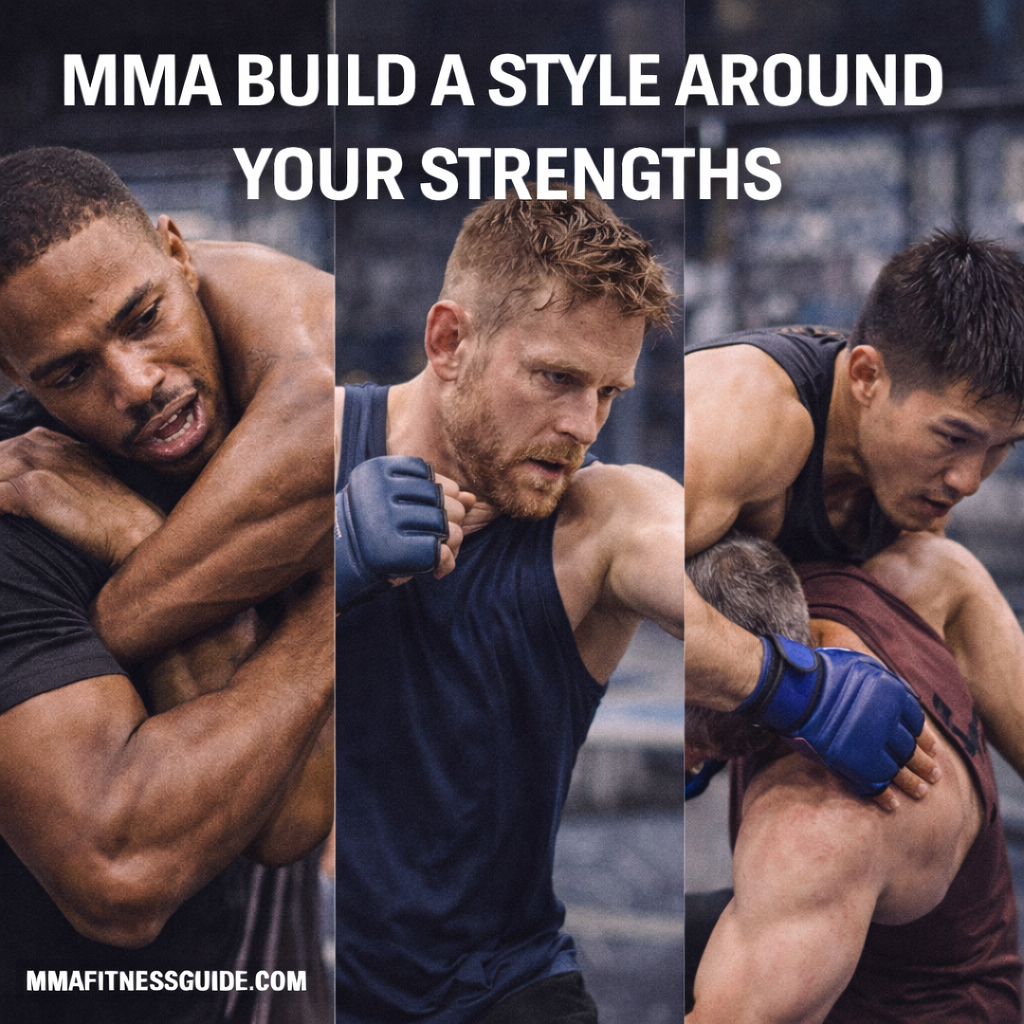
There is no single “perfect” fighting style in MMA. The most successful fighters don’t try to master everything at once—they build a style around their natural strengths. By leaning into what you do best and structuring training around those attributes, you can become more effective, confident, and consistent inside the cage.
This article explains how to build an MMA style around your strengths, identify your natural advantages, and avoid common mistakes that slow development.
Why Style Matters in MMA
MMA rewards adaptability, but it also rewards identity.
A clear personal style:
- Simplifies decision-making under pressure
- Improves confidence and consistency
- Reduces energy waste
- Enhances game planning
- Helps guide training priorities
Trying to fight like everyone else often leads to confusion and burnout.
Identify Your Natural Strengths
Before building a style, you must understand what you already do well.
Physical Attributes
Consider:
- Height and reach
- Strength and power
- Speed and explosiveness
- Endurance and durability
- Flexibility and mobility
Your body type influences which techniques feel natural and sustainable.
Athletic Background
Past experience matters.
Common backgrounds include:
- Wrestling
- Brazilian Jiu-Jitsu
- Boxing
- Muay Thai
- Other sports (football, gymnastics, etc.)
Your history shapes instincts, movement patterns, and comfort zones.
Mental Strengths
Style isn’t only physical.
Mental traits include:
- Aggression vs patience
- Comfort under pressure
- Tactical thinking
- Risk tolerance
- Emotional control
Your mindset influences how you approach exchanges.
Common MMA Style Archetypes
Most MMA styles fall into broad categories.
Pressure Fighters
Pressure fighters excel at:
- Forward movement
- Volume striking
- Clinch control
- Breaking opponents mentally
They benefit from strong conditioning and durability.
Counter Strikers
Counter fighters rely on:
- Timing and accuracy
- Defensive awareness
- Distance management
- Reading opponents
This style favors patience and technical precision.
Grappling-First Fighters
Grapplers build their style around:
- Takedowns and control
- Ground dominance
- Submissions
- Positional awareness
They thrive on dictating where the fight takes place.
Hybrid All-Rounders
All-rounders:
- Blend striking and grappling
- Adapt fluidly between ranges
- Prioritize versatility
They require strong fundamentals and fight IQ.
Match Techniques to Your Strengths
Once you identify your strengths, choose techniques that reinforce them.
Examples:
- Long reach → jab-heavy striking, front kicks
- Explosive power → bursts, clinch attacks
- Strong wrestling → pressure takedowns, top control
- High cardio → volume and pace control
Avoid forcing techniques that don’t suit your attributes.
Build Your Game Plan Around Your Style
Your style should guide how you approach fights.
Key considerations:
- Preferred range (long, mid, clinch, ground)
- Typical entries and exits
- High-percentage techniques
- Energy management strategy
A clear game plan reduces hesitation.
Training Priorities Should Reflect Your Style
Not all skills deserve equal training time.
Allocate training by:
- Spending more time on core strengths
- Supporting strengths with complementary skills
- Maintaining baseline competence in weaker areas
This approach creates efficiency, not imbalance.
Adapt Your Style to MMA Rules
Techniques must work within MMA rulesets.
Consider:
- Small gloves and defensive changes
- Takedown and clinch threats
- Scoring criteria
- Round structure and pacing
Style adaptation separates MMA success from single-discipline dominance.
Avoid the Trap of Imitation
Many fighters try to copy champions.
Common imitation mistakes:
- Adopting styles unsuited to body type
- Forcing techniques beyond current skill level
- Ignoring personal limitations
- Chasing trends instead of fundamentals
Champions succeed because styles fit them—not the other way around.
Evolving Your Style Over Time
Styles aren’t static.
As you gain experience:
- Strengths may change
- Weaknesses improve
- Strategy becomes more refined
Evolution should enhance identity, not erase it.
How Coaches Help Shape Style
Good coaches:
- Recognize athlete strengths early
- Design drills to reinforce style
- Guide technical development
- Prevent overextension into unsuitable areas
Style-building is a collaborative process.
Signs Your Style Is Working
A well-built style feels natural.
Positive indicators include:
- Clear decision-making
- Consistent performance
- Reduced mental fatigue
- Confidence under pressure
- Improved fight results
Comfort breeds effectiveness.
Final Thoughts
Building an MMA style around your strengths allows you to train smarter, fight more confidently, and progress faster. Instead of chasing every technique, focus on what fits your body, mindset, and experience. Over time, this clarity becomes a competitive advantage.
The best style in MMA isn’t the flashiest—it’s the one that works for you.