
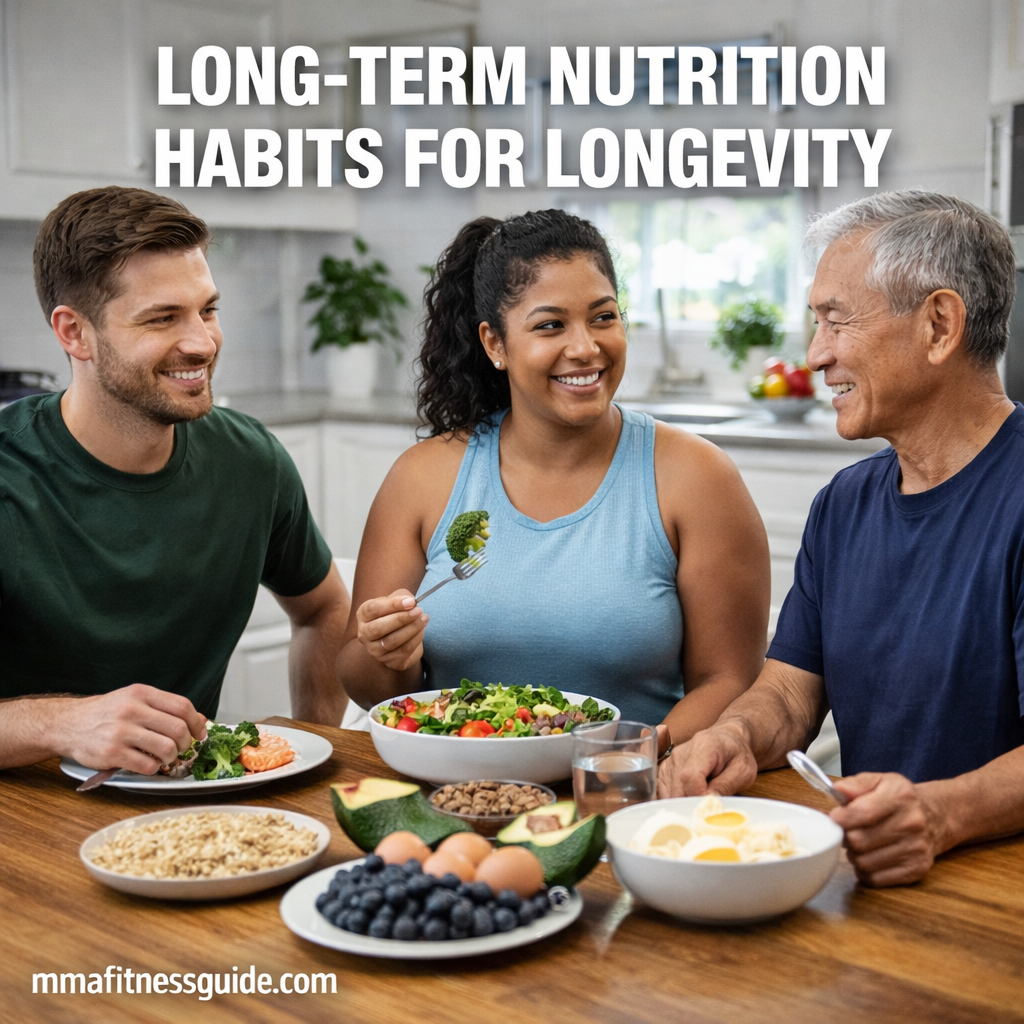
Nutrition isn’t just about fueling workouts or hitting short-term physique goals. What you eat consistently over years plays a major role in energy levels, injury resistance, cognitive health, and overall lifespan. For athletes and active individuals, longevity-focused nutrition supports performance today while protecting health for decades to come.
This guide explores sustainable nutrition habits that promote long-term health, recovery, and performance.
Why Longevity-Focused Nutrition Matters
Short-term diets often emphasize extremes—cutting calories aggressively, eliminating entire food groups, or cycling between restriction and excess. While these approaches may produce quick results, they often lead to burnout, hormonal disruption, and declining health over time.
Longevity nutrition focuses on:
- Consistency over perfection
- Nutrient density instead of calorie obsession
- Supporting recovery, joints, and organs
- Maintaining metabolic health as you age
The goal is to eat in a way you can sustain for life.
Prioritize Whole, Minimally Processed Foods
Whole foods provide the vitamins, minerals, fiber, and antioxidants your body needs to function optimally.
Aim to base most meals around:
- Lean proteins (fish, eggs, poultry, legumes)
- Vegetables of varying colors
- Fruits in moderate portions
- Whole grains and complex carbohydrates
- Healthy fats like olive oil, nuts, seeds, and avocado
Highly processed foods should be occasional, not foundational.
Build Protein Habits That Support Aging
Adequate protein intake becomes more important as you age due to natural muscle loss.
Long-term protein habits include:
- Including protein at every meal
- Spreading intake evenly throughout the day
- Choosing high-quality sources
- Adjusting intake based on activity level
Consistent protein intake supports muscle mass, bone density, metabolic health, and recovery.
Support Gut Health Consistently
Digestive health influences immunity, inflammation, and nutrient absorption.
To support gut health:
- Eat fiber-rich foods daily
- Include fermented foods when tolerated
- Stay hydrated
- Avoid extreme restriction that disrupts digestion
A healthy gut improves nutrient utilization and overall resilience.
Balance Blood Sugar for Long-Term Energy
Chronic blood sugar spikes and crashes increase inflammation and fatigue.
Helpful habits include:
- Pairing carbohydrates with protein or fat
- Prioritizing complex carbs over refined sugars
- Eating at regular intervals
- Avoiding constant snacking out of boredom
Stable energy levels support both training performance and long-term metabolic health.
Don’t Fear Healthy Fats
Fats play a critical role in hormone production, brain function, and joint health.
Focus on:
- Monounsaturated and omega-3 fats
- Fatty fish for anti-inflammatory benefits
- Avoiding excessive trans fats and industrial seed oils when possible
Balanced fat intake supports longevity and cognitive function.
Practice Mindful Portion Awareness
Longevity isn’t about eating less—it’s about eating appropriately.
Helpful strategies:
- Eat until satisfied, not stuffed
- Slow down meals
- Reduce distracted eating
- Adjust portions based on activity and age
Mindful eating naturally supports calorie balance without rigid tracking.
Hydration as a Daily Habit
Chronic dehydration contributes to fatigue, joint stiffness, and poor digestion.
Long-term hydration habits include:
- Drinking water consistently throughout the day
- Increasing intake during training and heat exposure
- Monitoring urine color as a simple guide
Hydration supports every system in the body.
Allow Flexibility for Sustainability
Rigid rules often fail long term.
Longevity-friendly nutrition allows:
- Occasional indulgences without guilt
- Social meals and cultural foods
- Adjustments during travel or life changes
Consistency over time matters far more than short-term perfection.
Nutrition and Training Longevity
As training intensity changes with age, nutrition should evolve too.
Adjustments may include:
- Prioritizing recovery nutrients
- Increasing micronutrient intake
- Supporting joint and connective tissue health
- Reducing reliance on extreme cutting or bulking phases
Smart nutrition helps you stay active longer.
Final Thoughts
Long-term nutrition habits are built through small, repeatable choices—not extreme plans. By prioritizing whole foods, balanced macronutrients, hydration, and flexibility, you create a foundation that supports both performance and longevity.
Eat in a way that fuels your training today while protecting your health for years to come.