Introduction
Leg locks used to be viewed as risky, unpredictable techniques — but modern grappling has made them a crucial part of MMA and submission fighting. Even if you never plan to become a “leg lock specialist,” every fighter should understand the basics. Knowing how to attack, defend, and stay safe around leg entanglements keeps you calm on the ground and prevents panic when opponents target your legs.
Leg locks aren’t just submissions — they’re a strategy. Here’s how to approach them safely and effectively.
Why Leg Locks Matter in Modern MMA
Leg locks change the pace of a fight immediately. They can:
- force opponents to step carefully
- slow down aggressive strikers
- create sweeps and reversals
- finish fights quickly
- punish opponents who stand too close
Understanding leg locks adds depth to your ground game.
Safety First: The Golden Rules of Leg Locks
Before learning offense, beginners must understand safety. Leg locks can cause serious injury if done incorrectly or too aggressively.
1. Tap Early
Ligament damage happens fast. Pain often comes after injury — tap before it feels sharp.
2. Never “crank” submissions
Leg locks are based on control and alignment, not speed or strength.
3. Don’t roll blindly
Rolling the wrong direction can make your opponent finish the lock quicker.
4. Protect your heel
Once your heel is exposed, you’re in danger. Calmly hide or untuck it.
5. Respect reaping rules in training
Reaping inward twists the knee — beginners must learn how to move safely.
Safety keeps training partners healthy and lets you practice leg locks confidently.
Understanding Leg Lock Positions (Leg Entanglements)
The foundation of leg locks isn’t the submission — it’s the entanglement.
1. Ashi Garami (Single Leg X)
The safest and most beginner-friendly position.
Benefits:
- good control
- easy entries
- foundation of most leg locks
2. Outside Ashi
Used for straight ankle locks and transitions.
3. Inside Sankaku (Honey Hole / 411 / Saddle)
Advanced but extremely powerful.
Benefits:
- strong control
- many submission options
4. Cross Ashi (Outside Sankaku)
Good for attacking the heel with strong leverage.
Learning positions first makes every leg lock safer and more effective.
The Three Most Important Beginner Leg Locks
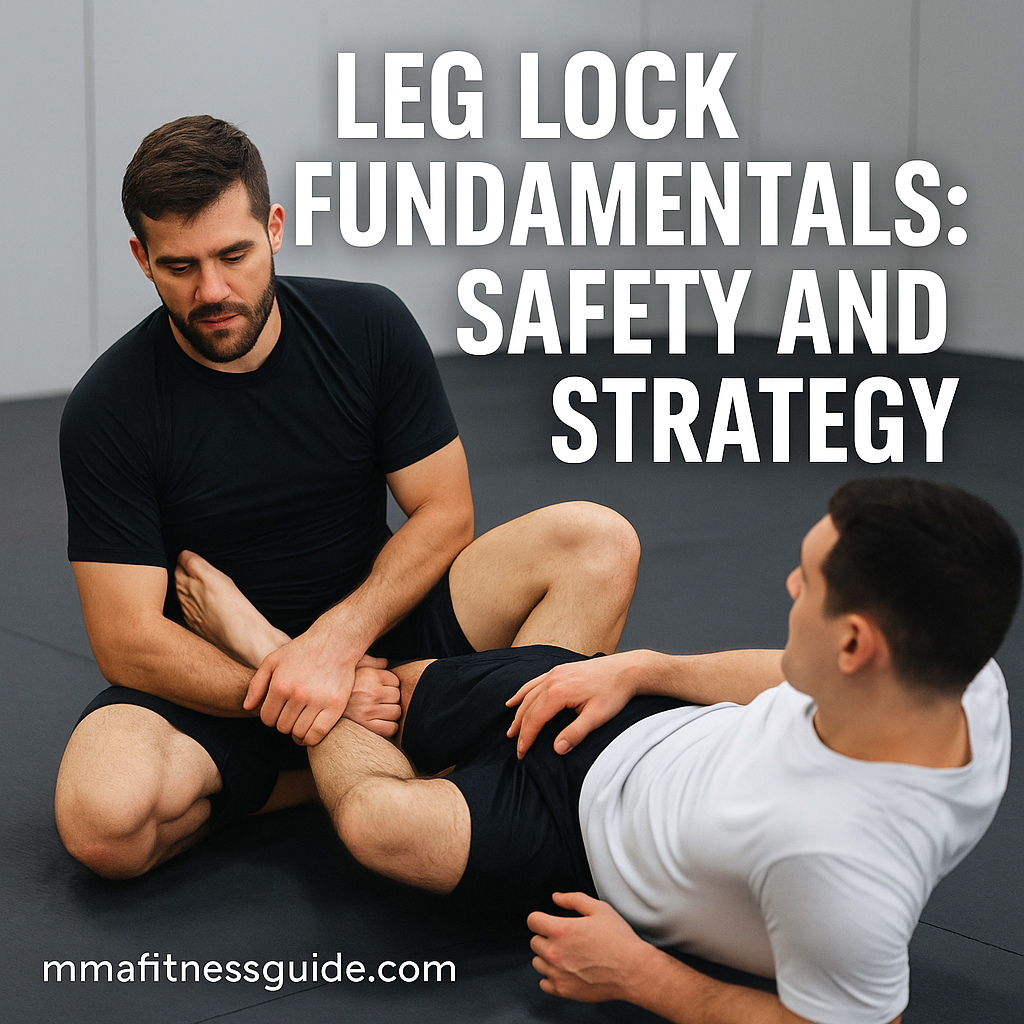
1. Straight Ankle Lock
Best starting point.
Why it’s great:
- minimal risk
- teaches mechanics
- works at all levels
Key mechanics:
- toes in armpit
- elbow tight
- lean back using your whole body
- keep their knee line controlled
2. Heel Hook (Advanced — Learn With Caution)
Very effective but high risk if done incorrectly.
Two main types:
- outside heel hook
- inside heel hook
Beginners should focus on defense before offense.
3. Kneebar
A straight-line submission like an armbar for the legs.
Key mechanics:
- hips deep
- legs controlling their thigh
- knees pinched
- slow extension
The kneebar is safer than heel hooks but still demands control.
Building a Smart Leg Lock Strategy
Leg locks aren’t just submissions — they influence the entire ground game.
1. Use Leg Locks to Off-Balance Opponents
If opponents fear leg locks, they move differently.
This creates openings for:
- sweeps
- back takes
- passing opportunities
2. Control Before Attack
Submission attempts without control lead to scrambles and risk losing position.
3. Don’t Sacrifice Position in MMA
In pure grappling, dropping back for legs is common.
In MMA, you must:
- protect your head
- avoid eating punches
- choose safe entries
Prioritize heel hook entries only when you have upper-body control or your opponent is off-balance.
4. Understand Knee Line Control
If the opponent’s knee slips past your hips, the submission is gone.
Focus on:
- pinching your knees
- controlling their hip
- preventing rotations
5. Re-Attack When Opponents Defend
Defenders often:
- turn their knee
- roll
- stand
Each reaction creates new openings. Learn to follow their movement.
Leg Lock Defense Basics (Every Beginner Needs These)
1. Clear the Knee Line
Slide your knee past their hips as priority #1.
2. Turn the Correct Direction
Your coach will teach which direction is safe based on the lock.
3. Control Their Reach
Grab their hands or grip fight to prevent them finishing the lock.
4. Stand When Possible
Standing helps:
- relieve pressure
- open their control
- create escapes
5. Don’t Panic and Spin Randomly
Panic makes injuries more likely.
Common Beginner Mistakes with Leg Locks
Avoid:
- ignoring knee line control
- attacking too fast
- rolling blindly
- leaving your heel exposed
- sacrificing top control unnecessarily
- trying heel hooks before basics
Good habits make you harder to sweep, catch, or injure.
How to Train Leg Locks Safely
1. Start With Straight Foot Locks
Heel hooks come later.
2. Train Slowly at First
Smooth is safe. Fast is dangerous.
3. Communicate With Your Partner
Especially before drilling heel hooks or reaping positions.
4. Use Positional Rounds
Great for learning:
- inside sankaku
- ashi garami
- heel exposure defense
5. Study Escapes Before Attacks
Defensive knowledge prevents injuries and builds confidence.
Final Thoughts
Leg locks are a powerful part of modern MMA and grappling — but they must be approached with respect. Mastering control, understanding safety, and building a strategic mindset help you use leg locks effectively without taking unnecessary risks. With the right fundamentals, leg locks become a valuable tool in your skillset, boosting both your offense and your defense.
Learn the positions.
Protect the knee line.
Train smart — and stay safe.