The Return of Traditional Techniques
When MMA first exploded in the 1990s, many believed traditional martial arts like Karate had no place in the cage.
But time — and elite fighters like Lyoto Machida, Stephen “Wonderboy” Thompson, and Georges St-Pierre — proved everyone wrong.
Karate’s emphasis on timing, distance control, and precision has made it a secret weapon in modern MMA.
It’s not about flashy kata or point fighting — it’s about translating centuries of striking wisdom into cage efficiency.
The Karate Mindset: Calm, Controlled, and Calculated
Before even talking about technique, Karate’s real strength lies in mindset.
Karate teaches awareness, patience, and composure — traits that translate directly into fight IQ.
The traditional principles of zanshin (awareness) and maai (distance) make Karate fighters specialists in reading opponents and striking at just the right moment.
In MMA, that means less wasted energy and more strategic dominance.
1. The Side Kick — Power Meets Precision
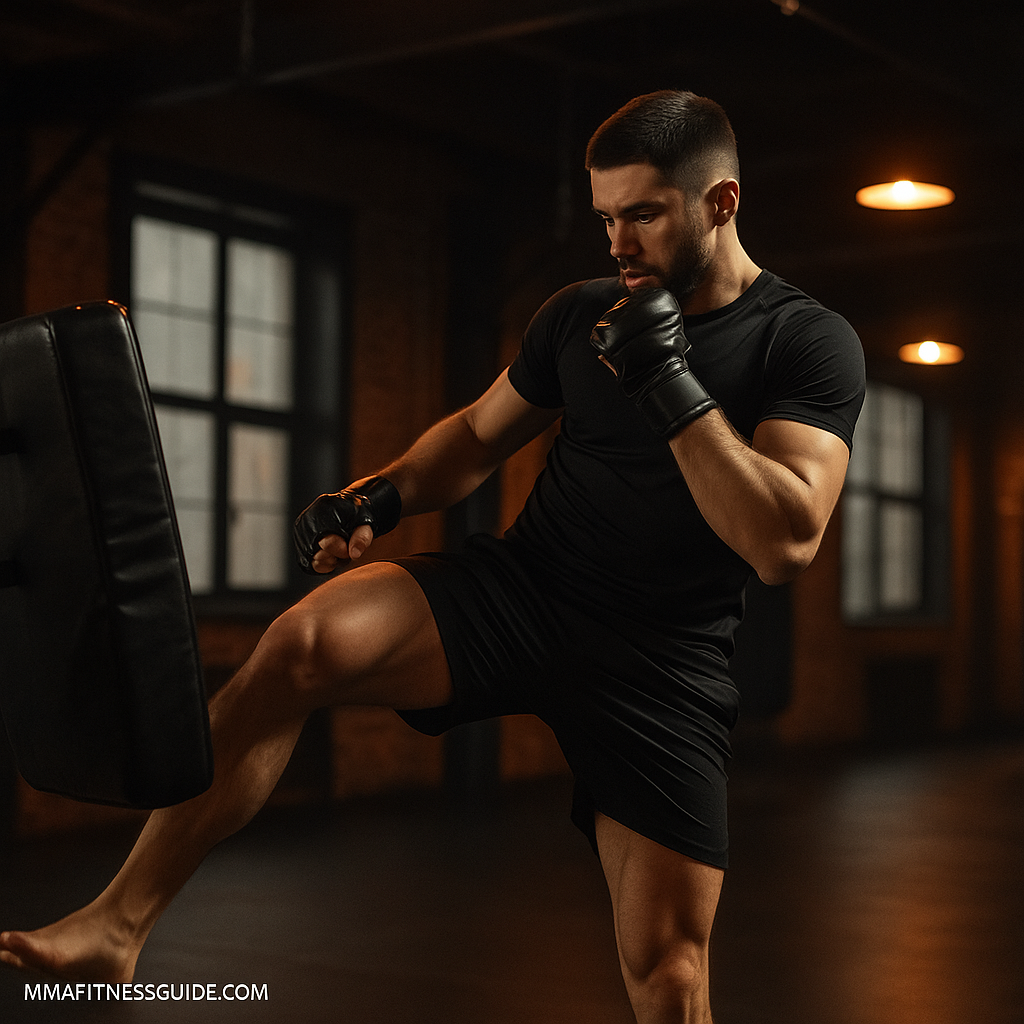
Once considered outdated, the side kick has become one of the most effective Karate techniques adapted for MMA.
Why it works:
- It creates distance against aggressive opponents.
- Generates power from the hips and core.
- Can target the body, knee, or even head for control or damage.
Used by: Stephen “Wonderboy” Thompson, Georges St-Pierre.
Training tip: Combine side kicks with feints and switch steps to disguise your timing and set up counterattacks.
2. The Front Kick (Teep Variation)
Karate’s front snap kick can act like a Muay Thai teep — perfect for disrupting rhythm and maintaining range.
Benefits:
- Stops forward movement instantly.
- Doubles as both a defensive and offensive strike.
- Works beautifully for setting up punches or spinning attacks.
Used correctly, it’s one of the cleanest ways to neutralize pressure fighters.
3. Blitz Attacks (Linear Entry Combinations)
Karate fighters are famous for their “blitz” style attacks — sudden forward bursts with fast punches.
These attacks catch opponents off guard and exploit openings with minimal telegraphing.
How to apply in MMA:
- Mix level changes into blitz entries.
- Use them after feints or stance switches.
- Exit at an angle to avoid counter shots.
This explosive movement teaches fighters how to control distance aggressively, rather than waiting to counter.
4. Stance and Distance Management
Karate fighters often use a wide, low stance, which offers excellent range control and evasion.
When adapted for MMA, this stance helps fighters move in and out efficiently while staying balanced for takedown defense.
Modern adjustments for MMA:
- Keep stance slightly narrower for faster sprawls.
- Stay light on lead foot for quick pivots and exits.
- Use bounce rhythm (kuzushi) to reset timing and frustrate opponents.
Mastering distance is what makes Karate-based strikers look effortless — they’re simply not where you expect them to be.
5. Spinning and Angular Strikes
Karate adds creativity to MMA striking through spinning back kicks, backfists, and hook kicks.
While risky, these moves create highlight-reel knockouts when used strategically.
Execution tips:
- Only throw spins when opponent commits forward.
- Practice timing, not just speed.
- Always recover stance immediately.
Used sparingly, these techniques add unpredictability to your arsenal — a key to keeping opponents guessing.
6. Counter-Fighting and Patience
Karate teaches waiting for the perfect opening — a principle that fits beautifully in MMA strategy.
Instead of rushing exchanges, Karate-based fighters bait their opponents, use angles, and counter precisely.
This method trains fighters to see patterns, stay calm under pressure, and make opponents miss — then pay.
Integrating Karate into Modern MMA Training
If you come from a Karate background or want to blend it into your MMA style, focus on:
- Translating point-fighting precision into full-contact timing.
- Adapting stance and distance for takedown defense.
- Mixing linear Karate strikes with circular Muay Thai or boxing combos.
- Staying fluid, not rigid — movement is your greatest weapon.
Karate can give fighters a striking identity that’s both technical and deceptive.
Key Takeaways
- Karate techniques still dominate MMA when adapted correctly.
- Side kicks, front kicks, and blitz entries create range and surprise.
- Distance control and timing are Karate’s greatest gifts to MMA.
- Discipline and composure make Karate fighters mentally dangerous.
As Lyoto Machida famously said,
“Karate is not just a martial art — it’s a way of life.”
And in MMA, that way of life continues to shape champions who fight with grace, control, and devastating precision.