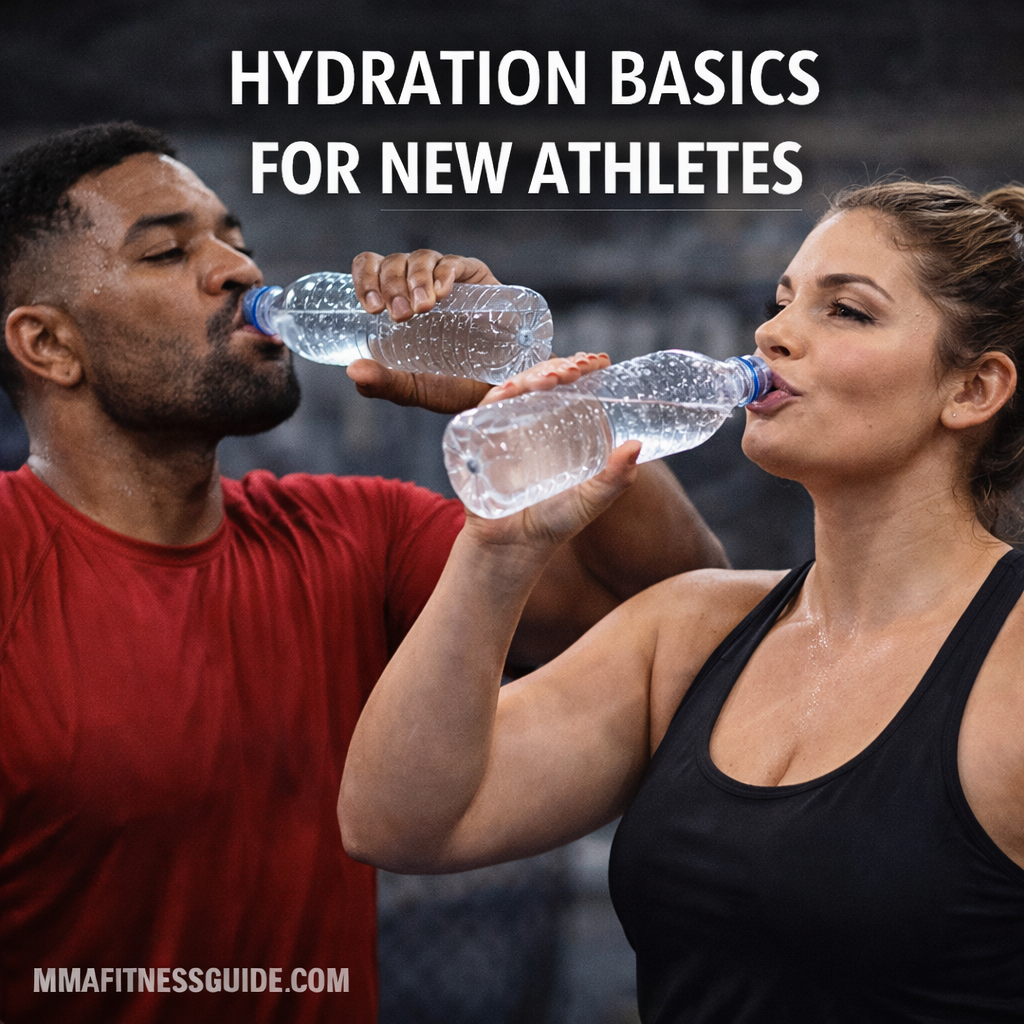
Hydration is one of the most important — and most overlooked — parts of athletic performance. For new athletes, especially those starting MMA, boxing, grappling, or general fitness training, proper hydration directly affects energy levels, endurance, recovery, and safety.
This guide covers hydration fundamentals in simple, practical terms so new athletes can build healthy habits from day one.
Why Hydration Matters for Athletic Performance
Water plays a role in nearly every function in the body.
Proper hydration helps with:
- Regulating body temperature
- Transporting nutrients to muscles
- Maintaining strength and endurance
- Supporting joint lubrication
- Preventing cramps and dizziness
- Improving focus and coordination
Even mild dehydration can reduce performance and increase fatigue.
Signs You May Be Dehydrated
New athletes often miss early warning signs.
Common signs include:
- Dark yellow urine
- Headaches
- Dry mouth or lips
- Fatigue during training
- Muscle cramps
- Lightheadedness
Ignoring these signals can lead to poor workouts or training-related illness.
How Much Water Do New Athletes Need?
There is no one-size-fits-all number, but general guidelines help.
Daily Hydration Baseline
A simple starting point:
- Drink water consistently throughout the day
- Aim for pale yellow urine
- Increase intake on training days
Body size, climate, and activity level all affect needs.
Hydration During Training
During workouts:
- Sip water every 10–15 minutes
- Drink more in hot or humid conditions
- Avoid chugging large amounts at once
Consistent small sips are easier on digestion.
Post-Training Rehydration
After training:
- Replace fluids lost through sweat
- Drink water gradually over the next few hours
- Pair fluids with a balanced meal
Recovery hydration supports muscle repair and energy restoration.
Water vs Sports Drinks
When Water Is Enough
For most beginner workouts, plain water is sufficient.
Water works best for:
- Sessions under 60 minutes
- Low to moderate intensity training
- General fitness and skill practice
When Electrolytes Help
Electrolyte drinks can be useful when:
- Training lasts longer than 60–90 minutes
- Sessions involve heavy sweating
- You train multiple times per day
- Training occurs in hot environments
Electrolytes help replace sodium and minerals lost in sweat.
Common Hydration Mistakes New Athletes Make
Avoid these common errors:
- Waiting until you feel thirsty
- Drinking only during workouts
- Overusing sugary sports drinks
- Ignoring hydration on rest days
- Trying to “catch up” all at once
Hydration is about consistency, not extremes.
Caffeine and Hydration
Caffeinated drinks can still count toward hydration, but moderation matters.
Tips for beginners:
- Balance caffeine with water
- Avoid relying on energy drinks
- Monitor how caffeine affects sweating and heart rate
Caffeine doesn’t cancel hydration, but it can increase fluid needs.
Hydration Tips for Hot Weather Training
Heat increases fluid loss significantly.
In hot conditions:
- Start training already hydrated
- Drink before, during, and after sessions
- Use electrolytes when sweating heavily
- Watch for dizziness or nausea
Heat-related dehydration is a serious risk for new athletes.
Simple Hydration Habits to Build
Make hydration automatic with simple habits:
- Carry a water bottle daily
- Drink a glass of water upon waking
- Hydrate with meals
- Refill your bottle before training
- Track hydration if needed
Small habits lead to long-term consistency.
Final Thoughts
For new athletes, hydration is one of the easiest performance upgrades you can make. You don’t need complicated formulas or expensive drinks — just awareness, consistency, and good habits.
By staying properly hydrated, you’ll train better, recover faster, and reduce the risk of injury or burnout as you begin your athletic journey.