Introduction
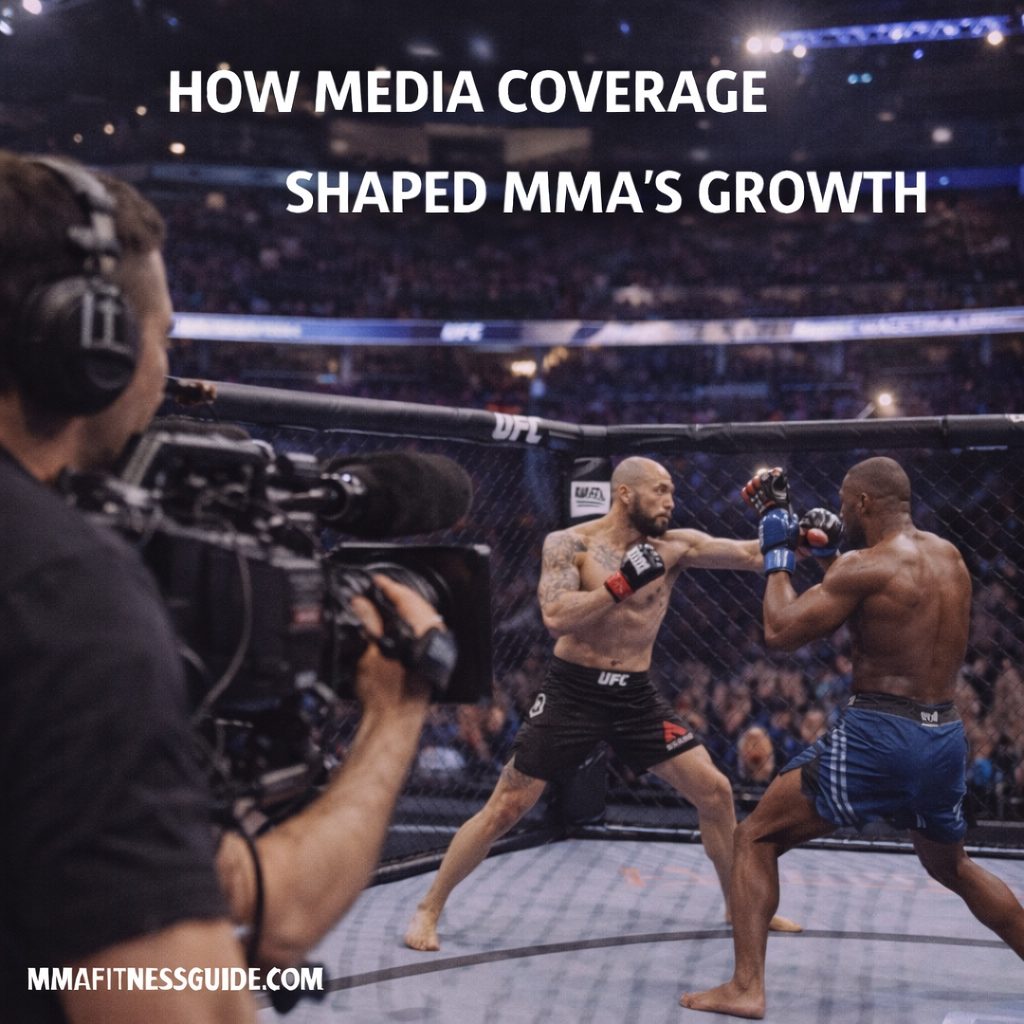
Mixed Martial Arts did not grow into a global sport by competition alone. Media coverage played a decisive role in shaping public perception, legitimizing athletes, attracting sponsors, and expanding MMA from fringe events into a mainstream spectacle. From controversial early broadcasts to polished modern productions, media exposure fundamentally changed how MMA was viewed and consumed.
Understanding MMA’s rise requires understanding how media transformed violence into sport, fighters into stars, and niche events into global entertainment.
The Early Days: Controversy Over Acceptance
When MMA first appeared on television in the 1990s, coverage focused heavily on shock value.
Early media narratives emphasized:
- Minimal rules
- Brutality and danger
- “No holds barred” branding
- Cultural fear around violence
This framing generated attention but also resistance, leading to bans and political backlash. While exposure increased awareness, it also slowed acceptance.
The Role of Pay-Per-View in MMA Survival
Despite criticism, pay-per-view became MMA’s lifeline.
Key impacts of PPV coverage included:
- Direct access to paying fans
- Financial sustainability outside traditional sports networks
- Freedom to develop the sport without mainstream approval
PPV allowed MMA to grow underground before going mainstream.
Reality Television and the Turning Point
Reality television changed everything.
The introduction of fighter-focused reality programming humanized athletes by:
- Showing their backgrounds and personalities
- Highlighting discipline and sacrifice
- Educating viewers on rules and techniques
This shift reframed MMA from violent spectacle to legitimate sport and career path.
Commentary and Storytelling Evolution
Early broadcasts lacked context and education.
Modern commentary transformed viewer experience by:
- Explaining techniques and strategy
- Highlighting fighter journeys
- Creating narratives beyond knockouts
- Teaching casual viewers how to watch fights
Education made MMA accessible to broader audiences.
Media as a Tool for Legitimization
Consistent, professional coverage helped MMA gain credibility.
Key legitimizing factors included:
- Athletic commissions regulating events
- Medical protocols highlighted during broadcasts
- Rule explanations and enforcement
- Respectful presentation of fighters
Media presentation influenced how regulators and sponsors viewed the sport.
Highlight Culture and Viral Growth
Short-form media accelerated MMA’s expansion.
Highlights helped by:
- Reaching non-fans through viral clips
- Emphasizing athleticism and technique
- Creating shareable moments
- Introducing new audiences to stars
Highlight culture brought MMA into the digital era.
Fighter Branding Through Media Exposure
Media allowed fighters to build personal brands.
Fighters gained leverage by:
- Developing distinct personas
- Using interviews and social media
- Connecting directly with fans
- Extending careers beyond competition
Media presence became as important as performance.
The Role of Sports Journalism
Serious journalism shifted MMA’s reputation.
In-depth coverage:
- Analyzed strategy and training
- Covered fighter health and safety
- Provided historical context
- Held promotions accountable
This positioned MMA alongside established sports.
International Media and Global Expansion
Global broadcasting expanded MMA beyond North America.
International media exposure:
- Created regional fan bases
- Elevated non-American fighters
- Encouraged cross-cultural competition
- Fueled global promotions
MMA became a truly international sport.
Social Media and Direct-to-Fan Access
Social platforms reshaped media power dynamics.
Fighters and promotions now:
- Control their own narratives
- Promote events independently
- Build audiences without traditional media
- Respond instantly to fan engagement
Media became interactive, not one-directional.
Negative Media and Ongoing Challenges
Media coverage hasn’t always been positive.
Ongoing challenges include:
- Sensationalism after injuries
- Focus on controversy over skill
- Misinformation around fighter safety
- Uneven coverage between stars and prospects
Media influence cuts both ways.
How Media Changed Fighter Opportunities
Expanded coverage increased career pathways.
Media growth led to:
- Higher sponsorship interest
- Global fan recognition
- Coaching and commentary careers
- Post-retirement opportunities
Visibility created long-term stability for athletes.
MMA’s Shift From Spectacle to Sport
Over time, media framing matured.
The sport evolved through:
- Technical analysis replacing shock narratives
- Respectful storytelling
- Athlete-centered coverage
- Professional broadcast standards
This shift cemented MMA’s legitimacy.
The Future of MMA Media Coverage
Media continues to shape MMA’s direction.
Future trends include:
- More behind-the-scenes content
- Data-driven analysis
- Athlete-controlled platforms
- Global streaming expansion
How MMA is covered will continue to influence how it grows.
Final Thoughts
Media coverage didn’t just promote MMA—it shaped its identity. From controversial beginnings to mainstream acceptance, the way fights were presented, explained, and humanized changed public opinion and unlocked global growth.
MMA’s evolution is inseparable from media evolution. The sport didn’t just fight its way forward—it was broadcast, framed, and told into existence.