Introduction
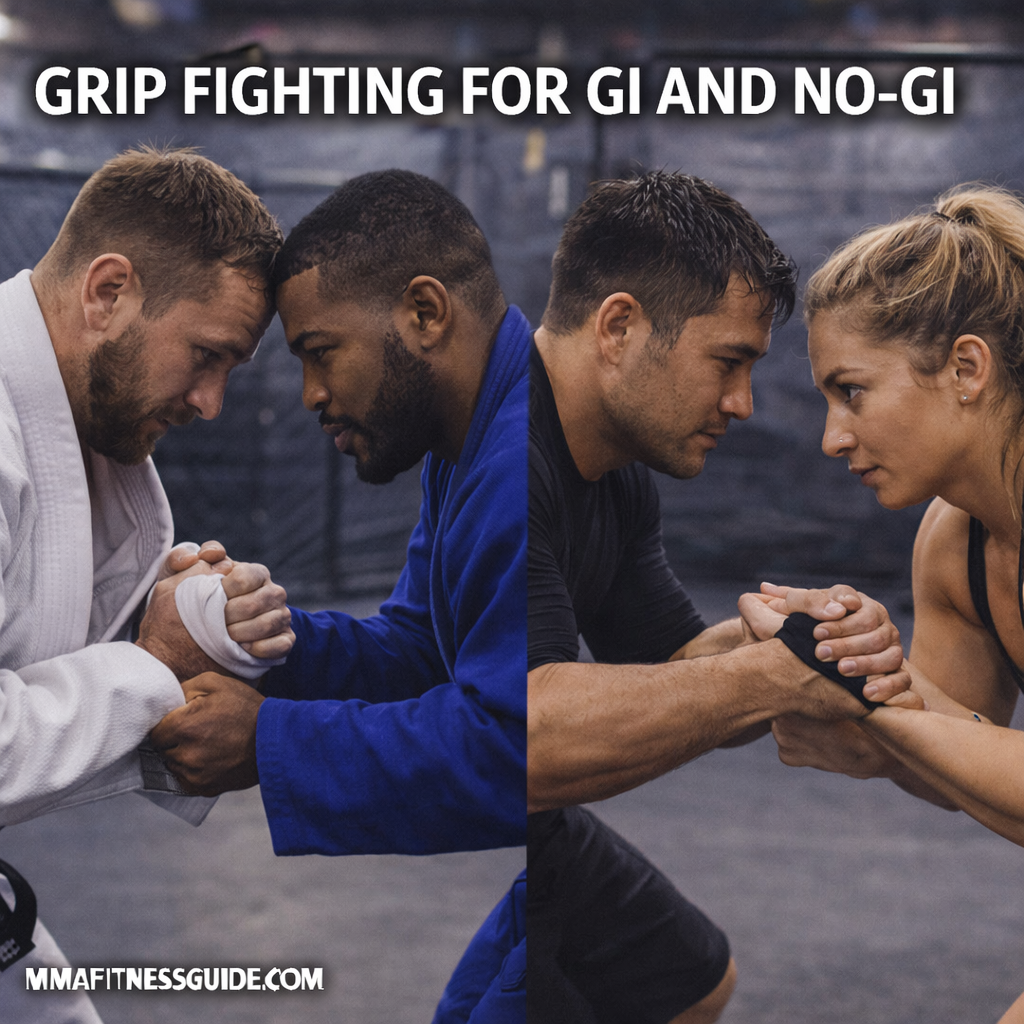
Grip fighting is one of the most decisive—and often underestimated—skills in grappling. Whether you train in gi or no-gi, the ability to establish, break, and transition grips determines who controls distance, tempo, and positioning. Many exchanges are effectively won or lost before a takedown, pass, or submission even begins.
Understanding the differences between gi and no-gi grip fighting helps fighters adapt their strategy, conserve energy, and impose their game more consistently.
What Is Grip Fighting?
Grip fighting is the battle for hand control that dictates movement and leverage.
It involves:
- Securing advantageous grips
- Breaking or nullifying opponent grips
- Transitioning between control points
- Using grips to off-balance, enter, or defend
Strong grip fighting creates opportunities while denying them to your opponent.
Why Grip Fighting Matters in Grappling
Grip control influences nearly every grappling outcome.
Effective grip fighting helps you:
- Control distance and posture
- Initiate takedowns and passes
- Prevent sweeps and submissions
- Conserve energy during exchanges
- Force opponents into reactive positions
Without grip control, technique becomes harder to apply.
Key Differences Between Gi and No-Gi Grip Fighting
While the principles overlap, the tools change significantly.
Gi grappling:
- Uses fabric for friction and control
- Allows sustained grips
- Slows movement and transitions
No-gi grappling:
- Relies on body grips and connection
- Requires constant adjustment
- Emphasizes speed and positioning
Adapting mindset is essential when switching formats.
Common Gi Grips and Their Uses
Gi grips provide durable control points.
Common grips include:
- Collar grips for posture control
- Sleeve grips for hand and arm control
- Pant grips for leg manipulation
- Belt grips for positional stability
These grips allow long-term control but require grip endurance.
Breaking Grips in the Gi
Grip breaking is as important as grip establishing.
Effective grip breaks include:
- Two-on-one sleeve stripping
- Rotational wrist movement
- Using body movement instead of arm strength
- Immediate re-gripping after breaks
Delaying grip breaks often leads to being controlled.
No-Gi Grip Fundamentals
No-gi grip fighting emphasizes connection over friction.
Key no-gi control points:
- Wrist control
- Inside biceps control
- Collar tie and head position
- Underhooks and overhooks
Position replaces fabric as the main source of control.
Hand Fighting in No-Gi
Hand fighting is constant in no-gi.
Important principles include:
- Always clearing grips before attacking
- Pummeling for inside control
- Using head position to assist grip control
Winning hand battles opens attacking lanes.
Grip Transitions Matter More Than Static Grips
Static grips become liabilities.
Effective grapplers:
- Transition grips as positions change
- Release grips before being countered
- Chain control points smoothly
Fluidity beats rigidity.
Energy Efficiency in Grip Fighting
Poor grip habits drain energy quickly.
Conserve energy by:
- Using body alignment instead of squeezing
- Letting go when grips no longer serve a purpose
- Attacking immediately after securing control
Grip fighting should support movement, not stall it.
Grip Fighting for Takedowns
Takedown success often starts with grips.
Gi takedown grips:
- Collar and sleeve combinations
- Pant grips for trips
No-gi takedown grips:
- Wrist-to-underhook transitions
- Head and arm control
Establish grips before committing to level changes.
Grip Fighting in Guard Play
From guard, grips define offense and defense.
Gi guard grips help:
- Control posture
- Set up sweeps
- Isolate limbs
No-gi guard grips rely on:
- Frames
- Wrist control
- Leg positioning
Grip selection should support your guard style.
Passing and Grip Dominance
Passers must win grip exchanges.
Effective passing grip strategies include:
- Clearing frames early
- Controlling hips and knees
- Breaking sleeve or wrist control before advancing
Passing fails when grips are ignored.
Training Grip Fighting Intentionally
Grip fighting improves fastest with focused training.
Helpful methods:
- Hand-fighting rounds
- Grip-only sparring starts
- Timed grip break drills
- Positional grip exchanges
Intentional reps accelerate adaptation.
Strength vs Technique in Grip Fighting
Grip strength helps—but technique matters more.
Technical advantages include:
- Better angles
- Efficient hand placement
- Timing grip breaks
Technique allows smaller athletes to win grip battles.
Common Grip Fighting Mistakes
Avoid these frequent errors:
- Holding grips too long
- Ignoring opponent grips
- Relying only on strength
- Failing to re-grip after breaks
Awareness prevents control loss.
Switching Between Gi and No-Gi Effectively
Cross-training requires mental adjustment.
Key transitions include:
- Letting go of fabric reliance
- Increasing hand activity
- Prioritizing head position and frames
Grip philosophy must change with attire.
Long-Term Benefits of Strong Grip Fighting
Consistent grip fighting development leads to:
- Better positional control
- Fewer defensive scrambles
- Improved confidence
- Cleaner submissions and passes
Grip control simplifies grappling.
Final Thoughts
Grip fighting is the gateway skill that makes techniques work in both gi and no-gi grappling. While the tools differ, the principles of control, timing, and efficiency remain constant. Fighters who invest in grip fighting gain an edge that shows up everywhere—from takedowns to submissions.
Win the grips, and the rest of the exchange becomes much easier.