Foot and toe injuries are some of the most common — and most ignored — problems in grappling sports. Brazilian Jiu-Jitsu, wrestling, judo, and MMA grappling place constant stress on the feet through gripping, posting, twisting, and mat friction. Small issues can quickly turn into chronic pain, infections, or performance-limiting injuries if not addressed early.
Proper foot and toe care isn’t just about hygiene. It’s about maintaining balance, grip, mobility, and longevity on the mats. This guide covers essential foot care practices every grappler should follow.
Why Foot and Toe Health Matters in Grappling
Your feet are constantly engaged during grappling.
They are responsible for:
- Balance and base control
- Posting and scrambling
- Pushing and pulling in guard work
- Grip with toes during transitions
- Shock absorption during takedowns
Neglecting foot health can reduce performance, increase injury risk, and even keep you off the mats entirely.
Common Foot and Toe Issues Grapplers Face
Mat Burns and Skin Abrasions
Repeated sliding, posting, and pivoting can cause painful mat burns.
Common causes include:
- Dry or cracked skin
- Worn or dirty mats
- Poor post-training hygiene
If left untreated, mat burns can become infected and delay training.
Toe Sprains and “Turf Toe”
Toe sprains are common when toes catch in the mat during scrambles.
Symptoms include:
- Swelling and bruising
- Pain during pushing or posting
- Limited toe mobility
These injuries may seem minor but can significantly affect movement and balance.
Fungal Infections
Warm, damp environments make grapplers vulnerable to fungal issues.
Common infections include:
- Athlete’s foot
- Toenail fungus
- Skin irritation between toes
Poor foot hygiene spreads infections quickly through gyms.
Cracked Heels and Calluses
Dry mats, showers, and constant friction can lead to:
- Thick calluses
- Deep heel cracks
- Pain during walking or training
These cracks can open pathways for infection.
Daily Foot Care Habits for Grapplers
Clean Immediately After Training
Never delay cleaning your feet.
Post-training habits should include:
- Washing feet with soap and warm water
- Cleaning between toes
- Drying completely, especially around nails
- Wearing clean sandals in locker rooms
Clean feet reduce infection risk dramatically.
Keep Toenails Short and Smooth
Long or jagged nails can cause injuries to you and your training partners.
Best practices:
- Trim nails straight across
- File rough edges
- Avoid cutting nails too short
- Check nails weekly
This is a basic but critical habit for all grapplers.
Moisturize Strategically
Dry skin cracks easily, but over-moisturizing can cause slipping.
Tips:
- Apply lotion at night, not before training
- Focus on heels and soles
- Avoid heavy oils before mat time
- Wear socks after moisturizing to lock in hydration
Balanced moisture keeps skin durable.
Protecting Your Feet During Training
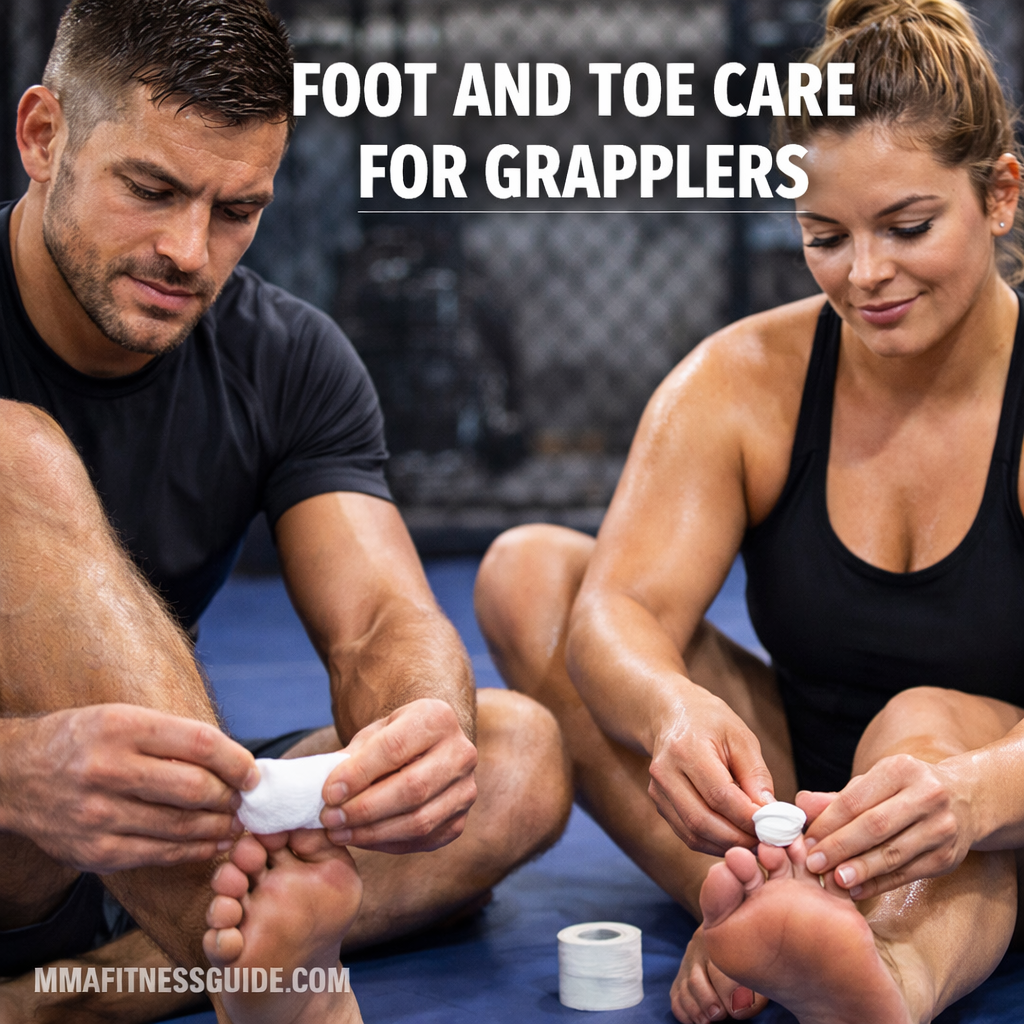
Tape Vulnerable Toes
Toe taping helps prevent sprains and mat burns.
Consider taping if you:
- Have a previous toe injury
- Play open guard frequently
- Train on rough mats
- Are returning from injury
Use flexible athletic tape and avoid cutting off circulation.
Use Mat-Safe Footwear When Needed
Some grapplers benefit from:
- Wrestling shoes (where allowed)
- Grappling socks
- Recovery sandals between sessions
Always follow gym rules and competition regulations.
Monitor Small Injuries Early
Never ignore:
- Redness
- Swelling
- Open cuts
- Persistent pain
Early treatment prevents minor issues from becoming major setbacks.
Recovery and Maintenance Between Sessions
Ice and Elevation for Acute Pain
After hard sessions, icing can help reduce inflammation.
Guidelines:
- Ice for 10–15 minutes
- Elevate feet when possible
- Avoid icing before training
This helps calm overworked tissues.
Mobility and Toe Strength Exercises
Healthy feet are strong and mobile.
Simple exercises include:
- Toe curls with a towel
- Toe spreading drills
- Calf and plantar fascia stretching
- Ankle mobility work
Strong feet improve balance and injury resistance.
When to Take Time Off the Mats
Training through pain can worsen foot injuries.
Take time off if you experience:
- Severe swelling
- Signs of infection
- Sharp or worsening pain
- Difficulty walking normally
Short rest periods often prevent long-term problems.
Foot Care for Competition and Travel
Tournaments and travel increase risk.
Be extra cautious by:
- Bringing sandals for locker rooms
- Packing antiseptic wipes
- Cleaning feet immediately after matches
- Changing socks frequently
Small precautions protect you during high-risk situations.
Final Thoughts
Foot and toe care is a non-negotiable part of grappling longevity. Healthy feet mean better balance, stronger base, and fewer interruptions to training.
By practicing consistent hygiene, addressing small issues early, and strengthening your feet, you protect one of the most important — and overlooked — parts of your body. Take care of your feet, and they’ll keep you moving on the mats for years to come.