
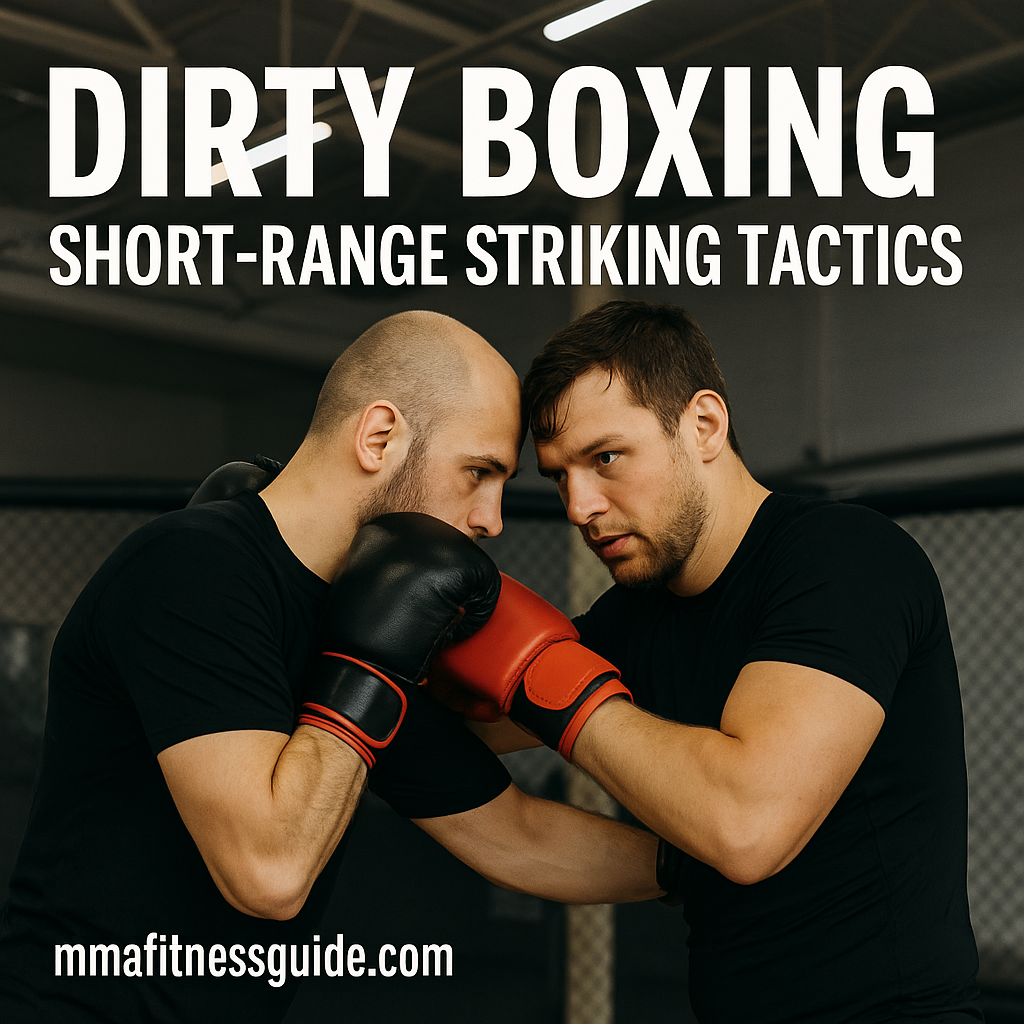
Dirty boxing is one of the most underrated — yet highly effective — striking styles used in MMA, Muay Thai clinch exchanges, and self-defense situations. It focuses on short-range punches, framing, off-balancing, and hand fighting inside the clinch. While the techniques aren’t “illegal,” they’re called “dirty” because they push right up against the edge of what’s allowed in combat sports.
Elite fighters use dirty boxing to control the clinch, land short damaging shots, wear down opponents, and create openings for takedowns or exits. When mastered, it becomes one of the most efficient ways to strike safely while maintaining positional advantage.
What Is Dirty Boxing?
Dirty boxing refers to striking from close range using tactics such as:
- Short punches inside the clinch
- Shoulder bumps
- Forearm frames
- Collar-tie strikes
- Hand fighting setups
- Wrist control and pulling strikes
- Body shots from tie-ups
It blends boxing, wrestling, and clinch fighting — making it ideal for MMA, where small gloves and cage pressure amplify its effectiveness.
Why Dirty Boxing Is So Effective in MMA
Dirty boxing works because it allows fighters to strike while maintaining control.
Advantages include:
- Opponent has limited visibility
- Short punches land quickly and unexpectedly
- Clinch control prevents counter-strikes
- Movements require less energy than long-range striking
- Works against the cage and in scrambles
- Sets up takedowns, trips, and disengagements
- Reduces risk of getting hit back
It’s a safe, efficient way to score damage and dominate close-range exchanges.
Essential Positions for Dirty Boxing
To strike effectively at close range, you need reliable control positions.
1. Single Collar Tie
One hand behind the opponent’s head pulling downward.
Benefits:
- Controls posture
- Opens angles for inside punches
- Great for uppercuts and hooks
2. Over-Under Clinch
One overhook, one underhook.
Benefits:
- Control of upper body
- Short punches accessible
- Smooth transition to wrestling takedowns
3. Wrist Control Clinch
Grabbing or pinning the opponent’s wrist.
Benefits:
- Prevents them from striking
- Frees your other hand to attack
- Helps set up pull-punch combinations
4. Head-Inside Position (Wrestling Clinch)
Your forehead under their chin or cheek.
Benefits:
- Strong positional dominance
- Disrupts their balance
- Creates pressure for body shots
Short-Range Strikes in Dirty Boxing
Dirty boxing focuses on compact, efficient strikes that don’t require long wind-ups.
1. Short Hooks
Perfect from single collar tie or over-under positions.
2. Uppercuts
Ideal for lifting the opponent’s chin when space is tight.
3. Hammerfists
Great in clinches where standard punches don’t fit.
4. Shoulder Strikes
Used to disrupt posture or create space — famously used by Conor McGregor.
5. Forearm Bumps
Not elbows — but firm forearm frames used to off-balance or strike.
6. Body Shots
Rips to the ribs and liver work extremely well in clinch exchanges.
7. Pull-Punches
Using wrist control to pull the opponent into a strike.
Short strikes add up fast and drain your opponent’s energy.
Control Tactics That Make Dirty Boxing Work
Dirty boxing isn’t just about striking — it’s about manipulating your opponent.
1. Off-Balancing
Push-pull motions make the opponent stumble, creating easy openings.
2. Posture Breaking
Pulling the head disrupts the opponent’s base and defense.
3. Framing
Using your forearm or elbow line to create angles for punches.
4. Head Position
Driving your head under their chin to maintain dominance.
5. Hand Fighting
Peeling grips, controlling wrists, and clearing obstacles.
These details determine whether your short punches land clean or get smothered.
Dirty Boxing Against the Cage
The cage multiplies dirty boxing effectiveness.
You can:
- Trap the opponent’s hands
- Land body shots and uppercuts
- Use head pressure to keep them stuck
- Mix in takedown attempts
- Prevent them from creating distance
This is why wrestlers and pressure fighters excel in close-range striking.
Drills to Improve Dirty Boxing
1. Pummeling to Short Punches
Pummel for inside control → throw light body or uppercut touches.
2. Wall Clinch Sparring
Partner against the wall → work wrist control and short shots.
3. Collar Tie Flow Drills
Switch between collar ties while landing light uppercuts.
4. Dirty Boxing Pad Work
Coach holds pads close to the body for tight hooks and uppercuts.
5. Hand Fighting Drills
Practice grip stripping and wrist control transitions.
Repetition builds comfort — comfort builds efficiency.
Common Mistakes to Avoid
- Swinging too wide (loses balance and power)
- Standing upright with poor posture
- Forgetting to hand fight
- Letting opponent escape clinch easily
- Overcommitting punches and getting reversed
- Not mixing clinch strikes with takedowns
Dirty boxing is about control — not brawling.
Final Takeaway
Dirty boxing is a powerful tool for fighters who want to dominate close-range exchanges. By combining clinch control, short punches, and smart positioning, you can keep your opponent off-balance, wear them down, and create openings for takedowns and finishes. It’s gritty, efficient, and highly effective — especially when mastered alongside wrestling and clinch work.
If you want to improve your close-range striking, dirty boxing should be a core part of your training.