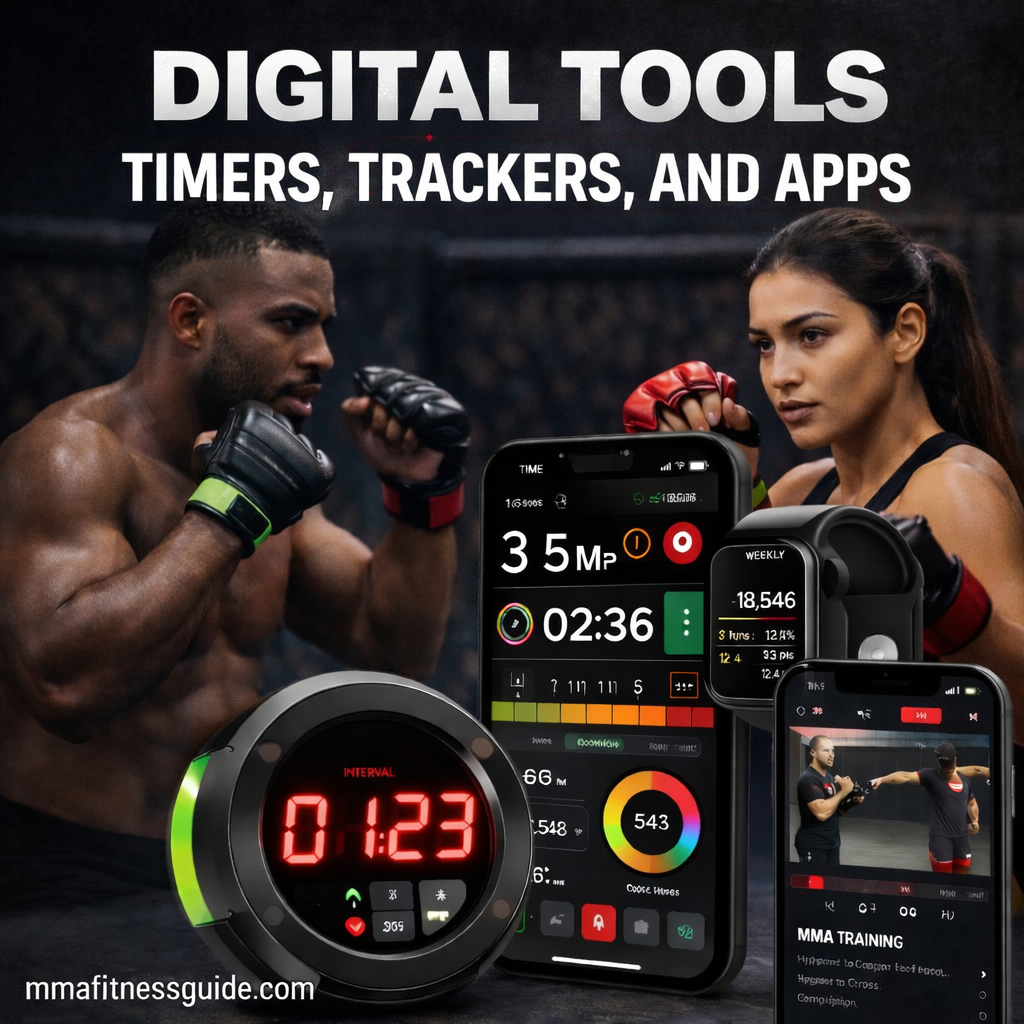
MMA training has always been demanding, but modern fighters now have access to digital tools that make training more efficient, measurable, and sustainable. From simple round timers to advanced performance trackers and training apps, digital gear has become an important part of how fighters prepare, recover, and improve.
This guide breaks down the most useful digital tools for MMA, how they’re used in real training environments, and how to avoid overreliance while still getting maximum benefit.
Why Digital Tools Matter in MMA
Mixed martial arts requires a balance of conditioning, technique, recovery, and mental sharpness. Digital tools help fighters manage this complexity without guessing.
When used correctly, digital tools can help you:
- Structure training sessions more effectively
- Maintain realistic fight pacing
- Track progress over weeks and months
- Identify recovery and fatigue patterns
- Stay consistent during solo training
The goal isn’t to replace coaching or instincts—it’s to support them with clarity.
MMA Timers: The Foundation of Structured Training
Timers are the most essential digital tool in MMA training. Almost every session, whether striking, grappling, or conditioning, benefits from proper timing.
Interval Timers for Fight Rounds
MMA-specific interval timers allow fighters to customize:
- Round length (3, 5, or custom minutes)
- Rest intervals
- Number of rounds
- Audible or vibration alerts
These timers are ideal for:
- Heavy bag work
- Pad rounds
- Shadowboxing
- Clinch and wall drills
- Ground-and-pound simulations
Using a timer ensures rounds stay intense and realistic, preventing casual pacing or extended rest.
Timers for Conditioning and HIIT
Beyond fight rounds, timers are invaluable for conditioning work, including:
- Sprint intervals
- Circuit training
- Tabata protocols
- Grip endurance sets
- Isometric holds
Precise work-to-rest ratios help develop the energy systems MMA fighters rely on most.
Performance Trackers: Measuring Training and Recovery
Trackers help fighters understand what their body is actually doing—not just how it feels.
Wearable Fitness Trackers and Smartwatches
Wearables can track:
- Heart rate during rounds
- Training duration
- Calories burned
- Daily activity levels
- Sleep quality and duration
For MMA athletes, heart-rate data can highlight:
- Conditioning gaps
- Poor recovery between rounds
- Signs of accumulated fatigue
This data is most useful when reviewed weekly, rather than obsessively after every session.
Training Load and Volume Tracking
Some trackers and apps estimate overall training load by combining intensity and duration. This helps fighters:
- Balance hard and light training days
- Avoid stacking too many high-intensity sessions
- Plan recovery or deload weeks
Tracking volume over time is especially useful during fight camps, where overtraining is common.
MMA Training Apps: Structure and Accountability
Training apps range from simple planning tools to full workout libraries. The best ones help organize training—not complicate it.
Workout Planning and Scheduling Apps
These apps are useful for managing:
- Strength and conditioning programs
- Weekly training schedules
- Progression over time
They’re especially helpful for fighters balancing:
- Striking sessions
- Grappling classes
- Strength training
- Cardio and recovery work
Clear planning reduces mental fatigue and keeps training consistent.
Technique and Drill Libraries
Some MMA apps include:
- Striking combinations
- Grappling drills
- Mobility routines
- Warm-up and cooldown flows
While they don’t replace a coach, these apps are useful for:
- Solo training days
- Travel workouts
- Beginners building fundamentals
They provide structure when live instruction isn’t available.
Recovery and Wellness Apps for MMA Fighters
Recovery is often overlooked in MMA, but it’s where many digital tools shine.
Sleep Tracking and Recovery Metrics
Sleep apps and wearables can reveal:
- Sleep consistency
- Recovery trends
- Effects of late or intense sessions
- Signs of burnout
Better sleep awareness allows fighters to adjust training before performance drops.
Mobility, Breathwork, and Mental Training Apps
Apps focused on:
- Stretching routines
- Breath control
- Nervous system regulation
- Focus and stress management
These tools support:
- Faster physical recovery
- Improved sparring composure
- Better weight-cut stress management
Even short daily sessions can make a noticeable difference.
How to Use Digital Tools Without Overcomplicating Training
Digital tools should simplify training—not turn it into a full-time analytics project.
Best Practices for MMA Athletes
- Use one main timer and one tracking system
- Review data weekly instead of daily
- Focus on long-term trends, not single sessions
- Let coaching and feel guide decisions first
Consistency matters more than perfect data.
Common Mistakes Fighters Make
- Switching apps too often
- Chasing numbers instead of skill quality
- Overanalyzing heart-rate data
- Ignoring recovery signals
- Letting apps override coaching feedback
Digital tools are support systems, not decision-makers.
Who Benefits Most From Digital MMA Tools?
Digital tools are especially useful for:
- Solo trainees
- Amateur fighters
- Busy athletes balancing work and training
- Fighters preparing for competition
- Coaches managing multiple athletes
Even experienced fighters benefit when tools are used intentionally.
Final Thoughts
Timers, trackers, and training apps won’t replace hard work or quality coaching—but they can significantly improve how MMA athletes train, recover, and stay consistent. Used correctly, digital tools add structure, awareness, and efficiency without taking away from the raw nature of the sport.
In a discipline where small advantages matter, smart use of digital tools can quietly elevate long-term performance.