Introduction
The guillotine choke is one of the most common submissions in MMA. It can happen during takedown attempts, scrambles, clinch battles, or even off a mistake in posture. Because it’s fast, surprising, and powerful, beginners often get caught in it repeatedly.
The good news is that guillotine defense is simple once you understand the key principles. With solid posture, hand positioning, and the right escape path, you can shut down the choke before it becomes dangerous — and even turn it into a dominant position.
Here’s a beginner-friendly guide to defending the guillotine effectively.
Why the Guillotine Works
The guillotine choke relies on three things:
- Your neck bending downward
- Their arm wrapping around the front of your neck
- Their hips or chest applying upward pressure
If you eliminate any of these elements, the choke becomes weak or impossible.
Key Principles of Guillotine Defense
No matter the position, these rules help keep you safe:
1. Keep Your Head Up
Looking up straightens the neck and removes the choking angle.
2. Fight the Wrapping Arm
Control their choking arm by grabbing the wrist or pulling the elbow down.
3. Get Your Hips Close
Space helps them finish the choke. Closing space reduces their leverage.
4. Move Toward the Opponent
Moving into them often relieves pressure, while backing away tightens the choke.
5. Stay Calm
Panic makes you tap faster and wastes energy.
These principles make every escape easier.
Defense 1: Standing Guillotine Escape
This is the most common scenario — usually during grappling exchanges or a sloppy shot.
How to defend:
Step 1 — Posture Up
Look up and drive your hips forward.
This breaks their angle and makes it harder to apply pressure.
Step 2 — Hand Fight
Use your hands to pull down on their choking arm or wrist.
Even a small adjustment helps you breathe.
Step 3 — Move to the Safe Side
If their choking arm is your right side, step your body to their right hip.
This removes the finishing angle.
Step 4 — Escape or Counter
From here you can:
- Drop for a single or double-leg
- Push their hips away
- Slide to their back
- Lift and take them down (carefully)
Make sure to keep posture strong throughout the movement.
Defense 2: Guillotine During a Takedown Attempt
This happens all the time when shooting a double-leg or single-leg.
How to defend:
Step 1 — Turn Your Head Toward the Shoulder
Avoid letting your head drift to the center of their chest.
Step 2 — Drive Forward
Your body pressure forces them to carry your weight.
Step 3 — Move to the Opposite Side
Similar to standing guillotine defense, circle to the safe side away from the choking arm.
Step 4 — Finish the Takedown
Your best options are:
- Run the pipe on a single
- Switch to a body lock
- Finish a double by stepping outside their leg
Once you land in side control, the choke is usually gone.
Defense 3: Guillotine From Guard
If they pull guard with a guillotine, stay calm — many fighters finish from here.
How to defend:
Step 1 — Hand Fight Immediately
Control the choking arm so they can’t tighten.
Step 2 — Posture Up and Stack
Stacking (driving forward) puts pressure on their lower back and limits their squeeze.
Step 3 — Move to the Opposite Side
If they have your neck on the right, move left.
Getting past the legs kills the choke almost instantly.
Step 4 — Land in Side Control
Once in side control, lift your head slowly.
Pulling out too fast can re-tighten the choke.
Defense 4: Arm-In Guillotine Defense
Arm-in guillotines are trickier but still manageable.
How to defend:
Step 1 — Grab Their Wrist
Peel space between their choking arm and your neck.
Step 2 — Lower Your Shoulder
Drop your shoulder onto the choking arm to create pressure.
Step 3 — Rotate to the Non-Choking Side
This removes the finishing angle.
Step 4 — Drive Into Side Control or Half Guard
These positions remove their leverage completely.
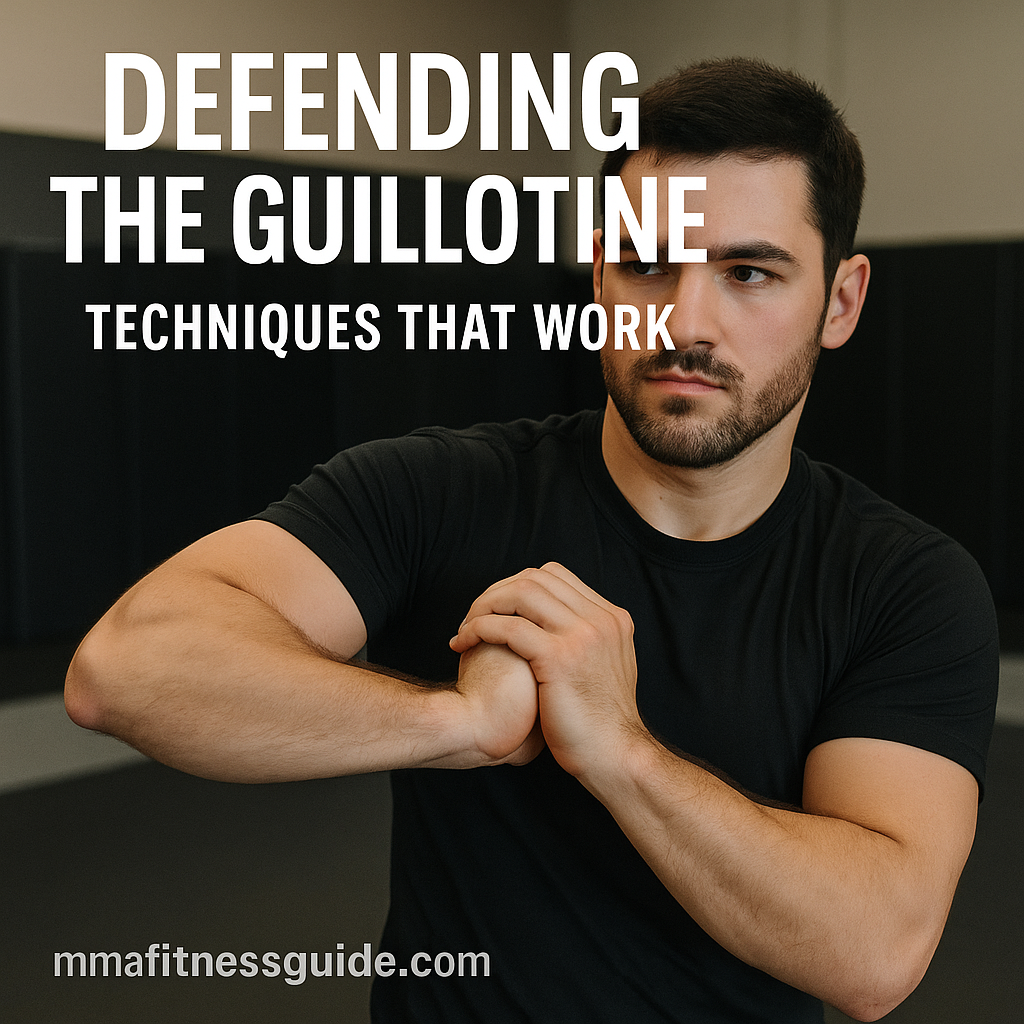
Defense 5: The “Prayer Hands” Escape (Beginner Friendly)
This is great when the choke is almost locked in.
How to do it:
- Put both palms together under their choking arm
- Lift your elbows up
- Drive your hands upward like a “prayer” motion
This creates just enough space for air and allows you to posture out.
Defense 6: Roll or Pass to the Safe Side
If you’re caught mid-scramble:
- Roll toward the side of their choking arm
- Keep your weight on them
- Transition to side control or north-south
Rolling away from the choke strengthens it — always roll into the choke side.
Common Mistakes to Avoid
Beginners often struggle because of these errors:
- Bending the neck
- Pulling straight back
- Not hand-fighting early
- Panicking and rushing
- Ignoring the choke until too late
- Shooting takedowns with the head down
Avoiding these mistakes makes defense dramatically easier.
Training Tips to Improve Guillotine Defense
To build confidence:
- Drill entries and escapes slowly
- Practice posture during takedowns
- Do positional rounds starting in guillotine setups
- Ask partners to increase pressure gradually
- Practice the “safe side” movement often
These help build automatic reactions anyone can use.
Final Thoughts
The guillotine choke can feel overwhelming at first, but with proper posture, hand fighting, and the right escape angles, it becomes much easier to defend. Focus on keeping your head up, moving to the safe side, and staying calm under pressure. With consistent practice, you’ll turn a common submission threat into a position you can escape — or even counter from.