Introduction
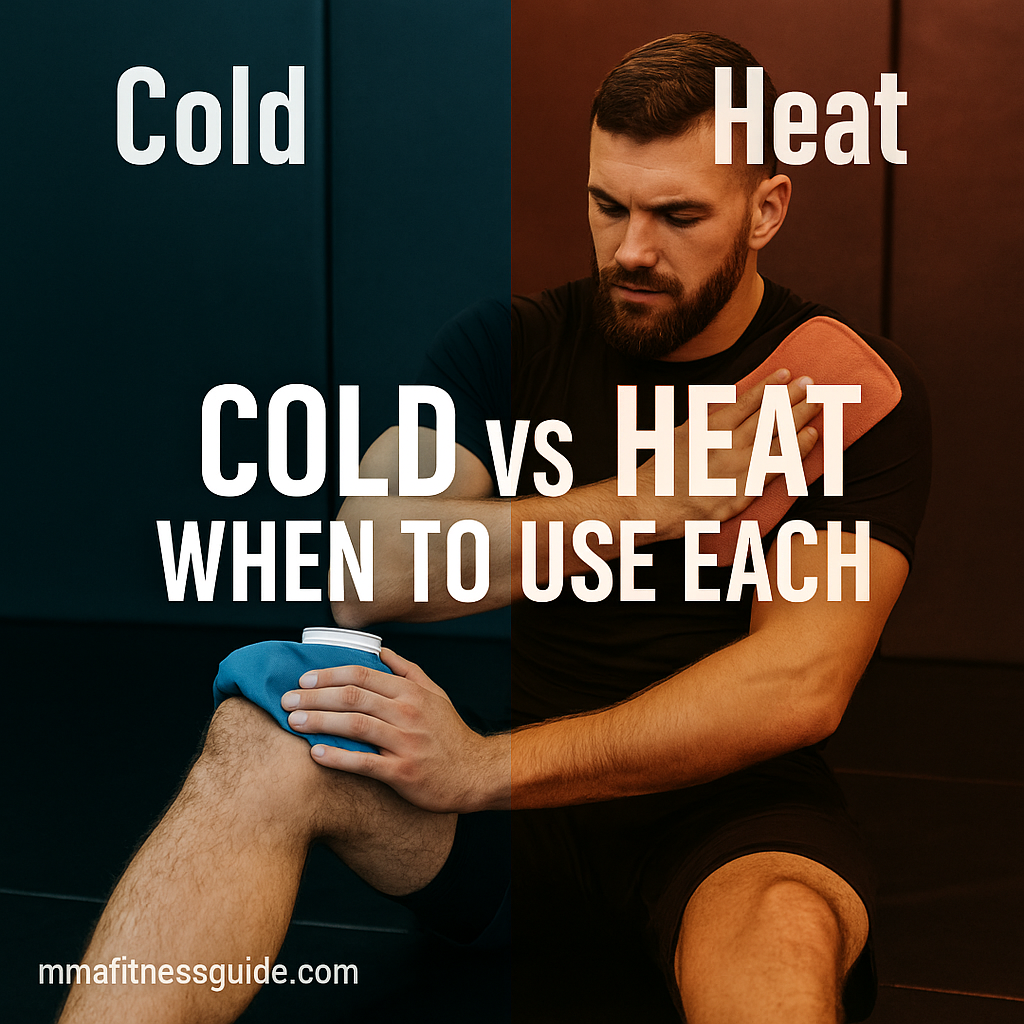
In MMA training, soreness, stiffness, and minor aches are a normal part of the journey. But knowing whether to use cold therapy or heat therapy can make a huge difference in how fast you recover and how good you feel at your next session. Many fighters guess or use the wrong one — which can slow healing or increase discomfort.
This guide breaks down when to use cold, when to use heat, and how both work so you can recover smarter and stay consistent in your training.
What Cold Therapy Does
Cold therapy (ice packs, cold baths, cold gels) works by decreasing:
- Swelling
- Inflammation
- Pain
- Blood flow to the injured area
- Nerve activity
This makes it ideal for recent injuries or sudden pain.
Cold therapy is best for:
- Fresh injuries (within the first 24–48 hours)
- Swelling
- Joint sprains
- Strains that cause immediate pain
- Hard sparring impact (shins, forearms, ribs)
- Overworked joints
- Post-training inflammation
If something feels hot, swollen, or sharp, cold is usually the right choice.
What Heat Therapy Does
Heat therapy (heating pads, warm baths, saunas) increases:
- Blood flow
- Muscle relaxation
- Range of motion
- Tissue flexibility
Heat is ideal for tightness, stiffness, or ongoing soreness, not new injuries.
Heat therapy is best for:
- Tight muscles
- Stiff shoulders or hips
- Chronic soreness
- Warm-up before training
- Muscle knots
- Low back tension
- Old injuries that flare up
If something feels tight, stiff, or achy, heat usually helps.
When to Use Cold vs Heat (Quick Guide)
| Symptom | Use Cold | Use Heat |
|---|---|---|
| Swelling | ✅ Yes | ❌ No |
| Sharp pain | ✅ Yes | ❌ No |
| New injury (last 48 hrs) | ✅ Yes | ❌ No |
| Stiff muscles | ❌ No | ✅ Yes |
| Chronic soreness | ❌ No | ✅ Yes |
| Post-training tightness | ❌ No | ✅ Yes |
| Bruising | ✓ Sometimes | ❌ No |
| Warm-up | ❌ No | ✅ Yes |
If you’re unsure, a good rule is:
Cold for pain. Heat for tightness.
Using Cold Therapy Correctly
To get the benefits, apply cold safely.
How to use cold therapy:
- 10–15 minutes at a time
- Use a cloth between ice and skin
- Don’t exceed 20 minutes
- Give the area a break between sessions
Good cold therapy options:
- Ice packs
- Frozen gel wraps
- Ice buckets (hands, feet)
- Cold showers
- Cold plunge tubs (for advanced athletes)
Avoid cold therapy when:
- Muscles are stiff but not swollen
- You’re warming up for training
- You have circulation issues
Cold slows tissue activity — that’s great for swelling but not for flexibility.
Using Heat Therapy Correctly
Heat works best for relaxing muscles and increasing movement.
How to use heat therapy:
- 15–20 minutes
- Use warm, not burning, heat
- Keep the area comfortable
- Follow with gentle stretching
Good heat therapy options:
- Heating pads
- Warm showers
- Heat packs
- Hot baths
- Sauna sessions
- Warm towels
Avoid heat therapy when:
- There’s swelling
- The area feels hot to touch
- The injury is new
- You feel sharp pain
Heat increases blood flow — which can make swelling worse.
Cold Therapy for Fighters: Best Situations
Cold therapy shines in high-impact training.
Great times to use cold include:
After hard sparring
Reduces swelling in shins, forearms, and ribs.
After pad rounds or bag work
Helps inflammation in wrists and knuckles.
After grappling
Good for knees, elbows, and shoulders that get tweaked.
After rolling ankles or spraining something
Immediately reduces swelling and pain.
After hard conditioning days
Ice baths help reduce systemic inflammation.
Cold keeps small problems from becoming bigger ones.
Heat Therapy for Fighters: Best Situations
Heat helps restore movement and reduce tension.
Use heat:
Before training
To loosen tight shoulders, hips, or back.
On rest days
To increase blood flow and boost recovery.
At night
To relax muscles after a long day of training.
On old injuries
Heat helps chronic stiffness feel smoother and less restrictive.
For mobility work
Warm muscles stretch and move better.
Heat helps you feel ready and flexible.
Can You Combine Cold and Heat? (Contrast Therapy)
Yes — and it’s extremely helpful.
Contrast therapy = switching between hot and cold.
Benefits:
- Reduces soreness
- Improves circulation
- Promotes recovery
- Helps stubborn aches
Basic method:
- 3 minutes heat
- 1 minute cold
- Repeat 3–5 times
Great for:
- Forearms
- Knees
- Ankles
- Shoulders
- Lower back
Use contrast therapy only after swelling has gone down.
Which Therapy Should Fighters Use Most?
For most MMA athletes:
- Cold after hard training
- Heat before training or on rest days
Cold = recovery
Heat = readiness
This combination keeps you moving well and recovering faster.
Final Thoughts
Both cold and heat therapy are simple tools that can make a huge difference in recovery. Cold reduces swelling and pain after intense sessions or fresh injuries. Heat loosens tight muscles, improves mobility, and helps you feel ready to train again.
Knowing when to use each method helps you stay healthy, train consistently, and avoid turning small aches into long layoffs. Recover smart — your body will thank you.